AI Visibility Tools 27 min read Published Updated
15 Best AI Rank Tracker Tools in 2026 (Expert Review)
I do not treat rank as a shared unit across vendors. Here I walk through how each AI rank tracker defines position inside an answer, mention, citation, share of voice, or a blended score, and what that number can actually tell me.
On this page
- 01
Rank inside AI answers is a vendor-defined construct, mention rate, citation share, position-weighted scores, or a blend, and I never compare those numbers across tools.
- 02
Collection method (UI scrape versus API sample) and refresh cadence change what an AI rank tracker is actually observing.
- 03
Engine counts on pricing pages are not the same as the engines I can run at a given tier, and prompt or answer caps often bind before the engine list does.
- 04
Claude Fable is a DIY measurement layer that returns citation objects; it is not a substitute for packaged llm rank tracking if I need share of voice over time.
What an AI Rank Tracker Measures
I do not treat rank as a shared unit across vendors. Each one defines position inside an answer as a mention, a citation, a share of voice, or a blended score, and I read that number against the vendor's own definition. Google still roots generative features in ranking systems, grounding, and crawlable pages; Pew's 2026 chatbot figures are why I track buyer-style prompts at all. I keep our guide to ai search visibility tools for the broader stack. Here I stay on how rank is defined, vendor by vendor.
Where LLM Rank Tracking Parts From SERP Rank
A classic SERP rank is a slot: page one, position three. LLM answers do not work that way. I look for whether the brand is named (mention), whether a URL is attached (citation), and how often that happens versus competitors (share of voice). Some vendors blend those into one score. None of those map 1:1 to a blue-link position.
Google’s AI optimization guide says generative AI search features are rooted in core Search ranking and quality systems. Grounding uses those systems to retrieve relevant, current pages from the Search index. Responses can include prominent, clickable supporting links, and content needs to be publicly accessible and crawlable. That is the SERP half. Chatbot answers still vary by model, prompt phrasing, and whether the vendor scrapes a UI or calls an API. I never compare one tracker’s ChatGPT first-place claim to another’s citation rate without reading both definitions.
The 2026 Query Mix I Actually Track
Pew Research Center’s 2026 survey of 5,119 U.S. adults (February 17–23, 2026) found about half of adults using AI chatbots, about one-quarter using them daily, about four in ten using them for information searching, and 38 percent of employed adults using them for work tasks. I treat those figures as demand context, not as a scorecard for any vendor.
That mix is why I track buyer-style prompts: best X for Y, vendor-versus-vendor, pricing, and implementation questions. I log the exact phrasing, the engine, and whether I got a mention, a citation, or neither. I do not map Pew’s adoption rates onto a tool’s mention rate or share of voice. Those are separate measurements. The survey tells me people search and work inside chatbots; my prompt list tells me whether a brand shows up when they do. I keep the list short enough to re-run by hand.
1. Ahrefs
Ahrefs reports three separate numbers for AI answers: Mentions, Citations, and AI Share of Voice. I have not seen a composite visibility score that rolls those into one rank. Brand Radar is gated by plan, chatbot indexes refresh on a different cadence than AI Overviews, and collection is UI scraping of rendered answers. I treat each metric as its own signal when I read an Ahrefs export, not as a substitute for a SERP position.
Mentions, Citations, and AI Share of Voice
Ahrefs splits the work into Mentions (the brand name appears in the answer), Citations (a source URL is attached), and AI Share of Voice (how often that brand appears relative to others in the tracked prompt set). There is no owned-versus-earned citation share as a named metric. I approximate that split with domain filters: my site versus publishers I do not control.
Engine coverage is seven engines, with Claude available through custom prompts rather than as a default tile. Gemini is in that set. I filed more on how to rank in gemini next to those citation rows. I do not collapse Mentions and Citations into one rank. A mention without a link and a cited URL are different outcomes for the same prompt, and I log them separately in my notes. Share of voice is relative to my prompt set, not the open web, and I do not treat it as market share.
Brand Radar Gating and Mixed Cadence
Brand Radar’s AI tracking is not on the Starter plan. Starter is listed at $29 and Lite at $129; Lite is the first plan where I can turn on the AI metrics. I do not treat that as a value judgment, it is a feature gate I have to plan around when I am on a small Ahrefs seat.
Cadence is mixed. Chatbot indexes are described as monthly. AI Overviews refresh on a few-day cycle. Those are not the same clock, so a Mentions number for ChatGPT and a Citations number for AI Overviews are not snapshots from the same day unless I check the timestamps. Prompt volumes in Brand Radar are modeled, not observed query logs. I use them as a planning input for which prompts to track, not as proof of how often a real user typed that exact sentence.
2. Rankability
Rankability’s rank is a Search Performance Index from 0 to 100, not a market-share figure. SPI mixes traditional search, video, AI mentions, and AI citations. Sentiment is scored per answer. There is no share-of-voice metric. I use Rankability when I want a single index I can plot, knowing the weights are theirs. Video surfaces are where I retell an AI-video GEO test I ran. Citation classification is present; a citation share is not.
Search Performance Index Weights
Rankability’s Search Performance Index is a weighted blend: traditional search 30 percent, video 10 percent, AI mentions 35 percent, AI citations 25 percent. That is not share of voice. A given SPI does not mean I own that percent of a market; it means Rankability’s formula scored my tracked set at that number. I keep the weights in view when I explain a movement to a client, an AI-citation bump can move SPI without a traditional ranking change.
Sentiment is attached per answer, not rolled into SPI as a fifth weight I can see. There is citation classification, whether a source is cited, without a share metric that splits owned versus earned. For how I compare citation-only tools, I keep ai citation tracking in 2026 next to this review. I do not convert SPI into a mention rate or a citation rate when I sit it beside an Ahrefs export.
Engines, Cadence, and Video Surfaces
Engine access is tier-gated: 3, 5, or 8 engines depending on plan, with 11 engines documented in total. I pick the engines I actually need before I pick a tier, because unused engines still sit behind that gate. Scans can be daily, weekly, or monthly. Starter is listed at $99 and includes a 7-day trial.
Rankability tracks traditional search plus YouTube, video, and TikTok surfaces. That is the only roster item where I routinely look at video as part of the same index as AI mentions. I ran a small GEO test on AI-generated video answers, same product prompts, watching whether a YouTube chapter or a TikTok clip got named. SPI moved when video mentions appeared even if the chatbot citation did not. I treat that 10 percent video weight as real work in the index, not as a claim about every engine’s video UI.
3. LLMrefs

When I open LLMrefs, I am looking at one commercial package: All in One at $79. There is no second public tier in the materials I used. The product does not publish a composite visibility index. Rank is two numbers I read side by side, an AI Visibility Score defined as how often the brand appears in answers, plus Share of Voice. Engine coverage is eleven. Cadence is weekly. MCP is not documented. I keep that frame before I file the number next to any other ai rank tracker I run.
AI Visibility Score as Appearance Frequency
When I map LLMrefs onto my own work, the AI Visibility Score is appearance frequency for the keywords I load. It is not a page-one slot and it is not a weighted blend of mention, citation, and sentiment. If the brand is in the answer, the score ticks; if it is not, it does not. Share of Voice is the companion percentage I use to see how that frequency sits against other names in the same answer set. Citations come through as counts and as the identities of the pages or domains named. I do not get a labeled citation-share series from that log. The All in One quota I worked from is 500 prompts, with 50-plus countries available. An API is offered. Endpoint docs were not published on the pages I reviewed, so I do not treat the integration as a documented contract. Weekly refresh is the sampling window I budget against.
4. SE Ranking

I read SE Ranking through SE Visible. Rank is a Visibility Score that weights brand mentions by where they sit in the answer, not a raw appearance count. Share of Voice and Net Sentiment sit next to that score. Engine coverage is five. Default cadence is daily. Collection is UI scraping of rendered answers. I do not treat that Visibility Score as interchangeable with Ahrefs Mentions or Rankability SPI. I only compare it to itself over time, inside the same prompt set.
Position-Weighted Visibility Score in SE Visible
The Core plan I reviewed is $129 and includes 100 daily AI prompts. Visibility Score, Share of Voice, and sentiment are documented for SE Visible; I do not assume those three series exist on every other SE Ranking module. Position weighting is the part of llm rank tracking I care about: a mention at the top of an answer is not scored the same as a mention buried later. That is closer to how I brief a client than a binary present-or-absent flag. An AI Search Add-on is priced in checks rather than as a flat extra seat. A 14-day trial is listed. Five engines and a daily default cadence sit under that quota. Collection is UI scraping of the rendered answer, so the number I export is what the interface showed, not an official API payload. I still treat it as a consistent daily sample of how the brand is named.
5. Search Atlas
Search Atlas gives me more rank-shaped numbers than a single index. I get a Visibility Score, Share of Voice, citation share, sentiment, and a first / last / skipped placement flag. Cadence was not disclosed on the pages I reviewed, so I do not put a daily or weekly label on the sample. The pricing page lists five engines. I treat that five-engine list as the commercial surface, even when other pages name additional models. I brief from placement on this ai rank tracker more than from the Visibility Score alone.
First, Last, or Skipped as Rank
Starter is $99 and ships with three engines. Perplexity and Copilot are documented from Pro. Brand analysis is stated to run on all five engines that the pricing page lists. Claude is named on other pages and is absent from those pricing-tier engine lists, so I do not count Claude as a priced engine on Starter or Pro until it appears there. First, last, or skipped is how I translate rank on this tool: not a 1–10 slot, and not a frequency score. I ask whether the brand opened the answer, closed it, or never appeared. Citation share and sentiment sit beside that placement flag. Visibility Score and Share of Voice fill out the rest of the dashboard. Because cadence was not disclosed, I cannot tell a client whether a skipped result is a same-day miss or a stale sample. I log that gap next to the placement field so I do not over-interpret a single skipped row.
6. Nightwatch
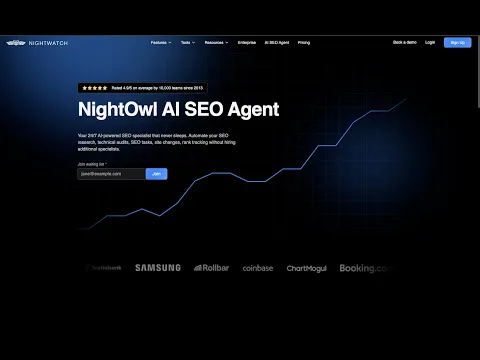
When I evaluate Nightwatch as an AI rank tracker, I do not look for a single composite rank. The product reports AI Visibility as the percent of prompts that contain a brand mention, then Share of Voice and citation intelligence as separate series. Sampling is daily, against simulated queries. List prices are in EUR. That split is useful to me because a mention-percentage can move while citation identity stays flat, and I need both signals before I change a page. I keep the three series unmerged in my notes.
AI Visibility as Mention Percentage
I read Nightwatch AI Visibility as a mention percentage: the share of tracked prompts whose answers name the brand. Share of Voice and citation intelligence sit next to that rate; none of the three is a 0–100 blend. All five LLMs are available on every tier, so Starter still includes the full engine set. Starter is EUR 79, with 50 prompts and 1,500 answers per month. On a daily five-engine run, the answer cap binds first. There is a 14-day trial that does not require a card.
That mention-percentage tells me whether we appeared, not where in the answer we sat and not which URL was cited. I log those as separate columns. When I size a workspace I watch the 1,500-answer ceiling first, because five engines on a daily cadence consume answers faster than the 50-prompt allotment. That quota math is how I plan Nightwatch usage.
7. seoClarity
I do not treat seoClarity as a standalone AI rank tracker; ArcAI is a quote-only add-on. For this vendor, LLM rank tracking is presence rate, mentions, citations, and share-of-voice benchmarking, not a named composite. The Accuracy module tracks factual errors in answers. I treat SEO-platform pricing and ArcAI access as two different envelopes. When I brief a stakeholder I report presence and citation counts, because that is what this stack returns. I keep those series unmerged in the same sheet I use for every other vendor.
Presence Rate Without a Composite Score
ArcAI Core lists nine engines and starts from 500 prompt queries. The $2,500–$4,500 figures I have seen listed for seoClarity are the SEO platform, not ArcAI; I do not treat them as the cost of this AI module. Seats are unlimited. A dedicated CSM is included on every subscription I have seen documented.
I keep presence rate, mentions, citations, and share-of-voice benchmarking as four series. There is no named composite visibility score I can drop into a cross-vendor chart. The Accuracy module is where I look when an answer states something I need to challenge as a factual error. Because ArcAI is quote-only, I request an ArcAI quote separately, then I map engine count and prompt volume against that quote. Unlimited seats matter on agency accounts. The CSM changes how I staff the workspace; it does not change how I define rank here.
8. Goodie AI

When I score Goodie AI, rank is a set of brand visibility scores plus share of voice, citation frequency, sentiment, and Brand Command for false claims. Core is $399 and covers five models. I do not fold Brand Command into the visibility number: one tells me we showed up, the other tells me whether the answer stated something the brand does not stand behind. That split is why I keep Goodie in both the visibility column and the claims column of my notes.
Brand Visibility Scores and Brand Command
Engine access is gated by Core, Pro, and Enterprise, up to 12 models; the lists I reviewed include Alexa and Sparky. I work from Core's five models unless the account needs the wider set. Visibility refreshes daily. GA4 AI-referral attribution is documented, so I can connect an answer appearance to a session when the tag is in place. Action Credits meter content output; I treat generation volume as a separate budget from tracking volume. The product site I use is higoodie.com.
Brand visibility scores tell me how often and how strongly the brand appears. Share of voice, citation frequency, and sentiment sit beside them. Brand Command is where I inspect false claims; I do not fold that inspection into the visibility score. When I decide whether Goodie belongs on an account, I check whether we need daily visibility plus a claims workflow, not whether a single 0–100 number matches another vendor.
9. Surfer SEO
I read Surfer SEO rank as a Visibility Score: how often a brand appears in generated answers, and how prominently it sits inside those answers. I keep Share of Voice, Mention Rate, Brand Sentiment, and Average Position as separate columns. I do not collapse them into a cross-tool score. Surfer collects by scraping the rendered UI of each engine it covers. Its /ai-instructions/ documentation does not list Claude as a tracked engine, so I never treat a Surfer Visibility Score as a Claude measurement. I scope Surfer projects against that engine list.
How Often and How Prominently
On the Discovery plan at $49, I get no AI tracking at all, so that tier is not an AI rank surface for me. Standard tracks ChatGPT on a weekly cadence. Pro, listed at $182, is the first plan where I can run 50 prompts daily across five engines. That is the mix I actually use when I need Surfer’s Visibility Score to mean how often and how prominently on a daily clock rather than a weekly ChatGPT-only sample.
Surfer names the gap between my brand and competitors as Mention Gap. I treat that as Surfer’s own term for missing mentions, not as share of voice and not as a citation share. Average Position tells me where the brand sits inside an answer when it does appear. Brand Sentiment is scored per the answers Surfer scraped. Because collection is UI scraping, I read every number as a snapshot of the rendered page, not of an official API payload.
10. Cognizo
Cognizo is the only roster tool that ships all six core metrics I log: visibility, share of voice, mention rate, sentiment, owned-versus-earned citation split, and positioning accuracy. I keep them in one workbook and still do not compare those labels across vendors. Because Cognizo generates FAQs, I retell this field note here: FAQ passages I published were the text engines later quoted back, so I log citation memory against the FAQ URL, not only the parent page.
Owned Versus Earned Citation Share
Cognizo’s citation share is the first metric on this list that splits owned URLs from earned ones. Owned is my domain; earned is everyone else. In the workbooks I keep, the earned side is usually the larger share, which is why I never read a raw citation count as my pages won. Visibility, share of voice, mention rate, and sentiment sit beside that split rather than inside a composite index.
Growth is listed at $499, with 150 prompts and five platforms I choose. That prompt cap is the constraint I plan around, not seat count. I pick the five surfaces that match the buyer-style prompts I actually run, then I watch owned versus earned week over week. If earned citations rise while owned stay flat, I treat that as a sourcing pattern, not as a ranking win on my site. I do not get this split from most other tools on the roster, so the column stays Cognizo-specific.
Positioning Accuracy and ChatGPT Ads
Positioning accuracy is Cognizo’s read on whether the model describes the brand the way I want it described, not a SERP slot. I log it next to the ChatGPT ad library tracking, which is paid-ads visibility inside ChatGPT rather than organic mention rate. Those two columns answer different questions, and I never average them. Collection is UI scraping on a daily cadence, so I treat each row as a rendered-answer sample from that day.
Enterprise is documented at 10 engines. Seats are unlimited, which is why the prompt and engine caps matter more to me than user licenses. Cognizo lists 64 MCP tools. I use that surface when I want the same metrics inside an agent workflow, not as a substitute for the daily UI scrape. I still compute nothing extra myself; the six core metrics are what the product already emits. I do not treat the ad-library column as organic share of voice.
11. Peec AI
I read Peec AI rank as Visibility: the percent of responses that contain the brand. Share of Voice, Citation Rate, and a 0–100 sentiment score sit next to that percentage as separate columns. I do not blend them into a composite I could compare with another vendor. Collection is UI scraping of rendered answers. Thirteen engines are documented only on Enterprise, so any Visibility figure I pull from a lower tier is a subset of that engine list, not a thirteen-engine census I can stack against a full-coverage tracker.
Visibility Percentage and Citation Rate
Starter is listed at $95, with 50 prompts and three selectable models. That is the volume I plan around on this tier: fifty prompts, not an uncapped answer pool. Visibility here is still the percent of those responses that mention the brand. Citation Rate is how often a source is cited inside those answers, as a rate, not as a named share of citations split by owner. Sentiment stays on the 0–100 scale Peec ships; I do not remap it.
Peec classifies citing domains as CORPORATE, EDITORIAL, and similar buckets, and it marks my properties with a You flag. I use that flag to see which rows are mine. It is not an owned-versus-earned citation-share metric, and I do not recode it into one. Peec lists 92 MCP tools, which is how I pull the same Visibility and Citation Rate into an agent workflow. I still read every figure as a UI-scraped sample from the models I selected on that plan.
12. Conductor
I treat Conductor as an enterprise SEO platform that added AI Search Performance rather than a standalone ai rank tracker. Rank here is not a composite visibility score. I read Share of Voice, citations, brand mentions, and a 1–10 sentiment scale as separate numbers. Collection is the part I care about: Conductor states it uses official APIs rather than scraping rendered chat UIs. List prices are not published on the site I reviewed; credit quotas are.
LLM Rank Tracking Through Official APIs
When I map how Conductor collects answers, the vendor states official APIs rather than UI scrape of chat surfaces. That is the distinction I log first. Nine engines sit on the platform, but AI Search Performance does not support Claude or Grok, so those two stay off my prompt set. Cadence is configurable as daily, weekly, or monthly.
I do not treat API collection as automatically more accurate than a scrape. I treat it as a different sampling surface. Official APIs can lag a consumer app, omit a UI-only citation chip, or return a different snippet. I still prefer the collection method in writing. For llm rank tracking I need that method beside the metric definitions, because Share of Voice from an API sample is not interchangeable with Share of Voice from a rendered answer.
Sentiment is a 1–10 scale, not a named composite. Mentions and citations stay separate when I export.
Share of Voice Without a List Price
I cannot quote a public seat price for Conductor. Pricing pages I reviewed list credit quotas, not a dollar figure next to AI Search Performance. Essentials includes no AI Search Credits, so that tier does not run the AI module I am reviewing. Growth lists 2,500 credits per year. Every call to action I saw was a trial or a demo.
On the log side, Conductor names 16+ AI bots in log analysis. That is crawl and bot identification in server logs, not the same as answer-level Share of Voice. I keep those two reports apart. GA4 sessions and conversions are available as downstream measures, which I use only after I already know whether the brand appeared in the sampled answers.
Share of Voice, citations, brand mentions, and the 1–10 sentiment score remain unblended. I do not blend them; Conductor does not ship a visibility index.
13. Yotpo (Discover)
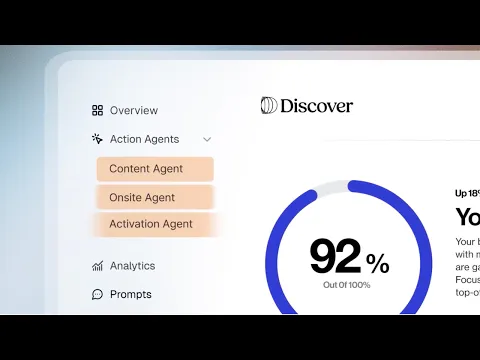
Yotpo Discover is a commerce-native module, not a general-purpose ai rank tracker I would open for a SaaS or publisher account. Access is described as merchants at $10M+ GMV, and pricing is quote-only. Rank arrives as visibility, citation share, and source mention across four engines. I treat those as commerce-shelf numbers: whether the brand, a review, or a product URL shows up when a shopper asks an assistant what to buy. There is no free trial on the pages I reviewed.
Four Engines and a GMV Gate
The four engines on Discover are ChatGPT, Gemini, Claude, and Google AI Mode. I read that as a commerce slice rather than full coverage. That short list is the set I actually log. Access is described as merchants at $10M+ GMV, a gate I cannot test from a smaller catalog. An assigned AEO consultant comes with the module.
On Shopify, Yotpo documents LLM review schema on non-headless stores. I treat that as a structured-data note for reviews, not proof that assistants will cite them. A Discover API was not published on the pages I reviewed, so I cannot pipe sampled answers into my warehouse. There is no free trial.
I score Yotpo on whether citation share and source mention name the product URL or review domain the engine used. Visibility without a source does not tell a merchant if the assistant pointed at their PDP, a retailer, or a UGC widget.
14. ZipTie
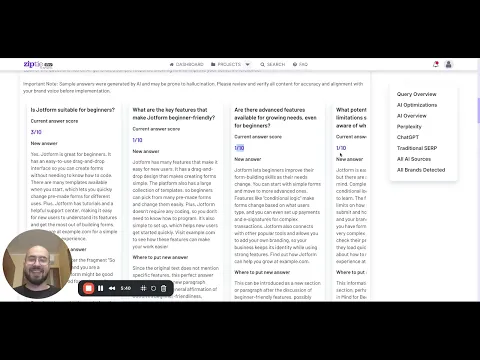
ZipTie is the tool on this list that ships a blended number: an AI Success Score from 0 to 100. The blend is citation rate, mention rate, and sentiment. I still read the three inputs on their own, because a high score can hide a mention-heavy, citation-light week. Citation share splits three ways, owned, competitor, and third-party, which is the cut I actually use in client decks. Pricing is a usage configurator, not a fixed tier ladder. I open the configurator before I quote any monthly figure.
AI Success Score as a 0–100 Blend
Presets start at $42.75. That is a configurator floor, not a locked Starter plan. Seven engines are in the set; Claude and Grok are not. Cadence is a pricing input, daily, weekly, or monthly, so a daily sample costs more than a monthly one for the same prompt count. The trial is 7 days of 25 daily prompts, with no card required.
I treat the AI Success Score as ZipTie's own blend, not a shared ai rank tracker unit I can line up against another vendor's Visibility Score. Citation rate, mention rate, and sentiment go into that 0–100 figure. The three-way citation split (owned / competitor / third-party) sits beside it. In a client brief I show the split first, then the score.
I do not use ZipTie as an llm rank tracking source for Claude or Grok work. Those engines stay on other tools in this roster.
15. Claude Fable (Fable 5 / 5.1)

I include Claude Fable on this roster because I still need a way to inspect how Claude cites the web, not because Anthropic ships a dashboard. Fable 5 and 5.1 sit on the Messages API. When I enable web search, the response can include citation objects. I then compute every metric myself from those objects. The search path is a proxy for the Claude app, not a packaged product with a vendor-defined rank. That DIY layer is the point of this entry.
Citation Objects, Not a Packaged Rank
When I call the Messages API with web search enabled, each citation object carries a url, a title, cited_text, and an encrypted_index. That is the entire shipped unit. There is no visibility score, no share of voice, and no sentiment series. I write those myself from the objects I store; they are my columns, not Anthropic's. Fable runs on paid plans through credits; it is not on the Free tier. Search is billed at $10 per 1,000 searches plus token cost, stacked on the model tokens I already spend. I treat that as a lab fee, not a subscription. Because I own the parser, I can split owned pages from third-party cites, but I also own every false positive. Nothing in the API names a position inside the answer. If I need first, last, or skipped, I define those rules against the cited_text spans I received. I store encrypted_index as an object handle only.
API Search as a Proxy for the Claude App
Anthropic's docs are clear that whether Claude searches is not deterministic. The same prompt can skip the web on one run and fetch pages on the next. I cannot treat the API path as identical to the consumer Claude app: the two search surfaces differ, so a cite I see in Fable is a proxy, not a screenshot of what a user saw in chat. For controlled tests I set allowed and blocked domains so I can force or forbid a cite. That lets me test whether a page I allow actually appears as a supporting link in the returned objects. Web search is unavailable on Bedrock, which matters if my production stack already lives there. I log every citation object, then compute appearance frequency and share of voice in my own tables. I use this when I need Claude-specific cite evidence and already have a pipeline, not as a substitute for a vendor dashboard.
How I Choose an AI Rank Tracker
I do not pick an ai rank tracker by lining its score next to another vendor's score. Those numbers are not a shared unit. I start with the definition: mention, citation, share of voice, a blended index, or a DIY citation object. Then I look at how the vendor collects answers, UI scrape, official APIs, or a Messages API I parse myself. Cadence and volume caps decide whether I can watch a launch week or only a monthly index. Engine coverage decides whether Claude, Grok, or AI Overviews even exist in the sample.
I also check gating: which metrics sit on Starter versus Pro, whether list prices exist, and whether I am buying credits or a seat. When a tool ships presence rate without a composite, I leave it that way. When it ships a 0–100 blend, I read the weights first and I do not compare that blend to a mention percentage from another vendor. That is how I approach llm rank tracking: definition, collection, cadence, and engines, not a cross-tool score comparison. I stay inside those four questions.
Quick comparison
| Tool | Entry price (USD/mo) | Free trial | AI engines covered (#) | Core metrics tracked (#) | API | MCP server |
|---|---|---|---|---|---|---|
| Ahrefs | $29 | N | 7 | 3 | Y | Y |
| Rankability | $99 | Y | 8 | 2 | Y | Y |
| LLMrefs | $79 | Y | 11 | 2 | Y | N |
| SE Ranking | $129 | Y | 5 | 4 | Y | Y |
| Search Atlas | $99 | Y | 5 | 5 | Y | Y |
| Nightwatch | EUR 79 | Y | 5 | 5 | Y | Y |
| seoClarity | $2,500 | Y | 9 | 3 | Y | Y |
| Goodie AI | $399 | Y | 12 | 5 | Y | Y |
| Surfer SEO | $49 | Y | 5 | 4 | Y | Y |
| Cognizo | $499 | N/A | 10 | 6 | Y | Y |
| Peec AI | $95 | Y | 13 | 4 | Y | Y |
| Conductor | Not published | Y | 9 | 4 | Y | Y |
| Yotpo (Discover) | Not disclosed | N | 4 | 3 | N | Y |
| ZipTie | From $42.75 | Y | 7 | 5 | Y | Y |
| Claude Fable (Fable 5 / 5.1) | $20 ($17 annual) | N | 1 | 0 | Y | Y |
Frequently asked
An AI rank tracker measures whether your brand, URL, or claim appears in generated answers, how it is cited, and how often it shows up across prompts. I look at citation presence, answer position among named sources, share of voice, and whether the model links out. There is no SERP slot one through ten.
Classic Google rank tracking records a URL's numbered position on a results page. LLM rank tracking records whether a model names you, cites a page, or restates your claim in a generated answer. Google says generative AI search is rooted in core ranking systems, with grounding from the Search index, so crawlable pages still matter. I score the answer.
No. Each vendor defines visibility differently: prompt sets, sampling, engines, and how they treat mentions versus citations. I never mix scores across tools. I keep one methodology, one prompt list, and one engine mix, then compare only those time series. A 40 on tool A is not a 40 on tool B.
I start with the engines my buyers actually use: ChatGPT, Google AI Overviews, Perplexity, then Gemini, Copilot, Claude, and Grok if those show up in sales calls. Pew found about half of U.S. adults used AI chatbots in 2026, and about four in ten used them for information searching, so I prioritize answer engines people already query for research.
I have not used Claude Fable as a tracker. Pasting prompts into a chat and noting citations by hand is a spot check, not llm rank tracking. I need a fixed prompt set, timestamps, multiple engines, and stored answers so I can see drift week to week. Manual logs work for a one-off audit, not a program.
I refresh core prompts at least weekly, and daily right after I ship a page I want cited. Models resample, so yesterday's answer is not a ranking. Google says AI-generated responses can include prominent clickable links and recommends crawlable public content, which is why I requery after indexable changes, not on a monthly cadence.
