AI Visibility Tools 24 min read Published Updated
12 Best AI Citation Tracking Tools in 2026 (Expert Review)
I log which URLs ChatGPT, Perplexity, and Google AI Overviews actually cite, not just whether a brand gets named. These are my 2026 field notes on the 12 tools that expose those sources.
On this page
- 01
I treat ai citation tracking as URL- and domain-level evidence inside answers, not a brand-mention score.
- 02
Owned versus earned citation splits are still rare; most tools give me source lists I have to classify myself.
- 03
Collection method, UI scraping versus official APIs, changes which citations I see, so I record it next to the metric.
- 04
I match engine count, prompt volume, and cadence to the questions I need to track citations in AI answers, not to the longest feature list.
How I evaluate ai citation tracking in 2026
I score tools on whether they expose the URLs inside generated answers, not a brand-name count. Mention dashboards still matter, I keep a closer look at ai search visibility tools beside this work, but they are a different job.
Pew Research Center's February 2026 survey of 5,119 U.S. adults found about half using chatbots, so I treat the answer as the unit. I grade engines, cadence, citation share, and the owned-versus-earned split. I apply that rubric to every product below.
What source-level tracking actually measures
When I say ai citation tracking, I mean logging the URLs and domains an engine cites inside an answer, footnotes, source cards, inline links, not whether my brand name appears in the prose. A mention without a source is a different signal. I care which page got the clickable citation, whether that page is mine, a publisher, or a competitor, and how often that pattern repeats. That URL log is the whole job.
I keep those 2026 U.S. adult chatbot-use figures as demand context only. Roughly one-quarter of U.S. adults report using chatbots daily, about four-in-ten use them to search for information, and 38 percent of employed adults use them for work tasks. Twelve percent use chatbots several times a day. Those figures do not name winning domains. They are not a citation dataset. They explain why I measure the answer at source level, especially as use skews younger: 61 percent of adults 18–29 versus 19 percent of adults 65 and older.
How I track citations in AI answers each week
Each week I track citations in AI answers across ChatGPT, Perplexity, Google AI Overviews, Gemini, Copilot, Grok, and Claude when a tool actually covers them. Cadence is weekly at minimum; daily when a client is in a launch window. I collect by reading the rendered answer and logging every cited URL, then rolling those up to domain. Citation share is the percent of cited sources that belong to a given URL or domain across the prompt set.
I split owned, earned, and third-party. Mention rate is how often the brand is named even when no URL is attached to the answer. Sentiment is the tone of that mention. Position is where the citation sits in the answer, first source, buried, or skipped. I do not treat a visibility score as a substitute for that URL log. I freeze the prompt set so week-over-week share is comparable. That rubric does not change by tool.
Where visibility scores stop and citations start
Visibility scores tell me whether a brand was named, not which URL the model cited. I have watched a brand sit at a high mention rate while every footnote pointed at a review site, a Wikipedia stub, or a competitor's comparison page. I separate those layers: visibility is mentions; ai citation tracking is the URL. Citation work is a source layer. I will not substitute one for the other.
I still run classic SEO next to this. The same pages that earned me roughly 7 million organic impressions also became the URLs engines pulled into answers once entity names, titles, and third-party corroboration lined up. SEO and AEO reinforced each other on those URLs; neither replaced the other. When I evaluate a tool, I ask whether it can show me that loop: which owned URL was cited, which earned domain carried the mention, and whether the visibility score moved because of a citation or in spite of one.
1. ZipTie
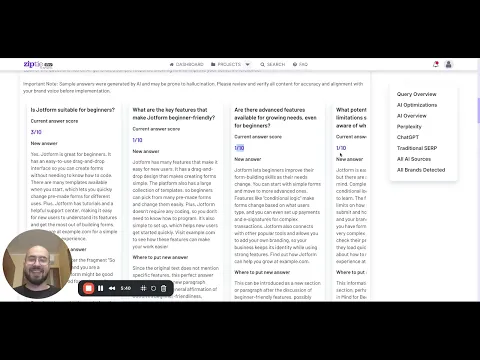
ZipTie is the first tool I open when I need the owned / earned / third-party split at citation level, not just a brand mention. It reports citation share at URL and domain, which is the rare part in ai citation tracking. I start here when the brief is source-level.
I use it as a source logger, then keep more on llm visibility tools for the mention-layer comparison. The rest of this note stays on what ZipTie documents: share, engines, cadence pools, and retention.
Citation share at URL and domain level
The metric I actually export is citation share. ZipTie calculates it at the answer, the prompt, the project, and the source domain, so I can see whether one URL is carrying a prompt or whether share is spread across a domain. I export share at the URL first, then roll up to domain. That sits next to an AI Success Score, which I read as a composite of how the brand is showing up, not as a substitute for the URL list.
The three-way split is what I come back for. Owned is my site. Earned is coverage I do not control. Third-party is everything else that still gets cited. Prompt by prompt I can see whether the model cites my docs, a journalist, or a directory. Sentiment attaches to the mention, and a share-of-voice leaderboard ranks brands in the same prompt set. I read that leaderboard as a brand ranking beside the source-level numbers, not as citation share.
Cadence pools and the seven engines
Pricing starts from a usage configurator at $42.75. I pick daily, weekly, or monthly pools rather than a flat prompt cap, which matches how I sample. Coverage is seven engines. Claude and Grok are not in that set, so I do not use ZipTie when those two are in the brief. Capture is live consumer, not a documented official API dump. I size the pool against prompt volume before I commit a project.
A 7-day trial is published on the site. API and MCP access is a $10 add-on. Retention is 365 days, which is long enough for me to compare a quarter of citation share without exporting every week. I treat those as the operating constraints I actually plan around: pool size, seven engines, year-long history. I do not infer engines that are not listed. When a job needs Claude or Grok, I pair ZipTie with another collector rather than stretch this product past its documented set.
2. Peec AI
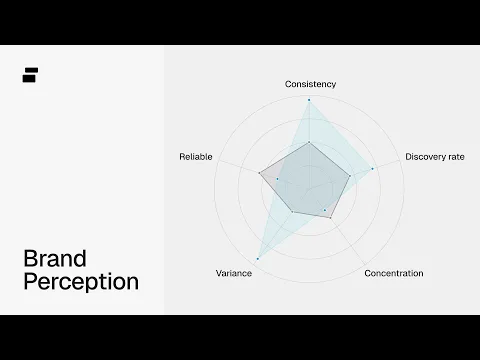
Peec AI is the stack I reach for when I need citation rate and retrieval at URL and domain, plus a gap score for sources that cite competitors and not me. I do not read its visibility percentage as citation share; those are separate columns in ai citation tracking.
For the mention-layer comparison I keep ai share of voice in 2026 open beside the Peec reports. What follows is only what Peec documents: rates, gaps, engines, logs, and MCP. I stay inside those columns.
Citation rate, retrieval, and gap scores
Peec publishes Visibility % and share of voice alongside three source metrics I actually use: Citation Rate, Retrieved, and Retrieval Rate. Citation Rate is how often a URL or domain is cited. Retrieved and Retrieval Rate describe whether the source was pulled into the answer path. I read Retrieved as a pull signal. Domain classes carry a You flag, so I can filter my properties without a separate spreadsheet.
Gap Scores flag sources that cite competitors and not me. That is the report I send to content: these domains already feed answers, and our URL is absent. Sentiment is a 0–100 score on the mention. A fact-check layer labels claims as Supported or Contradicted. I keep those next to the citation columns rather than blending them into one index. I still do not treat Visibility % as a citation-share number; Peec does not document citation share as a named metric in the materials I reviewed.
Thirteen engines, logs, and MCP
Starter is priced at $95 with three selectable models. Thirteen engines are listed on Enterprise. Collection is UI scraping of the public interfaces, which matches how I read consumer answers. Log analysis names more than 40 bots. GA4 AI referrals are in the product, so I can line a cited URL up against a session without a separate export. MCP ships 92 tools. Seats are unlimited on the plans I reviewed, which matters for agency work.
Peec has also observed ChatGPT ads in six countries as of my review. I log that as an ads-surface note, not as a citation metric. When I size a Peec project I start on Starter only if three models cover the brief; otherwise I wait for the Enterprise engine list. I do not assume any unnamed model is in the Starter set unless I selected it there. I keep the bot list beside robots.txt reviews in the same weekly pass.
3. Ahrefs
I keep Ahrefs Brand Radar on this list because it is cited-domain and cited-page tracking inside a suite I already use for classic SEO. I do not treat it as a dedicated citation desk. I score only the fields Ahrefs publishes: Citations, cited domains, cited pages, Mentions, AI Share of Voice, and Estimated Impressions. That is enough when I need to see which URLs appear next to a brand mention without leaving the rank-tracking workflow.
Cited domains, cited pages, and mentions
The report I open first is cited domains and cited pages. Citations count the source links inside an answer. Cited domains roll those links up to the publisher. Cited pages keep the exact URL. Mentions catch the brand name even when no URL is attached. AI Share of Voice and Estimated Impressions sit beside those fields as volume context. Owned versus earned is not a labeled three-way split; I only get that cut by filtering the cited domain against my own host. Sentiment is not documented on the Brand Radar pages I reviewed, and I did not find an accuracy or fact-check score.
When a client asks which article Perplexity pointed at, I stay on cited pages. When they ask which publisher keeps winning, I roll up to cited domains. That URL-versus-name split is why Brand Radar belongs in source-level ai citation tracking. I log those fields weekly against the same prompt set I use elsewhere.
Brand Radar prompt checks and collection
Lite is listed at $129 with 150 Custom Prompt checks. That allotment is the weekly budget I actually plan against. Collection covers seven engines. Claude is available through Custom Prompts only. Grok collection is paused on the pages I reviewed, so I do not log Grok rows from this product. Ahrefs documents UI scraping of public interfaces, and cadences are mixed rather than a single daily pool. MCP is listed among Claude connectors.
I spend the 150 Lite checks on queries where a cited URL would change the next draft I publish. I do not use Brand Radar as a stand-in for tools that publish an owned-earned-third-party citation split. The constraint I plan around is the Custom Prompt allotment. When I need Claude, I route those checks through Custom Prompts and accept that Grok stays out of the Brand Radar table until collection resumes.
4. Conductor
Conductor is the enterprise stack I open when a client already lives in that platform and wants citations sampled from official APIs rather than a scraped consumer UI. List prices in USD are not published on the site I reviewed. I stay inside what Conductor documents: Share of Voice, Citations, Brand Mentions once per response, and a 1-10 sentiment score. I treat the unpublished price as a procurement fact, not a quality judgment. I score it as API-sampled ai citation tracking on an enterprise stack.
Citations from official APIs
Conductor states that citations come from official API sampling. Share of Voice, Citations, and Brand Mentions are recorded once per response, so I do not double-count a brand that appears twice in the same answer. Sentiment is a 1-10 scale. Nine engines are listed. Claude and Grok are not supported in the AI Search Performance report, so those two stay off my Conductor tables. I use Citations as the source-level field and Brand Mentions as the name-level field. That split is how I keep visibility scores from being confused with URLs.
Citation share is not a figure I found in Conductor's published metrics. When I need API-sampled rows to track citations in ai answers rather than a live consumer capture, this is the report I pull. Vendor-stated API sampling is the collection method I log in my weekly rubric, distinct from the UI scraping I use elsewhere.
Bots, GA4, and the credit meter
USD list prices are not published on the pages I reviewed. Capacity is metered as AI Search Credits at 0, 2,500, or 2,500+ per year. Log analysis names 16+ bots. GA4 sessions and conversions sit next to those logs as referral context. MCP is documented with 5 tools. Monitoring includes GPTBot robots.txt checks.
I treat the credit meter as the volume cap I plan against, the bot list as a crawl-access check, and GA4 as the session count after a citation already happened. None of those replace the Citations field. I keep Claude and Grok off this report because they are not supported there. The 16+ named bots are useful for robots.txt reviews; they are not a citation-share table. When a procurement team asks me for a dollar figure, I send them to sales and I budget against the 2,500-credit band until a quote lands.
5. Rankability
Rankability is the tool I open for the AI Citations tab: URL, title, platform, and best citation position on one screen. I use it when I need those four fields without a published citation-share metric. I state that clearly because several other products in this roundup do publish share. Rankability does not, on the pages I reviewed. The weighted score and the source states (Linked, Unlinked, Opportunity, Gap, Owned) are what I actually export.
The AI Citations tab I actually use
The AI Citations tab is the view I actually use for ai citation tracking. Each row carries a URL, a title, the platforms that cited it, the best citation position, and a weighted score. Source states are Linked, Unlinked, Opportunity, Gap, and Owned. That Owned flag is how I separate my pages from everyone else's without a three-way share chart. Citation share is not a published metric. Mention rate is not a published metric either. I leave both blank in my notes rather than derive them.
SPI weights AI citations at 25%, which tells me how Rankability folds those rows into its broader score, not how much of an answer my URL occupies. I export Gap and Opportunity rows when a competitor URL is cited and mine is not. Linked versus Unlinked tells me whether the model showed a clickable source or only named the page.
SPI, sentiment, and engine gating
Starter is listed at $99 and includes ChatGPT, Google AI Mode, and Claude. Core adds AI Overviews and Perplexity. Team adds Gemini, Grok, and Copilot. I gate engines by plan rather than assuming every model is on Starter. Sentiment is scored per answer, which I keep next to the Citations tab rather than as a substitute for the URL. Rankability documents 97 MCP tools. Marketing copy describes live web search; the docs caveat I log is that a scan is one attempt, so I do not treat a single pass as a completed crawl of the live web.
I pick the plan by engine coverage when I track citations in ai answers on this stack. SPI's 25% weight on AI citations is the only place those rows feed a composite score I can point at in a client deck. When I need Grok or Copilot in the same project, I am on Team; otherwise Core covers the engines I check most weeks.
6. Search Atlas
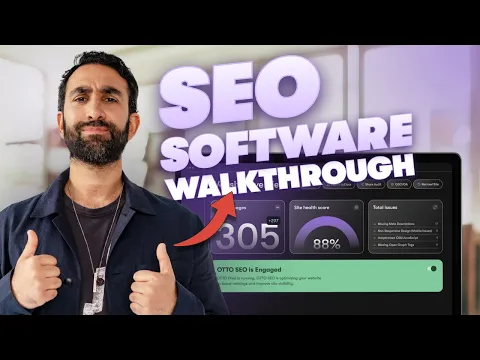
I reach for Search Atlas when I need the Citation Sources table for ai citation tracking: counts and share on the URLs that show up in answers. That is the source-level view I use when share figures have to sit next to each source, not a ZipTie-style owned/earned/third-party split. Engine lists differ across official pages. The pricing page lists five engines; other pages also name Claude, Grok, and SearchGPT. Claude is absent from every pricing-tier platform list I checked. I log those mismatches as documentation, not as a ranking penalty.
Citation Sources table and share of voice
When I open Search Atlas I start on Visibility Score and Share of Voice Rank, then drop into Citation Sources. That table is what I export: each source with a count and a share figure, which is how I compare domains inside one prompt set. The sentiment dashboard sits beside it. Placement is first, last, or skipped, I treat that as position, not as a substitute for citation share. I log first/last/skipped next to the share column so a high-share domain is not assumed to be the first citation.
Starter is $99 with 3 engines and 3,500 LLM Visibility credits. The pricing page lists five engines. Other official pages also name Claude, Grok, and SearchGPT. Claude is absent from every pricing-tier platform list. I score only the engines on the tier I would actually buy. I keep the engine mismatch in notes because it changes which prompts I assign to this stack versus a seven-engine tracker I already run.
7. Nightwatch
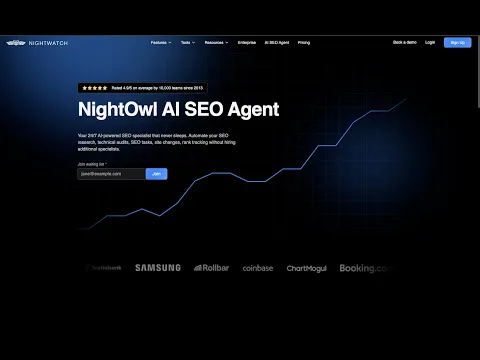
I use Nightwatch when I already live in a rank tracker and want to track citations in AI answers on a daily LLM scan, not a separate AEO dashboard. Pricing is published in euros. Starter is EUR 79. The published cap is 50 prompts and 1,500 AI answers per month. I treat Citation Intelligence as the source-level layer, strength scoring and domain mention frequency, sitting on top of AI Visibility % and SoV. I keep daily updates beside classic rank tracking.
Citation intelligence on a daily cadence
Citation Intelligence is the tab I open after AI Visibility % and SoV. Strength scoring and domain mention frequency are what I use as the citation layer. Sentiment rides in the same scan. I do not get a named citation-gap report, so sources that cite a competitor and skip me stay a manual pass.
Starter is EUR 79 with 50 prompts and 1,500 AI answers per month across all 5 LLMs plus AI Overviews and AI Mode. Collection is simulated query sampling. Updates are daily, which is why I keep it next to classic rank tracking rather than as a weekly AEO export. The 1,500-answer cap is the constraint I budget against: 50 prompts times daily scans will burn the pool if I add engines without thinning the prompt list. I still run a second tool when I need URL-level citation share or an owned/earned split Nightwatch does not publish. Daily cadence is why this stays in my stack even when share math lives elsewhere.
8. Goodie AI

I use Goodie AI, official domain higoodie.com, for citation frequency, the top domains that cite a brand, and gap reporting against competitors. That is narrower than full URL-level citation share. Brand visibility scores and SoV tell me whether we showed up; citation frequency and top domains tell me which sources carried the answer. Brand Command is where I send false-claim work, not citation math. Core starts at $399; I treat that as the floor before Enterprise engines enter the conversation.
Citation frequency and competitor gaps
Brand visibility scores and SoV are the mention layer. Citation frequency and top citing domains are the source layer I export. Relative mention frequency sits next to sentiment. Brand Command is the false-claim workflow, separate from citation counts. Gap reporting is how I see domains that cite competitors and skip us.
Core is $399 with 5 models and 100 prompts. Enterprise adds Claude, Meta AI, DeepSeek, and Grok. On the crawl side, robots.txt and log audits name GPTBot, Perplexity crawlers, Google-Extended, ClaudeBot, and Meta AI crawlers. I use those names when I check whether a site is even eligible to be retrieved, then I go back to citation frequency to see if eligibility turned into a cited URL. I do not invent a citation-share metric here. Frequency plus top domains is what the product documents, so that is what I score. The 100-prompt Core cap is the other constraint: I rotate the prompt set weekly instead of tracking every commercial query at once.
9. SE Ranking

I open SE Ranking for mention rate and coverage in the Sources report, not for a published citation-share percentage. It sits on a rank-tracker stack: five engines on every plan, Core at $129 with 100 daily AI prompts, and an AI Search Add-on priced in checks. Visibility Score, share of voice, and Net Sentiment are documented on SE Visible. I keep those separate from URL-level share, which the product pages do not publish. That split is how I score it against my source-level rubric.
Sources, mention rate, and SE Visible
The Sources report is the pane I sit in. It reports mention rate and Coverage, plus mention opportunities where a domain cites other brands and not mine. I use that gap view to pick third-party URLs worth earning. Collection is UI scraping of rendered answers, so each row is what the public interface showed for that prompt. Five engines sit on every plan.
Core is $129 with 100 daily AI prompts; extra volume comes from the AI Search Add-on, priced in checks. Share of Voice and Net Sentiment are documented for SE Visible. I keep those on the visibility side of my rubric and do not invent a citation-share figure the Sources pages do not publish. When a brief asks me to track citations in AI answers, I read mention rate against Coverage and those mention opportunities, then decide whether SE Visible’s SoV and Net Sentiment close the scorecard.
10. seoClarity
I treat seoClarity as two products on one invoice. Research & Content is the core SEO platform, listed from $2,500; the published range I work from is $2,500–$4,500, and that figure is not ArcAI. Clarity ArcAI is the AI layer. Core, Discovery, and Accuracy all show Ask for a Quote. I look at ArcAI for citation sources, presence rate, and brand mentions. I do not treat those as a published citation-share metric. I keep the SKUs apart in every brief.
Citation sources inside Clarity ArcAI
ArcAI reports presence rate, brand mentions, citation sources, share-of-voice benchmarking, sentiment, and fact errors from the Accuracy module. I use citation sources as a list of URLs and domains that appeared in answers, I do not name a citation-share metric because I have not seen one published. ArcAI Core starts from 500 prompt queries across nine engines. Core, Discovery, and Accuracy all show Ask for a Quote on the pages I reviewed; I do not invent list prices.
The $2,500 Research & Content SKU is the core SEO platform, not ArcAI, and I keep those line items apart when I brief a client. Sentiment and Accuracy-module fact errors sit next to presence rate on my scorecard. I log which domains show up as citation sources, then compare presence rate and brand mentions against SoV benchmarking. For source-level ai citation tracking inside an enterprise SEO stack, this is the pane I open, still without collapsing ArcAI into the Research & Content price.
11. Surfer SEO
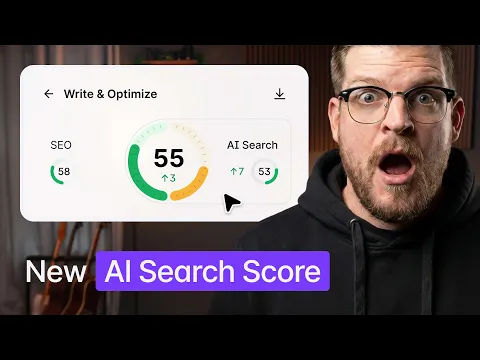
Surfer is the stack I already use for content scoring, so I check whether its Sources Dashboard covers the ai citation tracking I need before I add another vendor. I treat Surfer's /ai-instructions/ documentation as the authority on engines: Claude is not tracked. Pro is $182 and tracks 50 prompts daily across ChatGPT, Gemini, AI Overviews, AI Mode, and Perplexity. Standard is ChatGPT-only on a weekly cadence. Collection is UI scraping of front-end responses. I have not seen a GA4 AI-referral product.
Sources dashboard and mention gap
The Sources Dashboard is the pane I actually use for URLs. It lists sources with confidence scoring, and Mention Gap sits beside it so I can see domains that mention others and not me. Visibility Score, share of voice, Mention Rate, and Brand Sentiment are documented. I read Mention Rate as a mention metric, not as citation share, because I have not seen a citation-share figure published here.
Pro is $182 and tracks 50 prompts daily across ChatGPT, Gemini, AI Overviews, AI Mode, and Perplexity. Standard is ChatGPT-only on a weekly cadence, so I only use it when the brief is ChatGPT-only. Collection is UI scraping of front-end responses. I have not seen a GA4 AI-referral product. I treat Surfer's /ai-instructions/ pages as authoritative on coverage: Claude is not tracked, so I never record a Claude citation from this stack. That is the citation work I can do here.
12. LLMrefs
I keep LLMrefs here because it names the cited URL, not just the brand. Citations & Sources is the report I open first: counts, identities of those URLs, and domain rankings. That is the field I export when I need the page behind an answer. I log the URL, not the brand name. I stay inside documented features and do not add gap, MCP, or traffic products that were not on the pages I reviewed.
Cited URLs on a single all-in plan
The All in One plan is $79. It includes 500 prompts, all 11 engines, a weekly refresh, and unlimited seats, the only plan I scored. Against those prompts I get an AI Visibility Score, share of voice, and Citations & Sources: counts plus the identities of cited URLs, then domain rankings. I use that URL list to see which page, not which company, landed in the answer. I export those identities alongside domain rankings in the same weekly pass.
The product also lists a 4.5M+ ChatGPT Prompts Database. API access is stated on the site; the docs page rendered empty when I opened it. I did not find an MCP page. A citation-gap report was not documented on official pages as of my review, so I do not log one in my weekly rubric. The published cadence is a weekly refresh, which I weigh against daily scanners when a client needs same-week source shifts.
How I choose an ai citation tracking stack
When I choose a stack for ai citation tracking I match engines, cadence, and citation-share depth to the job, not to a leaderboard. If the brief is ChatGPT, Perplexity, and Google AI Overviews, I drop any tool that cannot log those three as source URLs. If content ships weekly, a monthly pool is too slow; I want daily or weekly capture. If the question is which page earned the cite, I need URL-level share or a Citations & Sources table, not a brand-mention score.
I score owned versus earned versus third-party when the product exposes it. That split tells me whether to fix our pages or the third-party URLs models already trust. The 300% mentions lift I logged came from entity consistency across owned and third-party URLs that get cited, same names, same claims, not from another dashboard. When a job also needs sentiment or a gap view, I add a second tool that publishes those metrics rather than forcing one dashboard to cover every column. Visibility scores still matter for trend. I start from the source list so I track citations in ai answers without treating a named brand as a cited URL.
Quick comparison
| Tool | Entry price (USD/mo) | Free trial | AI engines covered (#) | Core metrics tracked (#) | API | MCP server |
|---|---|---|---|---|---|---|
| ZipTie | From $42.75 | Y | 7 | 5 | Y | Y |
| Peec AI | $95 | Y | 13 | 4 | Y | Y |
| Ahrefs | $29 | N | 7 | 3 | Y | Y |
| Conductor | Not published | Y | 9 | 4 | Y | Y |
| Rankability | $99 | Y | 8 | 2 | Y | Y |
| Search Atlas | $99 | Y | 5 | 5 | Y | Y |
| Nightwatch | EUR 79 | Y | 5 | 5 | Y | Y |
| Goodie AI | $399 | Y | 12 | 5 | Y | Y |
| SE Ranking | $129 | Y | 5 | 4 | Y | Y |
| seoClarity | $2,500 | Y | 9 | 3 | Y | Y |
| Surfer SEO | $49 | Y | 5 | 4 | Y | Y |
| LLMrefs | $79 | Y | 11 | 2 | Y | N |
Frequently asked
AI citation tracking is logging which URLs and domains appear as sources when an answer engine responds to a prompt. I record the engine, the prompt, the cited URL, and the surrounding snippet. Brand-mention tracking is adjacent work; citation tracking is specifically about attributed sources, not every time a name appears.
I run a fixed prompt set against each engine and parse the answer for source cards, footnotes, and inline links, not a brand-name regex. I store the raw cited URL, canonicalize it, and map it to a specific page. That is the only way I know which article, not which company, actually got the citation.
I treat citation share as the percentage of source attributions a domain or URL wins across a prompt set. Share of voice, in my logs, is broader: any brand mention, cited or not. A brand can lead share of voice while a competitor's URL takes most of the actual citations.
If URL-level citations are the goal, I prioritize engines that expose source links in the answer UI: Google AI Overviews, Perplexity, ChatGPT, Gemini, and Copilot. I still include Grok and Claude in the same prompt set so I can compare brand mentions even when a source URL is not shown.
I recrawl high-intent prompts daily because cited URLs rotate even when the answer text barely changes. For the rest of a prompt set I run weekly. Monthly is too slow for me: I have watched a page lose a citation slot between two weekly pulls with no ranking change in classic search.
A classic rank tracker logs SERP positions. It does not, in my work, capture which URL an AI answer cites. I either use a dedicated citation tracker or I script prompt runs and parse source links myself. Rank data still matters; it just answers a different question than citation tracking.
