AI Visibility Tools 28 min read Published Updated
12 Best AI Search Visibility Tools in 2026 (Expert Review)
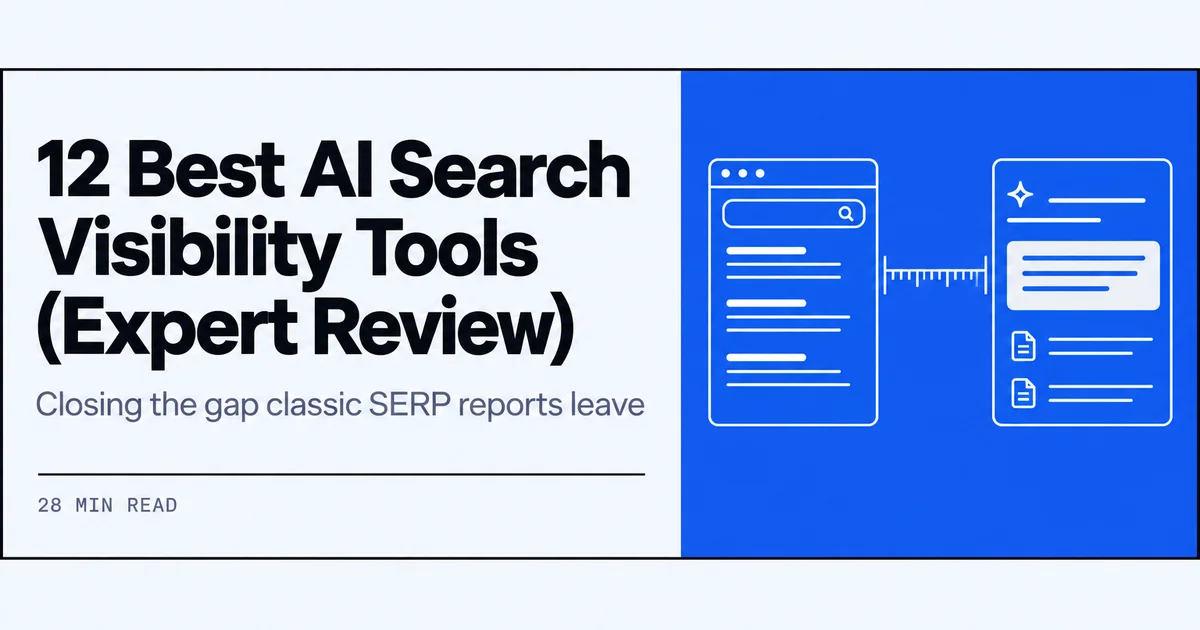
I wrote this as a field review: twelve platforms, one measurement gap, and the difference between ranking in blue links and being named inside an AI answer.
On this page
- 01
Classic SERP and Search Console reports still do not show whether a brand is named or cited inside ChatGPT, Perplexity, or similar answers.
- 02
I score AI search visibility tools on disclosed engines, collection method, metric definitions, cadence, and published price, not on a single worth ranking.
- 03
Engine lists, prompt caps, and whether content or agents are included change what the same monthly fee actually buys.
- 04
I use the tracking layer to find citation gaps, then I fix entity consistency and question-shaped pages rather than chasing a composite score.
Why AI search tracking is not classic rank tracking
I wrote this as a field review: classic rank trackers log URL positions, while an AI answer may mention a brand, cite a URL, or skip both. That is why I treat AI search tracking as a different measurement problem. This roster is criteria-based, not a 1–12 quality ranking. I lined twelve platforms against engines, collection method, metrics, cadence, content and agents, MCP/API, and published price. I keep that lens for the details on best ai visibility tools. I place each name among other ai search visibility tools without naming a winner.
What Google Search Console actually reports
When I open Search Console, I do not look for a citation-share chart or a ChatGPT mention count; those are not what Google documents. Google says pages appearing in AI Overviews and AI Mode are included in overall Search traffic reporting in Search Console, and that AI-feature traffic is reported in the Performance report under the Web search type. Both points sit in Google’s documentation on AI features in Search.
Separately, Google provides a Generative AI performance report in Search Console for measuring content performance in generative AI features on Google Search and Discover. That report can show how users discover content through generative AI features, as described in Google’s guide to optimizing for AI features. I treat those reports as Google-surface traffic and discovery. They do not tell me whether ChatGPT named a brand. I do not read them as citation share. I keep GSC in that lane when I measure Google.
How I evaluate AI search visibility tools
I evaluate ai search visibility tools against one checklist I reuse on every vendor. I record engines and which tiers gate them, the collection method as disclosed, core metrics (mentions, citations, share of voice, sentiment, any composite score), refresh cadence, content briefs or agents, MCP and API access, and price as published. Google’s 2026 guide for optimizing generative AI features emphasizes valuable, unique, non-commodity content and adds considerations for local, shopping, image, and video; I keep those notes beside any content module. In the field I have watched mention volume rise after a brand locked one entity name across its pages, as if the models retained that identity. I treat that as a working observation, not a published metric. I also note trial length and seat rules when the pricing page states them. I log unpublished items as unpublished rather than as a motive. That checklist is what this roster runs against.
1. Rankability
I use Rankability when I want AI visibility tracking sitting next to research, content, audits, and reporting in one workspace rather than as a bolt-on report. It is item 1 on a criteria list, not a quality rank. Agencies asking how this stack behaves at client volume can read a closer look at ai visibility tools for agencies. Below I stick to published engines, SPI, tiers, Copywriter, Autopilot, and MCP. Those pages are the source for what follows.
Engines, SPI, and published tiers
Rankability publishes three paid tiers: Starter at $99, Core at $199, and Team at $399. Each tier sets prompt and AI-answer caps and gates workspaces at 1, 3, and 10; seats are unlimited on those plans. Engines are tier-gated at 3, 5, and 8. The help centre documents 11 engines, including Brave AI, DeepSeek, and Meta AI, without a published tier or price for those extra names. SPI runs 0–100 with a stated mix of traditional 30, video 10, AI mentions 35, and AI citations 25. The vendor states SPI is not market share. I get sentiment per answer. I do not get share of voice or a citation-share percent. Cadence is daily, weekly, or monthly, plus on-demand. Marketing copy describes live web search with location appended. A 7-day trial sits on monthly billing; a card requirement was not disclosed on the pages I reviewed.
Copywriter, Autopilot, and MCP
Copywriter builds briefs from SERPs and AI-cited sources and can produce full drafts from a knowledge base. Autopilot’s API runs research, brief, draft, optimize, and fact-check through to a review-ready draft; it does not publish. Serena is advisory only. Automate can open a GitHub pull request and does not merge it. A hosted MCP sits at app.rankability.com/mcp with 97 tools, and Agent API is on all paid tiers. GA4 referrer traffic for named AI engines is documented as referrals, not a complete citation count. Site Auditor checks AI bot access from robots.txt; llms.txt auditing is not offered. I also logged two page differences: the pricing page lists 8 engines while docs list 11, and some third-party four-tier quotes do not match the vendor pricing page. I recorded those as page differences, not as a judgment of the product.
2. Ahrefs
I treat Ahrefs as an SEO suite that added Brand Radar, not as a standalone AEO box. I use it when I already live in that crawl-and-backlink stack and need mention and citation reporting beside it. For a wider pass on ai visibility monitoring in 2026, I keep Brand Radar in the same criteria frame as the other eleven. The notes below are what official pages document on engines, metrics, collection, plans, and seats.
Brand Radar metrics and collection
Brand Radar covers seven engines: Google AI Overviews, AI Mode, ChatGPT, Perplexity, Gemini, Copilot, and Grok, with Grok collection noted as temporarily paused. Claude appears only through Custom Prompts. Collection is UI scraping of rendered public interfaces, and raw responses are stored. There is no composite visibility score. The reports I get are Mentions, Citations, AI Share of Voice, and Estimated Impressions. Sentiment is not documented. Prompt volumes are modeled from Ahrefs keyword and People-Also-Ask data with semantic fanout; they are not observed AI logs. Cadence is mixed: chatbot indexes refresh monthly on a 90-day window, AI Overviews and AI Mode every few days, and Custom Prompts on daily, weekly, or monthly schedules. I treat those volume figures as modeled estimates when I brief a client, and I keep the mixed cadence on the same slide so nobody assumes a daily chatbot index.
Plans, seats, and where Brand Radar starts
Starter is $29 with 1 seat, 1 month of history, and no Brand Radar, API, or MCP. Lite at $129 adds Brand Radar, 150 custom prompt checks per month, API, MCP, and 6 months of history. Standard at $249 and Advanced at $449 raise checks, API units, and history. Enterprise at $1499 adds SSO, a dedicated account manager, and unlimited history. Extra seats are priced per tier; Starter cannot add seats. There is no trial of paid plans; Ahrefs Free is available after site-ownership verification. Official MCP is listed in Claude’s connectors directory. I do not get content briefs or full drafts; AI Content Helper is editor-side. Bot Analytics needs Cloudflare Logpush or a Worker. I map Brand Radar access to Lite and above when I am choosing a plan, and I treat Bot Analytics as a separate log pipeline rather than a default Brand Radar chart.
3. SE Ranking

I reviewed SE Ranking as a classic SEO platform that now ships in-suite AI modules plus a standalone product, SE Visible. Rank tracking still logs URL positions; SE Visible is where I looked for mention and citation coverage of AI answers. I used only documented metrics and published prices for this write-up. For teams already in this stack, the question is which of those layers actually covers the AI search tracking job, and which still sits next to classic SERP reports.
SE Visible metrics and three tracking surfaces
Every plan I checked lists five engines: Google AI Overviews, AI Mode, ChatGPT, Gemini, and Perplexity. SE Visible states Claude will be added. Collection is described as UI scraping of rendered answers through the browser interface, not API shortcuts.
Visibility Score, Share of Voice, and Net Sentiment are documented for SE Visible only. I did not see those three named on the in-suite trackers. Those three scores are the SE Visible layer, not a suite-wide composite. The Sources report gives Mention rate and Coverage. I did not find an owned-versus-earned citation-share split in the published material.
Work is split across three surfaces: AI Results Tracker, AI Overviews Tracker, and SE Visible. SE Visible defaults to daily collection and can switch to weekly. On the content side, Content Editor produces briefs and AI Writer produces drafts and FAQs. I treated that as a content workflow sitting beside the trackers, not as a substitute for citation analytics.
Plans, the AI Search add-on, and MCP
Core is published at $129 with 100 AI prompts per day, one seat, and six months of history. Growth is $279 with 250 prompts per day, three seats, and all-time history. Enterprise is custom. A 14-day fully functional trial is published.
Expansion beyond the in-suite caps is a paid AI Search add-on priced in checks, where one check equals one prompt on one platform. That add-on unlocks SE Visible. MCP is listed on every plan; official pages state 180+ tools on one URL and 160+ on another. API access starts at Core.
Website Audit has no documented GPTBot or ClaudeBot robots.txt check, and no llms.txt check on the material I used. There is no AI referral traffic report. Customer Success support starts from Growth upward; a named dedicated manager is not documented on the pages I reviewed for this field note. I recorded the 180+ versus 160+ MCP counts as a documentation difference across URLs.
4. Goodie AI
I reviewed Goodie AI at higoodie.com as an AEO platform that pairs visibility tracking with action agents and commerce product feeds. There is no docs site on that domain; I am recording that as an observation from the pages I fetched, not as a motive. Published pricing, engine gates, and agent credits were my source of truth when I placed it among these AI search visibility tools. I did not infer undocumented collection methods from the marketing copy alone.
Engines, Brand Command, and attribution
The ceiling is 12 engines, including Alexa for Shopping and Sparky (Walmart). Core covers ChatGPT, AI Overviews, Perplexity, AI Mode, and Copilot. Pro adds Gemini, Alexa, and Sparky. Claude, Meta AI, DeepSeek, and Grok sit on Enterprise. Visibility collection is described as daily; Brand Command is described as continuous. The collection method itself is unstated on the pages I used for this review. I kept Core, Pro, and Enterprise engine gates separate when I logged coverage.
I found brand visibility scores, share of voice, sentiment, and Brand Command for false AI claims. Citation frequency and relative mention frequency are described; I did not find a named citation-share percent or an owned-versus-earned metric. GA integration covers ChatGPT, Perplexity, and Gemini referrals, including influenced revenue from zero-click answers. Named bots include GPTBot, Perplexity crawlers, Google-Extended, ClaudeBot, and Meta AI crawlers. I treated those bot names as a crawl-access list, not as a citation count.
Plans, action credits, and commerce feeds
Core is $399 with 100 prompts, 10 action credits, three seats, and two countries or languages. Pro is $999 with 250 prompts, 30 credits, and five seats. Enterprise is custom at 500+ prompts and 60+ credits, with a dedicated AEO strategist and API. A 7-day Core trial is published; trial limits are not published.
Content Studio produces answer-first articles. Action credits meter writer, optimization, outreach, technical, and social agents. Technical analysis covers robots.txt, server config, and access logs for AI-bot blocking; llms.txt is a separate free generator. Commerce APIs listed are Shopify, BigCommerce, Google Merchant Center, Meta Catalog, and Amazon Seller Central. MCP is on Core and Pro; REST API is Enterprise only. SAML SSO is stated on the security page; there is no SSO row on the pricing table. I recorded the security-page SSO mention and the missing pricing-table row as a documentation difference. I used those figures as published.
5. Search Atlas
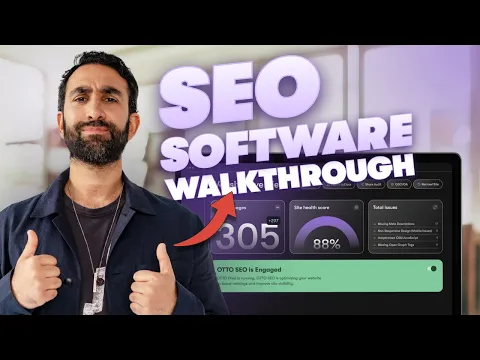
I reviewed Search Atlas through two layers: LLM Visibility for mentions and citations, and OTTO for on-page deployment. I kept both layers in scope. Engine lists differ across official pages; I am recording those differences as an observation of the URLs I opened, not as a motive. Among the AI search visibility tools in this roster, this is one where I had to reconcile product copy with the pricing table before I could describe engine coverage with confidence.
LLM Visibility metrics and OTTO
Metrics I found are Visibility Score, share of voice and Share of Voice Rank, Citation Sources with counts and share, a sentiment dashboard, and placement (first, last, or skipped). Cadence and collection method are not disclosed; product pages use real-time without a frequency. I treated that phrase as unspecified until a refresh interval is published.
Content Briefs sit next to Content Genius V3 full drafts. I did not treat OTTO as a citation tracker; it stays the deployment layer. OTTO can deploy meta, schema, canonicals, redirects, alt text, internal links, articles, and landing pages via a CMS connector or a JS snippet. An approval mode exists; which actions default to auto-deploy is not specified. Site Auditor has no robots.txt file audit, no llms.txt check, and no GPTBot check. Digital PR, WILDFIRE backlink exchange, and metered PR outreach are listed. There is no AI referral session product; official material points to manual GA4 segmentation.
Credits, engine lists, and plans
Starter is $99 with one seat, three engines (ChatGPT, Gemini, Google AI), 3,500 LLM Visibility credits per month, and two LLM Visibility projects. Growth is $199 with three seats and 20,000 credits. Pro is $399 with five engines including Perplexity and Copilot, and 50,000 credits. Agency is $999 with ten seats and a dedicated support team. Enterprise is quote-only and adds API.
The pricing page says brand analysis always runs on all five platforms. Other official pages list Claude, Grok, and SearchGPT; Claude does not appear in any pricing-tier platform list. Engine counts differ across vendor URLs: 4, 5, 6, and 7. I recorded those mismatches as documentation differences. I used the pricing-page engine list when a product page disagreed. A 7-day trial is published with a 30-minute onboarding session. Official MCP is on npm with 30 LLM Visibility and AEO tools. No auto-suggested prompts are documented on the pages I opened.
6. seoClarity
I treat seoClarity as an enterprise SEO platform with a quote-only AEO layer, Clarity ArcAI, rather than a self-serve tracker. I keep the core platform price and the ArcAI add-on separate because official pages publish them that way. Among the AI search visibility tools on this roster, this is the one I review for clickstream-backed prompt data, hallucination tracking, and warehouse integrations, not for a published list price on the generative module.
ArcAI engines, clickstream, and Accuracy
On ArcAI Core I found nine engines with no engine gating: ChatGPT, AI Overviews, AI Mode, Claude, Gemini, Perplexity, Copilot, Grok, and DeepSeek. Prompt queries start at 500. Cadence is weekly by default, with daily available; the API page states daily through on-demand. Collection method for the answers themselves is not disclosed. Prompt and keyword data are stated as proprietary clickstream, including a Demand-Distilled Volume metric and a 1+ billion question database.
I get share-of-voice benchmarking, brand mentions, citation sources, and sentiment labeled positive, neutral, negative, or mixed. There is no named composite visibility score. The Accuracy module tracks hallucinations and fact errors. Discovery is an add-on for AI bot tracking, named generically rather than as GPTBot strings. ArcAI agents generate briefs and FAQs. Content Fusion is assisted writing rather than full articles. Sia is preview-approve-execute; it does not publish autonomously. I recorded those as documented outputs rather than a single index I could compare across vendors.
Platform price versus the ArcAI add-on
The core platform list prices I found are Research & Content at $2,500/mo, Technical SEO at $3,200, and Enterprise at $4,500; the same pages also publish from £1,800. A Rankings tier sits below those at custom pricing. ArcAI Core, Discovery, and Accuracy all show Ask for a Quote, with no currency or minimum published. I logged the ArcAI path as unpublished list pricing, separate from those core figures.
Trials are free and custom after a demo; duration is not published. Users are unlimited. API access is included at no extra charge for data already tracked; full docs sit behind an account executive. MCP works with ChatGPT, Claude Desktop, and Cursor; no tool count is published, and it is not listed in Claude's connectors directory on the MCP page. Every subscription includes a dedicated Client Success Manager. Historical retention and export file formats are not disclosed. Integrations include BigQuery, Snowflake, Redshift, GA, GSC, and Adobe Analytics.
7. Cognizo
I use Cognizo as an AEO platform that pairs six core metrics with ChatGPT ads observation and a content agent that can auto-publish. Growth and Pro gate engines; Enterprise opens all ten. A free trial is not documented on the published pages I used for this review. Among AI search visibility tools here, I look at Cognizo when I need an owned-versus-earned citation split and a publishing workflow in the same product, with ads and bot names in the same stack.
Six core metrics, ads, and citation splits
I counted ten engines: ChatGPT, Perplexity, AI Overviews, AI Mode, Gemini, Copilot, Meta AI, Claude, Grok, and DeepSeek. Growth and Pro choose five from a listed subset; Enterprise is custom across all ten. Tracking is daily. Collection is UI scraping of the rendered answer.
Documented metrics include visibility score, share of voice, citation share, an owned/earned citation split, source mention rate, sentiment, and positioning accuracy, six of that core set. Citation gap flags domains that cite competitors but not the brand. Paid ads tracking for ChatGPT covers an ad library, competitor ads, and targeting opportunities. Named bots include GPTBot, ClaudeBot, OAI-SearchBot, and others. Prompt volume and AI-generated prompt suggestions are present. So are CRM/support enrichment and AI traffic analytics. I treat the owned/earned split as the reason I open this module first when a client asks who actually gets the citation. The ads library is ChatGPT-only on the pages I reviewed.
Content agent volumes and plan gates
I logged Growth at $499: 8 AI-optimized articles per month, 150 prompts, 22,500 responses/mo, an auto-publishing content agent, MCP and API, unlimited seats, regions, languages, and competitors, one domain in AI Traffic Analytics, and a quarterly strategy review. Pro is $999 with 20 articles, 350 prompts, 52,500 responses, and a monthly strategy review. Enterprise is custom: all 10 platforms, a dedicated AI search strategist, and SSO/SAML. A free trial is not documented on the published pages I used for this review.
I counted a 64-tool MCP in six groups, listed in Claude's Connectors Directory as Community rather than first-party co-developed. Content Studio generates briefs, articles, and FAQs. Technical crawler audits are present. History is all-time on every tier. Export formats are not published on those pages. I treat the auto-publishing agent as a documented publish path, not an unsupervised rewrite. Engine count on Growth and Pro stays at five from the listed subset.
8. Peec AI
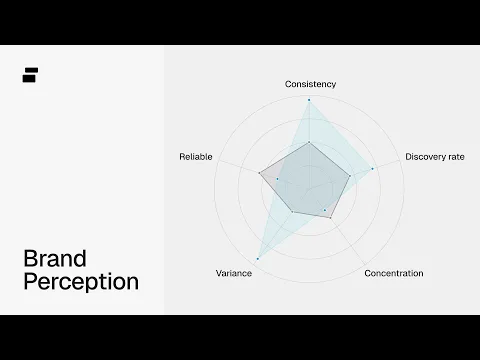
I use Peec AI as an analytics-first tracker: server-log bot collection, ChatGPT ads observation, and citation rate at domain and URL. Actions stop at structural briefs. Among AI search visibility tools on this list, Peec is the one I open when I want log-backed crawler evidence rather than a content studio. I still run AI search tracking against the same prompt set I use elsewhere so the Visibility % is comparable in my notes, including the three-engine gate on lower tiers.
Engines, server-log bots, and ChatGPT ads
I counted a maximum of 13 engines. Starter, Pro, and Advanced pick three from ChatGPT, Google AI Mode, AI Overviews, Copilot, Perplexity, and Gemini. Enterprise opens all 13, including Claude Sonnet 4, GPT-5 Search, Grok, DeepSeek, Qwen, Mistral, and Meta Spark. Refresh is daily, every 24 hours. Collection is UI scraping via browser automation.
I get Visibility %, Share of Voice, sentiment on a 0–100 scale, and Citation Rate/Retrieved at domain and URL. Domains are classified CORPORATE, EDITORIAL, INSTITUTIONAL, UGC, REFERENCE, COMPETITOR, or OTHER, with a You flag. I treat the You flag as a first-party domain marker in that taxonomy. Fact-checking is Supported or Contradicted; there is no positioning-accuracy score. robots.txt is checked against 40+ AI bots from 20+ vendors. Bots are collected from first-party server logs. ChatGPT ads tracking covers US, UK, CA, AU, NZ, JP, and KR, with no Google or Meta Ads connection. GA4 AI Referrals come via OAuth; there is no GSC integration.
Plans, MCP, and API gating
I logged Starter at $95: 50 prompts, 4,500 answers/mo, 1 country, 1 project, MCP, and CSV. Pro is $245 with 150 prompts and 3 countries. Advanced is $495 with 350 prompts and a Looker Studio connector. Enterprise is custom: all 13 models, REST API, and SSO. I found a no-credit-card free trial; length is not published. Users are unlimited on every tier. Annual billing is 15% off.
Hosted MCP sits at api.peec.ai/mcp with 92 tools and is first-party in Claude's connectors directory; MCP is on every tier, REST API on Enterprise only. Actions give structural briefs only, no full drafts or FAQ generation. The agent is human-in-the-loop. Historical retention is not published. Peec is Berlin-based. Agency credit plans exist separately, from Essential at $245 to Scale at $795. I treat the REST API gate as Enterprise-only on the pricing page I reviewed. I recorded the agency ladder as a separate SKU.
9. Conductor
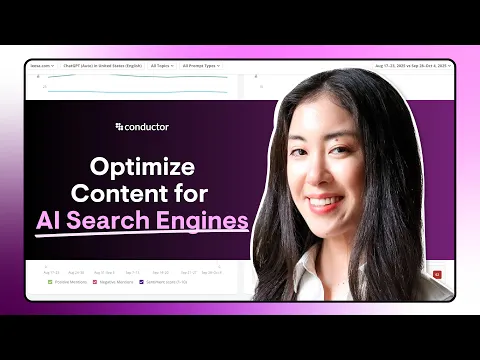
I treat Conductor as an enterprise SEO and AEO suite, not a point tracker. The vendor describes official API collection rather than UI scraping, and I could not find a list price on any official page; calls to action go to a trial or a demo. I look at it when I need configurable cadence, monitoring signals next to classic SEO, and a documented path into ai search tracking that sits beside keyword history.
API sampling, engines, and Monitoring
The vendor states collection through official APIs, not UI scraping. I counted nine engines when ChatGPT Auto and Search, and Google AI Mode and AI Overviews, are aggregated. The AI Search Performance report does not support Claude or Grok as trackable engines.
Metrics I found are Share of Voice, Citations, Brand Mentions counted once per response, and Brand Sentiment on a 1–10 scale. I did not find a confirmed composite visibility score. Cadence is configurable daily, weekly, or monthly per topic, and collection is described as taking five hours to a few days.
Conductor Monitoring lists 20+ AEO signals, including robots.txt mistakes such as blocking GPTBot. llms.txt auditing is not confirmed on the pages I reviewed. Log file analysis names 16+ bots. GA4 reporting covers sessions, engagement, conversions, and revenue; bot crawling is a separate report. Generate Draft is labeled beta. The Intelligence engine auto-generates prompts grounded in 10+ years of keyword data.
Credits, unpublished prices, and AgentStack
I could not find a list price on any official page; calls to action go to a trial or a demo. Essentials includes no AI Search Credits, 60 drafts per year, and 3 websites. Growth lists 2,500 AI Search Credits per year, 180 drafts per year, and 5 websites. Enterprise is custom, with 2,500+ credits and 10+ websites.
The vendor title for the trial says 3 weeks; page metadata says 30 days, and no credit card is required. A Free AI Visibility Report is available without purchase. MCP is at mcp-universal.conductor.com with 5 tools, first-party in Claude's connectors directory. The Data API requires Intelligence; the Content API requires Creator.
AgentStack lets external assistants query and generate; autonomous action is not documented. SAML is available; the tier is not tied on a pricing row. Export is XLSX/CSV up to 1 million rows. Keyword history goes up to 24 months; AI search retention is not published.
10. LLMrefs

I treat LLMrefs as a single-tier tracker: one All in One plan, eleven engines, and a ChatGPT prompt database built from public datasets and clickstream. I reach for it when I want weekly coverage across those engines without per-engine fees. Among the ai search visibility tools in this roster, it is the one I log as a tracker first, not a content suite. The notes below are what official pages published as of this review, including items that remain unpublished.
Eleven engines, volume estimates, and score
The only paid plan I found is All in One at $79 per month: 500 prompts, all 11 engines with no per-engine fee, a weekly dashboard update, 50+ countries, 20+ languages, unlimited seats, projects, and domains, plus CSV and API. The eleven engines are ChatGPT, ChatGPT Search, AI Overviews, AI Mode, Gemini, Perplexity, Claude, Grok, Copilot, Meta AI, and DeepSeek.
I recorded an AI Visibility Score as frequency of appearance, plus Share of Voice. Citations & Sources are counts and identities, not a named share metric. There is no named sentiment metric; the nearest published label is brand mention accuracy. Collection method is unstated.
Monthly AI prompt volume estimates sit beside a ChatGPT Prompts Database of 4.5 million-plus real user messages from public datasets and clickstream. A Query Fan-Out Generator is documented. A free account needs no card and includes a 7-day trial; free-tier limits are not published. The FAQ references a 50-keyword baseline.
API, crawlability checker, and unpublished items
I crawled a 341-URL sitemap and did not find an MCP page; official pages I reviewed also do not mention MCP, so MCP remains unpublished. Content briefs, drafts, and FAQs are not offered. The AI Crawlability Checker tests rendered text, response times, HTTP 402, 403, and 429 blocking, JSON-LD, and SSR/SPA. A robots.txt or GPTBot directive check is not documented. llms.txt is a generator. Only GPTBot and ChatGPT-User are named.
I also logged gaps as unpublished rather than inferring a reason. No GA4 or GSC integration is claimed. API sits on the only paid tier; the API docs page renders empty, so endpoints, auth, and rate limits are not published. /docs is a placeholder. SSO is not mentioned on official pages as of this review. There is no citation gap report. Competitor benchmarking runs through Share of Voice and position. The pricing page has no enterprise tier; a blog post tells high-volume agencies to contact sales.
11. Surfer SEO
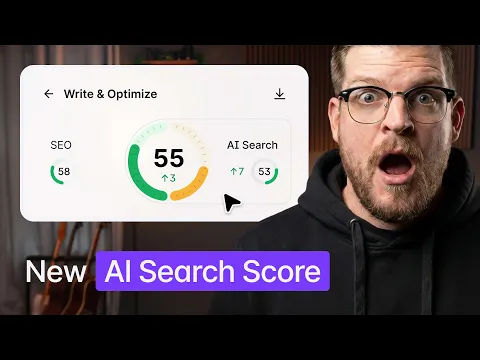
I treat Surfer as a content platform with an AI Tracker module, not as a dedicated AEO suite. I use it when briefs and drafts already live in Surfer and I want mention and share-of-voice reads on five engines without standing up a second stack. Where AI Tracker docs and marketing disagree on Claude, I follow the more specific tracker documentation. I log it beside the other ai search visibility tools as a criteria check, not a quality ranking.
AI Tracker metrics and documented engines
AI Tracker documents five engines: ChatGPT, Gemini, AI Overviews, AI Mode, and Perplexity. The AI Tracker documentation states it does not track Claude; Claude is an MCP agent client only, and I treat that more specific page as authoritative. Collection is UI scraping of front-end responses, not APIs, with a self-consistency check.
Metrics I recorded are Visibility Score, Share of Voice, Mention Rate, Brand Sentiment, and Average Position. The Sources Dashboard lists referenced pages with confidence scoring; there is no named citation share. Mention Gap and Coverage Gap are documented. Cadence is daily on Pro and above, with multiple queries per day averaged, and weekly on Standard.
Prompt suggestions are auto-generated at project creation only. I found no prompt volume data on the pages I used. Surfer is not a technical SEO crawler in this module. A Marketplace offers paid placements in trusted sources when supported. Auto-Optimize applies content optimizations; nothing publishes autonomously.
Plan gating and AI Search Analytics
Discovery is $49 with no AI prompt tracking and 1 seat. Standard is $99 with 25 prompts weekly on ChatGPT only and 3 seats. Pro is $182 with 50 prompts daily across all 5 engines, MCP, and 5 seats. Peace of Mind is $299 with 100 prompts daily, API, 10 seats, and a dedicated success manager. Enterprise is $999, custom, with SSO and white-label. A 7-day Pro trial with full feature access is published.
Standalone AI Search Analytics meters 50 prompts at $95 per month, 100 at $185, 200 at $365, and unlimited custom. MCP is beta from 11 August 2026 on Pro and above, with 3 tool groups and no published tool count. API starts at Peace of Mind, currently closed testing; AI Tracker via API is listed as coming soon.
I found GSC available; GA4 is not. A Looker Studio connector is mentioned. Content Editor produces briefs; Surfer AI produces full drafts.
12. Nightwatch
I treat Nightwatch as classic rank tracking that includes AI visibility in the base price, not as a bolt-on. List prices are in EUR. Every published tier is gated by two caps at once, AI prompts and AI answers per month, and engines are not split by plan. I reach for it when I already need SERP monitoring and want ai search tracking on the same dashboard, rather than standing up a standalone AEO platform beside it.
Daily AI visibility inside rank tracking
Nightwatch documents five LLMs, ChatGPT, Claude, Gemini, Perplexity, and Copilot, plus Google AI Overviews and AI Mode as SERP AI surfaces. I did not find engine gating: every tier covers all of those engines. The vendor describes collection as simulated query sampling of real user interactions, with daily updates on all engines.
Metrics I can pull include AI Visibility as the percentage of prompts with a mention, Share of Voice, Citation Intelligence with strength scoring and domain-level mention frequency, sentiment/framing, and Average Position. Prompt Research generates prompts from real user questions; a prompt-volume metric is not published.
AI Content Writer produces briefs and drafts. Site Audit covers 100+ SEO issues; GPTBot robots.txt and llms.txt checks are not documented on the pages I used. NightOwl autonomously runs keyword research, audits, rank monitoring, and competitor analysis. I noted that NightOwl does not publish content and does not act on AI visibility findings I surface in the tracker.
EUR plans, dual caps, and MCP
Nightwatch publishes prices in EUR. Starter is EUR 79 with 50 AI prompts, 1,500 AI answers per month, unlimited seats, and 5 sites. Professional is EUR 159 with 150 prompts, 4,500 answers, API access, and 25 sites. Agency is EUR 399 with 500 prompts, 15,000 answers, 100 sites, and a dedicated account manager. Enterprise is custom, with unlimited prompts and answers, SSO, and custom retention. Capacity is capped by both prompts and AI answers each month. A 14-day full-feature trial is listed, with no credit card.
MCP requires Professional and above. Official material describes six tool categories; a tool count is unpublished, and setup is described as manual config. Full SERP archives go back 3 years. Location coverage is 107,000+ locations across 190+ countries with zip-code precision. Integrations documented include GSC, GA4, and Looker Studio. CSV export is not confirmed on official pages. Slack and Zapier are not confirmed, the integrations page returned 404 when I checked.
How I choose among these AI search visibility tools
I do not pick from this roster as a 1–12 quality list. I match the stack to the gap I have. If I need citation analytics, who named us, which URL was cited, owned versus earned, I start with a tracker that stores answers and source identities. If the gap is production, I want briefs, drafts, or an agent that stops at review. If the gap is enterprise BI, clickstream volume, warehouses, a success manager, I look at the platforms that sit next to GSC and a data lake. I also check ads observation, bot logs, and commerce feeds before I buy a seat.
The numbers only matter when I act on them. When share of voice moves and a competitor is cited from a domain I do not own, I take that URL, break the page into question-and-answer blocks, and keep entity names consistent so an answer engine can quote a self-contained passage on the next pass. That FAQ-shaped rewrite is my workflow with ai search visibility tools, not a claim any vendor makes.
Quick comparison
| Tool | Entry price (USD/mo) | Free trial | AI engines covered (#) | Core metrics tracked (#) | API | MCP server |
|---|---|---|---|---|---|---|
| Rankability | $99 | Y | 8 | 2 | Y | Y |
| Ahrefs | $29 | N | 7 | 3 | Y | Y |
| SE Ranking | $129 | Y | 5 | 4 | Y | Y |
| Goodie AI | $399 | Y | 12 | 5 | Y | Y |
| Search Atlas | $99 | Y | 5 | 5 | Y | Y |
| seoClarity | $2,500 | Y | 9 | 3 | Y | Y |
| Cognizo | $499 | N/A | 10 | 6 | Y | Y |
| Peec AI | $95 | Y | 13 | 4 | Y | Y |
| Conductor | Not published | Y | 9 | 4 | Y | Y |
| LLMrefs | $79 | Y | 11 | 2 | Y | N |
| Surfer SEO | $49 | Y | 5 | 4 | Y | Y |
| Nightwatch | EUR 79 | Y | 5 | 5 | Y | Y |
Frequently asked
I treat AI search visibility tools as monitors of whether a brand is cited inside generated answers, not as replacements for rank trackers. A rank tracker still reports classic SERP positions. These tools instead sample prompts across ChatGPT, Perplexity, Google AI Overviews, Gemini, Copilot, Grok, and Claude, then record citations, phrasing, and competitor share of those answers.
No. Google Search Console includes pages that appear in AI Overviews and AI Mode in overall Search traffic, and AI-feature traffic sits in the Performance report under Web search. Google also offers a Generative AI performance report for Google Search and Discover. I still need dedicated tools for ChatGPT, Perplexity, Gemini, Copilot, Grok, and Claude.
When budget is tight I start with the engines my buyers already use: Google AI Overviews because they sit in Search, then ChatGPT and Perplexity for conversational research. I add Gemini, Copilot, Grok, and Claude only after those three show a stable prompt set. Coverage without a repeatable query list wastes the remaining budget.
Scores diverge because vendors sample different prompts, engines, locales, and time windows, then extract citations with different parsers. I never treat a 0–100 score as comparable across products. I compare the same prompt, same engine, and the raw cited URLs. Methodology mismatch, not a single true ranking, is what I see in side-by-side pulls.
I refresh weekly for most brands and daily only when a launch or algorithm swing is in play. AI answers drift between sessions, so a monthly snapshot misses replacements. I keep a fixed prompt list and re-run it on the same engines. Frequency without a stable query set just produces noise I cannot act on.
I still run two measurement layers. Classic rank trackers and Search Console cover blue links, plus Google's AI Overviews traffic in the Performance report and the Generative AI performance report. Dedicated AI visibility tools cover citations in ChatGPT, Perplexity, Gemini, Copilot, Grok, and Claude. One login is convenient; separate data models match separate jobs.
