AI Visibility Tools 28 min read Published Updated
12 Best AI Share of Voice Tools in 2026 (Expert Review)
I scored these platforms the way I score client work: same prompt set, named share-of-voice math, and a sampling method I can explain to a CMO. Pricing pages did not get a vote.
On this page
- 01
Treat AI share of voice as a competitor methodology: same prompts, engines, and cadence, or the percentage is not comparable.
- 02
Sampling method and small wording changes move cited domains, so I read SOV as a trend rather than a one-day audit.
- 03
Prompt volume and real buyer-query coverage matter more than a long unweighted prompt list.
- 04
A composite visibility index is not share of voice in LLMs; I only treat a metric as SOV when the vendor names the formula and the competitor set.
How I Evaluate AI Share of Voice
I score every platform the way I score client work: a named competitor formula, sampling I can defend in a CMO review, and prompt weights that match demand. Google Search Console’s generative-AI performance reports measure how often my URLs appear in AI Overviews and AI Mode, with country, device, and hourly-to-monthly grain. That is Google only. I treat GSC as calibration against third-party panels, not a shared denominator across engines.
How I Measure Share of Voice in LLMs
I only call something competitor share of voice when the denominator is shared: the same prompt set, the same engines, and every brand in the set counted the same way. A mention is a brand string in the answer. A citation is a linked or attributed source. Those are different events, and I refuse to mash them into one unlabeled index and call it market share. Composite visibility scores are useful for trend lines inside one vendor; they are not a percentage of a defined market. When I need the definition I brief to clients, I send them more on what is ai share of voice. For share of voice in llms I want: brand A’s mentions (or citations) divided by the sum of mentions (or citations) for the competitive set, per engine, then rolled up with explicit prompt weights. If a tool cannot show that formula, I treat the number as a proprietary index, not a share.
Sampling Accuracy and Paraphrase Risk
Sampling is the measurement, not a footnote. I have watched the same intent, rephrased by a few words, return a different cited-domain set. A study of 30 information-seeking query pairs across seven deployed OpenAI and Gemini models found that minor wording changes can produce different cited-domain sets; for the Gemini models examined, every tested pair changed its cited domains after paraphrasing. That is why I care whether a vendor scrapes the public UI or calls an official API, and whether it stores the exact prompt string I approved. Scoring With the Engine measures source breadth and source concentration by engine, separates cross-engine citation divergence from short-term temporal turnover, and reports that engine effects are substantially larger than adjacent-day similarity changes. First-party generative-AI Search reports still only describe Google’s own features. I do not mix a ChatGPT scrape with a Gemini API pull and call the union one sample. Paraphrase risk and collection path both move which domains get cited.
Prompt Volume Versus Prompt Lists
An unweighted prompt list treats a curiosity query and a high-intent buyer query as equal. That inflates brands that win trivia-style prompts and starves brands that win the few prompts that actually move pipeline. I want volume on the denominator: modeled prompt volume, clickstream, or a real-message database, then a weight per prompt so the rollup matches demand. A long unweighted list is a convenience sample, not a market. I still use lists for coverage gaps and for regression tests when I change a page, but I never brief a CMO on an unweighted average and call it market share. When a vendor publishes a volume score, I ask what corpus trained it, whether the unit is messages or unique users, and whether I can export the weights. If I cannot audit those weights, I keep the prompt-level table and apply my own. Volume-blind shares are still useful for spotting which prompts a competitor owns; they are not how I size the category.
1. Ahrefs
Ahrefs Brand Radar is the first tool I open when I need a named AI Share of Voice with modeled prompt volumes sitting next to the answers. Collection is UI scraping of public interfaces, not official APIs. Access is tier-gated; I treat Brand Radar as a Lite-and-up surface, not the Starter SKU. For how I compare this class of product, see more on ai search visibility tools.
AI Share of Voice Metrics I Actually Use
The four numbers I actually export from Brand Radar are Mentions, Citations, AI Share of Voice, and Estimated Impressions. Mentions count brand strings in the generated answer. Citations count attributed sources. The share metric uses a competitive set on a shared prompt list, which is the definition I will defend in a QBR. Estimated Impressions apply modeled volume to those outcomes so a prompt that almost nobody runs does not dominate the rollup. I did not find a composite visibility score on the surfaces I reviewed, and sentiment was not documented on official pages as of my review. That is not a gap in the share formula; it means I do not brief feeling from this product. I keep Mentions and Citations in separate columns so a citation-heavy page and a mention-heavy answer do not hide each other. When a stakeholder wants one number, I show the volume-weighted share and leave Mentions and Citations in the appendix.
Prompt Checks, Cadence, and Sampling
Brand Radar sits on Lite and above in the stack I reviewed; Starter does not include AI tracking. Custom prompt checks are capped by plan, so I size the prompt list before I promise a cadence to a client. Cadence is mixed rather than one global interval: some checks run on a different schedule than others, and I log that in the measurement notes so a weekly prompt is not compared to a daily one as if they were the same sample. Collection is UI scraping of public interfaces. That matches what a logged-out or consumer session might see, and it also inherits paraphrase and layout risk I already described. I do not treat a scraped answer as equivalent to an API completion. When I add a competitor, I confirm the new brand is on the same prompt checks, not a parallel list with a different cap. Check caps are the real scarcity; engines I cannot assign a check to do not enter my denominator.
2. Peec AI
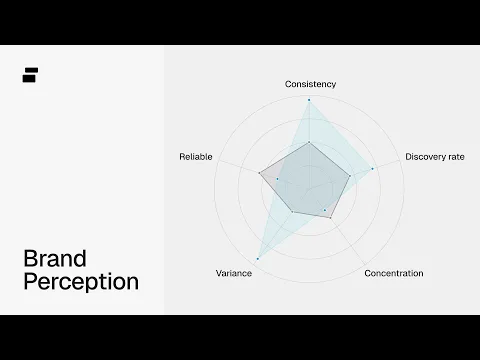
Peec AI is the tracker I reach for when I want Visibility and Share of Voice on the same prompt row, plus a 1–5 Prompt Volume score. It scrapes public UIs on a daily cadence. Engine count is gated: I can select three models until Enterprise, which documents a 13-engine ceiling. I file it with other llm visibility tools in 2026 rather than as a full SEO suite.
Share of Voice in LLMs and Source Types
For share of voice in llms, Peec documents Visibility, Share of Voice, and Citation Rate as separate fields, which I prefer to a single unlabeled blend. Visibility is presence. Share of Voice is the competitive split. Citation Rate is how often a source appears, not a named percentage of all citations in the set; I did not find a citation-share percentage on the pages I reviewed. Domain classes let me separate what kind of site was cited. Sentiment is scored 0–100. Gap analysis is the view I use to see which prompts a competitor wins that I do not. I still export the three core rates side by side. I do not fold sentiment into the share denominator. Owned versus earned share is not a split I found documented here, so I do not brief that cut from this tool. When a client asks who owns the answer, I show Share of Voice and Citation Rate together, with domain class as a filter.
Prompt Volume, Engines, and Server Logs
The Prompt Volume score is a 1–5 scale, not a raw query count I can drop into a spreadsheet. I use it to rank prompts, then I still want an export if I am going to weight a share rollup. Until Enterprise I pick three models; Enterprise documents thirteen. That gating matters because a brand that only appears on engines I did not select never enters the denominator. Collection is daily UI scraping of public answers. On the analytics side I can attach GA4 referrals, and Peec documents 40+ bot user-agents from server logs, which I use as a crawl-visibility cross-check rather than as share math. Logs tell me bots fetched a page. They do not tell me the page was cited in an answer. I keep those two facts in different columns, and I do not average a log hit with a citation rate. I re-read the user-agent list when a new crawler shows in my own logs.
3. SE Ranking

I score SE Ranking through SE Visible, the surface that names Share of Voice, Visibility Score, and Net Sentiment. I do not treat other in-suite trackers as the same measurement. Core and Growth cap daily prompts, and the paid AI Search Add-on meters one check as one prompt on one platform. Sampling is UI scraping of rendered answers. A 14-day trial is how I confirm the check math.
Share of Voice Inside SE Visible
When I open SE Ranking for competitor work, I stay inside SE Visible. That is the surface where Visibility Score, Share of Voice, and Net Sentiment are documented. Other tracker screens in the suite do not carry those three names in the materials I reviewed, so I do not mix their numbers into a client SOV readout.
Share of Voice is the named AI share of voice metric I put next to another brand on the same prompt set. Visibility Score is a separate index I keep labeled as visibility, not market share. Net Sentiment sits beside both. I still want a denominator I can explain: answers, engines, prompts.
Sources is where I look for mention rate and coverage. Rate is how often a domain shows up relative to the sample. Coverage is how much of the prompt set produced a source I can inspect. I did not see a named citation-share percentage on the SE Visible materials I used, so I do not report one.
Daily Prompts, Five Engines, Add-on Checks
SE Ranking does not gate engines by plan across the five engines it tracks. I can run the same prompt on all five without a higher-tier unlock for a sixth or seventh model. What is gated is daily prompt volume on Core and Growth. I treat those caps as a sampling budget, not as a quality score.
The AI Search Add-on meters checks as one check equals one prompt times one platform. Ten prompts on five engines is fifty checks. I put that math on the briefing slide so a CMO sees why a long prompt list burns the add-on faster than a volume-weighted set.
Sampling is UI scraping of rendered answers, not an official API pull. I note that in the method footnote: the cited-domain set can shift with wording and with whatever the public interface returned that day.
A 14-day trial is available. I use it to confirm the five-engine set and the check math.
4. Goodie AI

I review Goodie AI from higoodie.com as a competitor share-of-voice tool with conversation-volume claims, a Brand Command accuracy layer, and engine counts that change from Core to Enterprise. I score the named competitor AI share of voice, not a composite I have to reverse-engineer. Core lists five models; Enterprise lists twelve. Sampling cadence is daily visibility. I also note action credits and GA referral attribution when I brief a client.
Competitor Share of Voice and Brand Command
When I pull Goodie for a category review, I start with brand visibility scores and competitor share of voice in LLMs against named rivals. That is the denominator I put on a slide: my brand versus theirs on the same conversation set. Citation frequency sits next to it. Sentiment is scored as well. I keep visibility, share, citations, and sentiment in four columns so nobody collapses them into one index.
Brand Command is the accuracy layer. Official materials describe it catching false claims about the brand. I treat that as a QA flag, not as share of voice. A corrected false claim does not change how I compute the competitive split.
What I did not find is an owned-versus-earned split inside the share-of-voice number. If a client asks whether citations are their domain or a publisher, I cannot answer from a Goodie SOV cell. I log that gap and, when I need the split, I use a tool that labels owned, competitor, and third-party sources.
Conversation Volume and Engine Gating
Goodie claims to monitor real-customer queries rather than a static prompt list I typed in. I treat that as a volume story I still have to validate against my own message logs. If the conversations match what sales hears, I weight them. If they do not, I keep a parallel prompt set.
Engine gating is explicit. Core is five models. Enterprise is twelve. I do not assume the Core five are a subset I can name without checking the current higoodie.com list, because marketing pages change. Daily visibility cadence is the default I plan around. That is frequent enough for a weekly CMO note if the sample holds.
Action credits meter the work beyond the dashboard. I budget them the same way I budget add-on checks elsewhere: every extra action is a line item. GA referral attribution is available; I use it to see whether generative answers coincide with GA-referred sessions, not as proof that a citation caused the visit.
5. Search Atlas
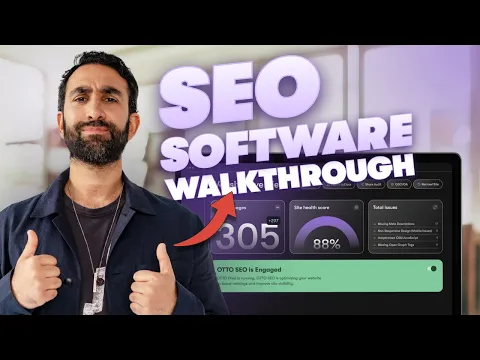
I review Search Atlas on Visibility Score, Share of Voice Rank, the citation share table, and LLM Visibility credit metering. Official pages list different engine counts depending on which plan copy I open, so I record both numbers and I do not pick one. Brand analysis is stated to run on all five engines even when the tracker plan lists three. OTTO is a separate agent, not the tracker.
Visibility Score and Share of Voice Rank
I use two named outputs from Search Atlas and I keep them apart. Visibility Score is an index. Share of Voice Rank is the competitive rank I can put next to another brand. I treat share of voice and Share of Voice Rank as the competitive pair, and I do not fold Visibility Score into that pair.
Citation Sources share is the table I export. That is a citation-share view at the source level, which is closer to how I brief a content team than a single visibility number. Sentiment is present. Placement is labeled first, last, or skipped; I use those labels to explain why a brand can be mentioned and still sit in a weak slot.
I did not find an owned-versus-earned split. Citation Sources share tells me who got cited, not whether the URL is ours, a competitor, or a third party unless I classify the domains myself after export. For client work I do that classification in the sheet, not in the UI.
LLM Visibility Credits and Engine Lists
Starter and Growth list three engines. Pro+ lists five. I write both figures into the method note because official pages list different engine counts. Brand analysis is stated to run on all five even when the tracking plan is the three-engine tier. I do not silently upgrade a Starter sample to five engines in a client report. I keep the tracker sample and the brand-analysis run labeled as different jobs.
LLM Visibility is metered in credit pools. I treat the pool as a sampling budget: more prompts, more engines, more credits. The refresh interval is not published on the pages I reviewed, so I do not claim daily or weekly as a fact. I ask the account team for the actual cadence before I promise a reporting rhythm.
OTTO is a separate agent. I do not fold OTTO actions into the tracker's share-of-voice readout. If a stakeholder wants both, I keep two line items: the LLM Visibility sample, and whatever OTTO produced on its own credits.
6. seoClarity

I scored seoClarity against the same three tests I use on client work: named share-of-voice math, sampling method, and prompt-volume evidence. ArcAI is the surface I actually opened. The $2,500–$4,500 figures I found describe the core SEO platform, not ArcAI, so I did not treat those numbers as the price of the AI layer. Clickstream prompt demand is the third test, and I came back to that on ArcAI specifically.
Share-of-Voice Benchmarking on ArcAI
On ArcAI I did not find a named composite visibility score. What I did find, and what I actually used, was presence rate, brand mentions, citations, share-of-voice benchmarking, and sentiment. I log each of those as its own column. The Accuracy module runs factual checks against claims the models make about a brand. That is useful when I am briefing a CMO who cares whether the answer is true, not only whether the brand appears.
Share-of-voice benchmarking here is a competitor comparison with a shared denominator, which is the definition I care about. I still want the formula written down: mentions over whose mentions, citations over whose citations, and whether unmentioned brands sit in the denominator. Official pages I reviewed did not publish that formula in the detail I would put in a client memo. I treat the benchmarking as a ranking of presence across a prompt set, not as a finished market-share number I would take to finance.
Clickstream Prompt Demand and Nine Engines
Demand-Distilled Volume is the prompt-demand layer I looked for. seoClarity claims a database of 1+ billion questions built from clickstream. That is closer to how I weight client prompt sets than a flat list of questions a strategist typed in. Nine engines are listed, and I did not find engine gating documented: the same set is described as available without a higher-tier unlock. Default cadence is weekly. I use that volume to weight share, not to decorate a slide.
ArcAI is sold as a quote-only add-on. Official pages I reviewed did not publish a self-serve price for it. I keep the core SEO platform invoice separate from the ArcAI quote, because the published $2,500–$4,500 band describes the former. Weekly sampling gives me a trend line. It will not catch paraphrase-level citation churn inside a campaign week, which is why I still ask how those nine engines are sampled. Quote-only is a procurement path I plan for, not a score.
7. Conductor
I opened Conductor because it is one of the few platforms that states official-API collection instead of UI scraping. Named Share of Voice sits in the product, which is the label I look for before I trust a dashboard number. Official pages I reviewed did not publish list prices. Every call to action I followed routed to a trial or a demo. I scored it on sampling method first.
API Sampling and Share of Voice
I treat official-API collection as a different sampling method from UI scraping of public chat interfaces. Conductor documents the former. The metrics I actually used were Share of Voice, Citations, and Brand Mentions, plus sentiment on a 1–10 scale. That is a named competitor share with a shared denominator, which is what I take to a CMO. I keep citation count in its own column so I never confuse volume of sources with share. I do not fold sentiment into the share number.
The Performance report I reviewed omitted Claude and Grok. I log that as coverage, not as a motive. If a client's buyers live in those two engines, I cannot use this report as the whole market. I still prefer API sampling when the vendor has access, because a scraped UI can return a different cited-domain set even when the prompt string looks identical. That omission is a filter I apply before I promise a client multi-engine coverage from a single export.
AI Search Credits and Unpublished List Prices
Essentials includes no AI Search Credits. Growth includes 2,500 credits per year. Cadence is configurable as daily, weekly, or monthly. Official documentation describes 9-engine mode pairs. Official pages I reviewed did not publish list prices. Every call to action I followed routed to a trial or a demo, which is how I had to evaluate access. I read Essentials as a plan without the AI Search layer.
I meter this product as credits against engines against cadence, not as an unlimited tracker. If I run daily checks across paired engines, 2,500 credits a year is a planning constraint I write into the SOW before anyone is surprised mid-quarter. Unpublished list prices mean I cannot drop Conductor next to a self-serve tier on a spreadsheet without a sales conversation. I treat that as a buying-process fact, not a quality score. The named Share of Voice metric still only means what the sampled prompt set and credit budget allow me to observe.
8. LLMrefs
LLMrefs ships as a single $79 All in One tier. That is the whole commercial surface I reviewed: named Share of Voice, 11 engines, weekly refresh, and a 4.5M ChatGPT Prompts Database presented as volume evidence. I do not have to map feature flags across plans, which is rare on this list. Weekly refresh is the cadence I actually got; there is no daily option documented on the pages I opened. One price is the buying model I recorded.
Share of Voice and the Prompt Database
The dashboard I used exposes an AI Visibility Score and a named Share of Voice. Citation counts are present. I did not find a named citation-share percentage next to those counts, so I do not report citation share from this tool without doing the division myself. Monthly AI prompt volume estimates are the demand layer; the 4.5M ChatGPT Prompts Database is the evidence they point to. I treat that database as ChatGPT-weighted volume, not a multi-engine demand model, and I keep Share of Voice as its own export column.
I found no MCP integration in the product as reviewed. Public API docs were empty on the pages I opened. Eleven engines on a weekly cadence is wide engine coverage at a weekly interval. I keep AI Visibility Score in a different column from Share of Voice so I never present an index as market share. I apply those volume estimates as weights, not as decoration. For a team that needs API pulls or MCP, that work is not documented here.
9. Nightwatch
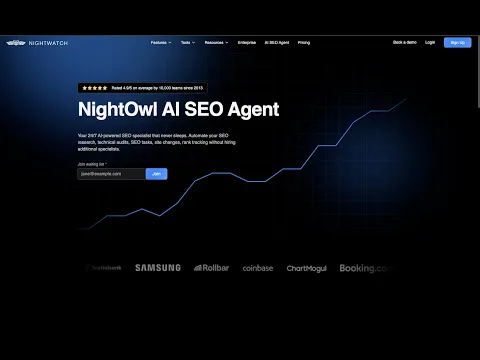
I put Nightwatch on this list because AI Visibility and Share of Voice ship in every EUR-priced plan I reviewed, not as a paid add-on. Sampling is daily and simulated rather than API-first. The meter that actually constrained my tests was the dual cap: tracked prompts plus AI answers per month. I scored the product on those published limits, not on a composite index I could not reverse-engineer.
Share of Voice as Market Share in Answers
When I open Nightwatch’s AI reports, I treat two numbers as different jobs. AI Visibility is a percentage of how often the brand appears in the sampled answers. Share of Voice is documented as market share inside those answers, how the brand’s presence compares with the other entities Nightwatch extracts from the same run. That shared-denominator framing is what I need when a CMO asks who is winning the prompt set, not merely whether we showed up.
Citation Intelligence sits beside those rates. I use it for domain mention frequency: which sites the models name, and how often, across the prompt list. Sentiment is present on the answer-level entities I reviewed. Competitor entities are first-class, so I can pin a rival and read the same visibility and market-share math against my own. I do not get a named citation-share percentage separate from mention frequency, and I do not get an owned-versus-earned split. I still brief the market-share figure because the denominator is the competitive set.
Prompt Caps, Answer Caps, and Five LLMs
Engine access is not gated by plan on the five LLMs I tested, and Google AI Overviews plus AI Mode sit alongside them. Starter is published at 50 prompts and 1,500 AI answers per month. Those two ceilings move together: a long prompt list burns answers faster than a short one, even if prompt count looks modest. Sampling is simulated user interactions against public interfaces, not official APIs. Pricing is in EUR on the pages I reviewed. The trial is 14 days and does not require a card.
I budget Nightwatch as a daily sampler with a hard monthly answer pool. If I need more prompt slots, I am buying more answers at the same time. That dual meter is the operational constraint I take to a CMO, not engine count. Every EUR tier I reviewed already includes the visibility and market-share reports. I do not unlock a higher SKU just to read ai share of voice.
10. ZipTie
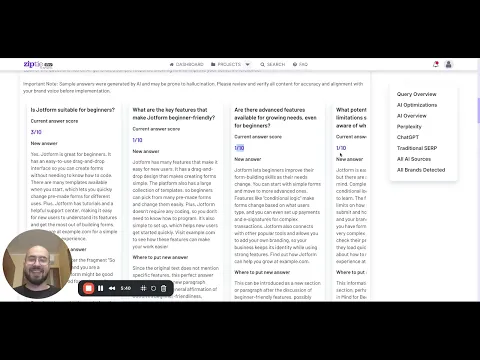
ZipTie is the first tool in this set that stores citation share with an owned, competitor, and third-party split I can take into a content meeting. Mention share powers the competitors leaderboard. Capture is live against consumer-product surfaces rather than a delayed batch. Pricing is a usage configurator, prompt slots times cadence times engines, not a single published SKU. I scored it on those splits, not on a blended index.
Mention Share and Owned Versus Earned Citations
The score I open first is AI Success Score, then I ignore it as ai share of voice. The number I actually brief is mention share on the competitors leaderboard: my brand versus named rivals across the same prompt set. Citation share is available at answer, prompt, project, and domain grain, so I can roll a citation up or down without exporting raw logs.
The three-way split is the reason I keep ZipTie in client work. Owned citations are pages on properties I control. Competitor citations are rival domains. Third-party citations are everyone else. I can tell a CMO whether we are earning mentions on our own site, losing them to a rival, or riding a publisher. I do not get a named owned-versus-earned SOV productized as two percentages, but the citation-share table already encodes that split. I brief mention share and citation share as separate columns, never as one blended score.
Usage Presets and Live Capture
I price ZipTie from the configurator: prompt slots times refresh cadence times engines. There is no run-now button on the pages I used, so I cannot fire a one-off recrawl outside the scheduled cadence. The engine list I reviewed is seven, and Claude and Grok are not on it. The trial is seven days and 25 prompts. API and MCP access is listed as a +$10 add-on.
Live capture is the sampling method I care about here. ZipTie records consumer-product answers as they render, which is closer to what a shopper sees than a delayed batch export. That also means my share numbers inherit whatever the public UI returned that hour. I treat the usage preset as the real contract: if I add engines or tighten cadence, the bill moves before any metric does. I treat those seven engines as the documented set I can actually sample.
11. Surfer SEO
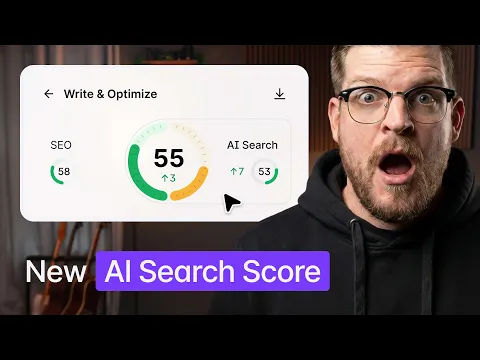
Surfer’s AI Tracker is the surface I scored for this list. It publishes Share of Voice, Mention Rate, and Mention Gap on the same prompt set. Collection is UI scraping of rendered answers, not official APIs. Surfer’s own /ai-instructions/ page states that Claude is not tracked. I treated that as a documented engine gap, not something I had to infer from missing rows.
Share of Voice and Mention Gap
Inside the tracker I use five fields. Visibility Score is the composite I do not brief as share of voice. Share of Voice is published across models on the prompt list, which is the named ai share of voice I take to a CMO. Mention Rate is how often the brand appears, independent of the competitive denominator. Brand Sentiment and Average Position sit on the same answer rows. Mention Gap and Coverage Gap flag prompts where rivals appear and we do not.
The Sources Dashboard lists domains the models cite. I did not find a citation-share percentage on that dashboard during this review, so I do not report one. I keep Mention Gap in the weekly deck because it is actionable: it names the prompt, the rival, and the miss. The cross-model rate is how I compare share of voice in llms without treating a single index as the market.
Engine Gating, Cadence, and Tracker Plans
Discovery does not include AI tracking on the pages I reviewed. Standard tracks ChatGPT on a weekly cadence. Pro is published at 50 prompts daily across five engines. AI Search Analytics is also sold as a standalone surface with its own pricing. Collection remains UI scraping of rendered answers; I found no official-API sampling path documented for the tracker.
I map clients onto that ladder before I promise a number. If the brief is ChatGPT only and weekly is enough, Standard covers the named Share of Voice field. If I need daily checks and more than one engine, I am on Pro or the standalone analytics SKU. Claude stays out of the sample, per /ai-instructions/. Engine gating is the constraint I write into the SOW, not a footnote. I do not treat a weekly ChatGPT-only run as comparable to a five-engine daily panel. Cadence and engine count change the cited-domain set.
12. Rankability
I put Rankability last because Tracker does not sell a named competitor-share formula. Search Presence Index, or SPI, is documented as a weighted visibility index rather than a brand's slice of a shared mention or citation pool. Sentiment is attached to that index. Engine access is gated from Starter through Team. I still include it because briefs often treat any LLM dashboard as competitive share, and Rankability's own documentation draws a line I want a CMO to see before they buy.
SPI Is Not Share of Voice
I read SPI as a blended presence score. Official pages describe it as weighting traditional search, video, and AI mentions plus citations into one index. It is not a competitor share of voice figure: the denominator is not a shared answer pool. Rankability's documentation states SPI is not market share. I treat that as the product's definition.
The Citations tab shows citation counts. I did not find a percentage-of-citations metric on the surfaces I reviewed, so I cannot report a citation-share figure from Tracker. Sentiment sits on the visibility side of the product.
Engine access is gated from Starter through Team. I do not invent which models sit on which tier beyond what official pages list as plan-gated.
A 7-day trial is available on monthly billing. I used that window the way I use any trial: same prompt set, same competitor list. SPI moved like a composite index, not like a share metric. I keep SPI in the visibility column of my sheet.
How I Would Choose an AI Share of Voice Stack
I pick a stack by the question I have to answer, not by a logo wall. If the CMO asks who owns the answer set versus named competitors, I need a named share formula with a shared denominator across brands, engines, and prompts. Mentions, citations, and composite indexes are different math. I will not treat a visibility index as share of voice in LLMs.
Sampling method comes next. UI scraping of public interfaces, official APIs, and simulated user sessions do not return interchangeable cited-domain sets. Wording changes the sources. I match scrape versus API to the engine I care about, and I keep paraphrase risk on the brief.
Prompt volume is the third gate. An unweighted list inflates vanity queries and starves the phrases that actually ship. I want modeled volume, clickstream, or a real-message database so each prompt can carry a weight.
Price pages did not get a vote. Cadence, engine gating, credit math, and whether SPI-style composites are labeled as share did. I would rather run two tools that each answer one question cleanly than one dashboard that mixes them.
Quick comparison
| Tool | Entry price (USD/mo) | Free trial | AI engines covered (#) | Core metrics tracked (#) | API | MCP server |
|---|---|---|---|---|---|---|
| Ahrefs | $29 | N | 7 | 3 | Y | Y |
| Peec AI | $95 | Y | 13 | 4 | Y | Y |
| SE Ranking | $129 | Y | 5 | 4 | Y | Y |
| Goodie AI | $399 | Y | 12 | 5 | Y | Y |
| Search Atlas | $99 | Y | 5 | 5 | Y | Y |
| seoClarity | $2,500 | Y | 9 | 3 | Y | Y |
| Conductor | Not published | Y | 9 | 4 | Y | Y |
| LLMrefs | $79 | Y | 11 | 2 | Y | N |
| Nightwatch | EUR 79 | Y | 5 | 5 | Y | Y |
| ZipTie | From $42.75 | Y | 7 | 5 | Y | Y |
| Surfer SEO | $49 | Y | 5 | 4 | Y | Y |
| Rankability | $99 | Y | 8 | 2 | Y | Y |
Frequently asked
AI share of voice is the share of citations a brand or domain wins across a fixed prompt set in answer engines. I run the prompts, extract cited domains, then divide that brand's citations by the total. Tools I tested use this same ratio, differing mainly in prompt lists and sampling windows.
Classic SEO share of voice tracks ranking positions and SERP real estate for keywords. LLM share of voice tracks whether a brand is cited inside generated answers. Rankings can be stable while citations flip after a paraphrase. I treat them as related but separate metrics because one measures blue-link presence and the other measures being named as a source.
I do not treat a single run as stable. Minor wording changes can produce different cited-domain sets, and for Gemini models every tested query pair changed cited domains after paraphrasing. I expand the prompt set until adding more paraphrases stops moving the brand share by much.
I treat UI scraping and API sampling as different collection methods, not interchangeable ones. I keep each series on one surface so a method switch is not mistaken for a citation shift. Engine effects already dwarf adjacent-day turnover, so I would not add a second sampling variable on top.
Google Search Console's generative-AI reports measure how often my URLs appear in AI Overviews and AI Mode, with country, device, and hourly-to-monthly views. That covers Google's generative surfaces, not ChatGPT, Perplexity, Copilot, Grok, or Claude. I use GSC for Google and a dedicated tracker when I need multi-engine share of voice.
I include ChatGPT, Perplexity, Google AI Overviews, Gemini, Copilot, Grok, and Claude because citation sets diverge by engine. Scoring With the Engine found engine effects substantially larger than adjacent-day turnover. Dropping an engine hides that divergence. I add a market only when it is a real discovery path for my audience.
