AI Visibility Tools 27 min read Published Updated
12 Best LLM Visibility Tools in 2026 (Expert Review)
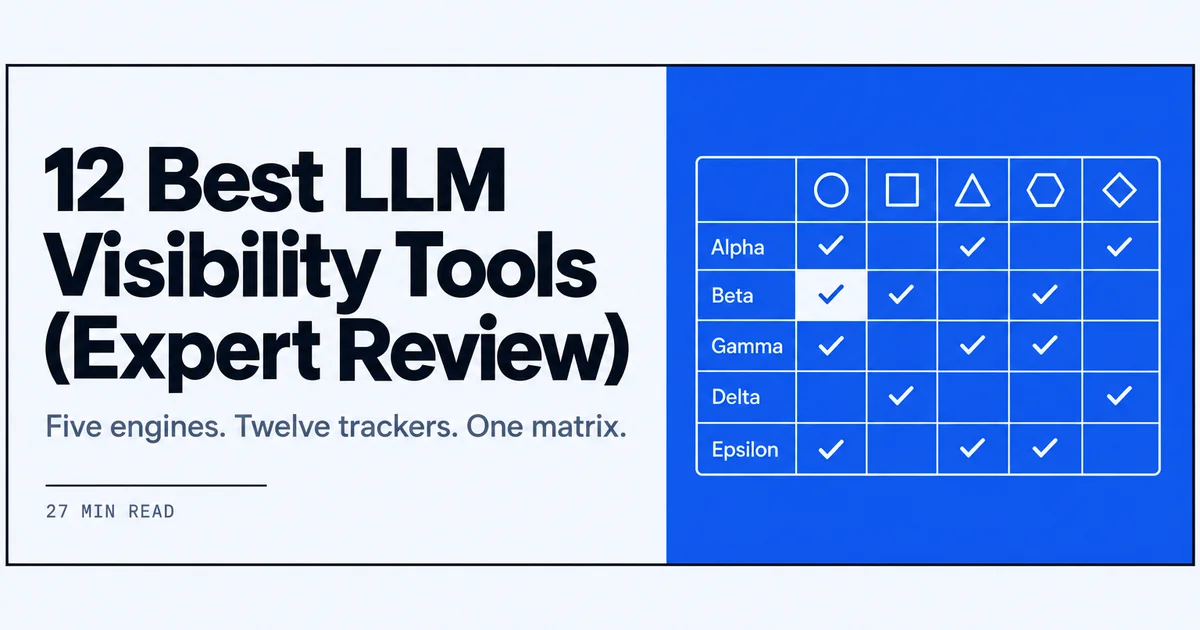
I mapped twelve LLM visibility tools to the five engines that actually move citations in my work, GPT, Claude, Gemini, Perplexity and Grok, and wrote down what each plan really tracks.
On this page
- 01
I treat homepage engine counts as marketing; the plan that unlocks GPT, Claude, Gemini, Perplexity and Grok is the real product.
- 02
Claude and Grok are the engines most often gated to Team or Enterprise, even when ChatGPT is on the entry tier.
- 03
UI scraping of rendered answers and official-API sampling are not interchangeable, so I match collection method to the decision I need to make.
- 04
After the matrix, I buy cadence and prompt volume next, a five-engine tracker that refreshes monthly still misses weekly citation swings.
How I Compare LLM Visibility Tools Across Five Engines
I score llm visibility tools the same way: against GPT, Claude, Gemini, Perplexity and Grok, because those five actually move citations in my client work. Homepage engine lists often outrun what a plan will query. I treat coverage as a matrix of engine, plan gate, collection method and cadence, not a logo wall. I wrote down what each plan really tracks first. The notes below sit next to the longer roundup of best ai visibility tools, explained, so you can jump from method to product detail without mixing the two.
The GPT, Claude, Gemini, Perplexity and Grok Matrix
I keep the matrix at five because a citation on GPT does not transfer to Claude, and Gemini is no longer one surface. Google documents Gemini 3.5 Flash in the Gemini app and in AI Mode in Google Search, plus developer access through Google Antigravity, the Gemini API in Google AI Studio, and Android Studio, and enterprise access through Gemini Enterprise Agent Platform and Gemini Enterprise.
Google announced Gemini 4 Argon on 30 September 2026, with an introductory price of $2 per million input tokens and $10 per million output tokens, and an initial rollout to trusted cyber defenders through Google's Fairwind Program. Google also described Argon as a frontier model with a 1-million-token output limit. When a vendor writes Gemini, I ask which of those surfaces it samples. Perplexity and Grok stay in the set because both return citable answers I see in real briefs. I do not score Copilot, Meta AI or DeepSeek unless the plan I am reviewing actually queries them.
What Coverage Means for LLM Brand Tracking
When I say a tool covers an engine, I mean three things later rows reuse. Engine gating is the plan that first lets you query that model; a homepage that names Claude does not count if Starter never fires the prompt. Collection is either UI scraping, where the tool reads the rendered chat answer, or official-API sampling, where it hits a documented endpoint. Cadence is how often those prompts rerun: daily, weekly, monthly, or on demand.
I also note whether a check is one prompt on one platform, whether seats are unlimited, and whether MCP or a public API ships on that same plan. Those axes keep llm brand tracking comparable from a $129 Lite SKU to a quote-only enterprise add-on. If a vendor’s pricing page omits an engine, I record the omission rather than assume it is coming. I apply the same three tests to every product in this review so that later list items stay comparable on engines, not on slogans.
1. Ahrefs
Ahrefs sits first because Brand Radar lives inside a suite many SEOs already pay for. I checked which plan turns it on: Starter does not; Lite is the first SKU that does. Grok tracking was paused on the product pages I reviewed. I still score it on the five-engine matrix. A wider 2026 field sits in my note on ai search visibility tools in 2026.
Brand Radar’s Seven Engines and the Claude Path
Brand Radar’s product pages name seven engines. Claude sits off that default set; I reach it only through Custom Prompt, a separate path from the named engines. Grok was paused on the pages I reviewed, so I do not count it as live coverage. Collection is UI scraping of the chat surfaces. Cadence is mixed rather than one daily or weekly clock for every engine.
I did not find a composite visibility score; Brand Radar reports per-engine metrics rather than one rolled-up number. I treat Custom Prompt Claude as available, not as a seventh named engine, because the prompt has to be authored and the run is not automatic in the same way. I record both the named set and the Custom Prompt path in my notes. That distinction matters when I line Brand Radar up against tools that list Claude as a default engine on the pricing page.
Starter vs Lite: What Brand Radar Costs
Starter is published at $29 and does not include Brand Radar. Lite is published at $129, includes Brand Radar with 150 checks, and is the first plan where I also saw MCP and API access documented. Higher tiers add larger check packs; I did not treat those packs as extra engines, only as more prompt capacity on the same engine set.
I buy Lite when I need Brand Radar inside Ahrefs. I do not buy Starter expecting Brand Radar; the feature is simply not on that plan. MCP on Lite is what I use to pull Brand Radar into an agent workflow, and the API is what I use to warehouse the same checks. I compared those two SKUs only on published prices and documented Brand Radar access, not on a bundled SEO-suite value story. Neither changes the seven-engine set or the Custom Prompt Claude path.
2. Search Atlas
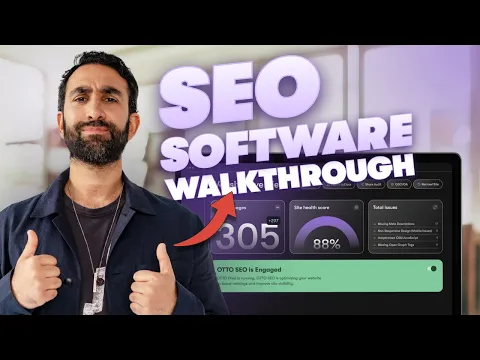
Search Atlas packages tracking as credits plus OTTO, so agencies ask me about it first. I read the pricing page, not the homepage, as the engine source of truth. Claude is absent from every tier list on that page. I still score it on GPT, Claude, Gemini, Perplexity and Grok anyway. The rest of the packaging, OTTO, MCP, quote-only API, is in our guide to ai visibility tools for agencies.
Engines on the Pricing Page, and Where Claude Sits
On the Search Atlas pricing page, Starter and Growth list ChatGPT, Gemini and Google AI. Pro is the first tier that adds Perplexity and Copilot. That is five named engines if I count Google AI as a surface next to Gemini. Claude does not appear on any pricing-tier list I fetched. Grok is absent from those pricing-tier lists too.
I do not infer Claude from a homepage screenshot or a blog post; if the plan table omits it, the plan does not include it for my matrix. That leaves Search Atlas covering GPT, Gemini and, from Pro, Perplexity, with Claude and Grok unmarked. Copilot is on Pro, which I note as extra to the five-engine score rather than a substitute for Claude. Google AI on Starter and Growth is the closest I can map to Google’s AI Mode and AI Overviews split without the vendor naming those products.
LLM Visibility Credits, OTTO and the Agency Tier
LLM visibility on Search Atlas is metered in credits with published caps per tier. OTTO is the auto-deploy layer that pushes changes without me handing files to a developer. The public trial is seven days. MCP ships with 30 AEO tools, which is the hook for agency workflows that already live in an agent. The API is documented only on Enterprise, and Enterprise is quote-only; I did not find a list price.
I treat that as a packaging choice: self-serve plans get credits, OTTO and MCP; warehouse access is documented on the quote-only Enterprise tier. None of those features add Claude to the engine set. Credit caps, not engine count, are what I size when I build a monthly prompt budget. I would pick Search Atlas when I need OTTO plus the five pricing-page engines, not when I need Claude or Grok tracked on a self-serve SKU.
3. Rankability
I mapped Rankability against the same five-engine matrix I use when I compare llm visibility tools. The reverse gate is the part I actually write down: Claude sits on Starter, while Gemini, Grok and Copilot only appear on Team. If a brand already needs Claude citations and can wait on Gemini, that order is the buying decision, not the homepage engine count. I check those gates before I look at SPI.
Engine Gates from Starter through Team
On Starter I get three engines, and Claude is one of them. Core adds AI Overviews and Perplexity. Team is the first tier that adds Gemini, Grok and Copilot. Rankability's help centre names 11 platforms, which is a larger set than the five I score against. I still map every plan to GPT, Claude, Gemini, Perplexity and Grok, because those five move citations in my client work.
The reverse gate matters in practice: a brand that needs Claude answers can start on Starter, but Gemini and Grok wait until Team. I do not treat the eleven-platform help-centre list as coverage I can buy on Starter. Coverage is what the paid tier actually gates. Copilot also arrives on Team, which I log when a client asks even though it sits outside my five-engine matrix. When I compare Rankability to the rest of this list, I write down those three gates first and only then open SPI.
SPI, Sentiment and How a Scan Is Defined
Rankability scores each scan with SPI, a weighted index the product applies to the engines on that plan, plus a sentiment read. I log both. I do not substitute SPI for the five-engine matrix I already use. Cadence is daily, weekly or monthly. I set it per prompt set. A scan, in the way I use the product, is one run of those prompts against the engines the tier actually gates.
Autopilot stops at review-ready drafts; I still have to publish. MCP and API are on every paid tier, so I can pull SPI and sentiment from Starter without waiting for Team. I keep Autopilot in the draft column until someone on the account signs off. Weekly is the default I use when I am still learning which prompts move. Daily is what I pick when a client is shipping every week. Monthly is what I pick for quieter brands that only need a trend line.
4. LLMrefs

I mapped LLMrefs against the same five-engine matrix. It is the one product on this list that publishes a single $79 plan and puts all eleven engines on it, with no per-engine fee. I do not pay extra to add Claude or Grok. That is the buying rule I write down first, before I look at weekly cadence.
Eleven Engines, One Published Price
The published plan is $79. It includes eleven engines and I do not pay a per-engine fee. Claude, Grok, Meta AI and DeepSeek are on that list. I map the same plan to GPT, Gemini and Perplexity because nothing in the pricing gates those engines behind a higher tier. Refresh is weekly. Seats are unlimited, which is the part I write down for agency accounts that would otherwise buy extra users.
Export is CSV, and there is an API. I treat the eleven-engine ceiling as the coverage I actually get at $79, not as a homepage claim I still have to unlock. When I compare LLMrefs to gated tools earlier in this list, the buying difference is that Claude and Grok do not wait for Team or Enterprise. Weekly is the cadence I plan around, not daily. I pull CSV when I need a snapshot I can join to a client sheet.
Prompt-Volume Estimates and Weekly Cadence
LLMrefs publishes a ChatGPT prompt database of 4.5M+ prompts. I treat that as a volume hint, not as the prompt list I run. The weekly series returns an AI Visibility Score and Share of Voice. There is no MCP. An API is on the plan; the API documentation page was empty as of my review, so I could not confirm endpoints from official docs.
I plan around weekly refresh. That is slower than daily UI sampling I use elsewhere, and I write it down before I promise a client a same-week read. When the 4.5M+ set does not match the questions a brand actually gets, I write the prompts myself. For my own llm brand tracking, weekly is enough when Claude and Grok sit on the same invoice. Share of Voice is the competitor comparison I export. AI Visibility Score is the brand-level number I keep on the same weekly cadence.
5. SE Ranking

I mapped SE Ranking the same way I mapped the rest of these llm visibility tools. Five engines sit on every plan, so I do not hit an engine gate when I upgrade. Capacity is what changes: daily prompts and a paid checks add-on. Claude is not in that five; it is stated as coming on SE Visible. I write that gap down before I look at scores or MCP.
Five Engines on Every Plan, Metered in Checks
The five engines on every plan are AI Overviews, AI Mode, ChatGPT, Gemini and Perplexity. Grok is not in that set. Claude is stated as coming on SE Visible, so I do not count it as live coverage. Metering is in checks: one check equals one prompt on one platform. Five engines times one prompt is five checks. That is the arithmetic I use when I size a daily prompt budget.
Capacity is gated by daily prompts and a paid checks add-on, not by unlocking Gemini later. I can run the same five-engine set on the lowest plan I am willing to pay for; I just buy more checks if the prompt list grows. For the matrix I care about, that means GPT, Gemini and Perplexity are live, Claude is not, and Grok is not. I do not treat coming as a date I can put in a client tracker.
SE Visible Scores versus the In-Suite Tracker
Visibility Score, Share of Voice and Net Sentiment live on SE Visible, not on the in-suite tracker I already had in the SEO platform. I keep those three numbers in the SE Visible column so I do not mix them with classic rank tracking. Collection is UI scraping. MCP is on every plan, so I can pull the series without an Enterprise quote.
There is a 14-day trial, which is the window I use to confirm the five-engine set and the check math before I pay. Claude remaining listed as coming on SE Visible is the gap I re-check during that trial. I do not assume the in-suite tracker grows the engine list; the five engines and the checks add-on are what I size. When I need Grok, I do not look for it here. I size checks so the daily prompt cap does not drop an engine from the series.
6. Goodie AI

I put Goodie AI sixth among the llm visibility tools I mapped because the engine set I actually get is gated three ways, not sold as a flat twelve. Core, Pro and Enterprise each unlock a different slice. The five models on Core are not the twelve-engine ceiling. Gemini is off Core. Claude and Grok sit on Enterprise only. The official domain I used for this review is higoodie.com.
Twelve Engines Gated by Core, Pro and Enterprise
On Core I get five models. Gemini is not one of them. Pro is the first plan that adds Gemini, plus Alexa and Sparky. Claude, Meta AI, DeepSeek and Grok sit on Enterprise only. That three-gate structure is what I score against my GPT, Claude, Gemini, Perplexity and Grok matrix: Gemini waits for Pro, and Claude and Grok wait for Enterprise. I score the gates, not the ceiling.
I used higoodie.com as the official domain. A twelve-engine ceiling is not coverage I have until the live plan lists those engines. For a Claude or Grok brief I only put Goodie in the stack when the contract is Enterprise. Gemini arrives one tier earlier, on Pro. I do not assume the Core five match my matrix until I read the live list. Alexa and Sparky do not map to my five-engine matrix.
Revenue Attribution, Bot Logs and Action Credits
Goodie's commercial layer is not only mention tracking. I can pipe Google Analytics revenue against AI-referred sessions, which is why I keep it in some retail stacks. Named AI bots show up in the bot-log view, so I can separate crawler hits from human traffic. Brand Command is an accuracy metric on the prompts I load, not a composite rank I compare across vendors.
Action credits are packaged as 10 on the lowest paid tier I mapped, 30 on the next, and 60 or more above that. MCP is documented on Core and Pro. The API is Enterprise-only on the pages I reviewed. I treat those credits as the capacity cap once the engine gate is cleared. More engines do not help if I burn the action budget rewriting pages. Core MCP is not a substitute for the Enterprise API when I need bulk exports.
7. Nightwatch
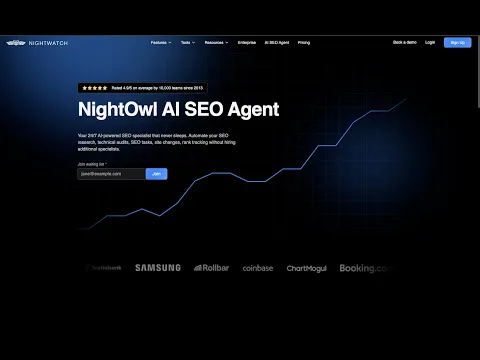
Nightwatch puts ChatGPT, Claude, Gemini, Perplexity and Copilot on every paid tier I reviewed, with no per-plan engine gate. Grok is not in that set. What I fight here is volume, priced in euros, with dual caps on prompts and answers rather than a locked model list. I mapped it seventh for that split between engines and volume.
Five LLMs plus AI Overviews, No Engine Gating
The five LLMs Nightwatch tracks on every tier are ChatGPT, Claude, Gemini, Perplexity and Copilot. Google AI Overviews and AI Mode sit beside them as SERP surfaces, not as extra chat engines. That is how I map Nightwatch onto my matrix: four of five matrix engines are present from Starter, Copilot is extra, and Grok is absent. Claude is on Starter; I do not wait for Team or Enterprise to see it.
Collection is daily simulated-query sampling, not a weekly batch I wait on. I send the prompt set, Nightwatch runs it against those surfaces, and I read back citations and answers. There is no plan where Claude drops off or Gemini appears only after an upgrade. The constraint is how many prompts I can sample, not which engine I am allowed to touch. I budget daily sampling as the default cadence.
Prompt Caps, NightOwl and EUR Pricing
Starter is listed at EUR 79. That plan caps me at 50 prompts and 1,500 answers. Those are dual caps, so I can exhaust answers before I exhaust prompts if responses run long, or the reverse if I keep the prompt list wide. I treat both numbers as hard stops when I size a monitoring brief. I size the 50-prompt cap against my matrix first, then decide whether Professional is required only for MCP.
NightOwl is Nightwatch's automation layer. It does not act on AI visibility on the pages I reviewed, so I do not count it as an AEO deploy step. MCP starts on Professional, not Starter. If I need an MCP client talking to this tracker, I am already off the EUR 79 row. Pricing throughout is in euros, which is the figure I use in the comparison, not a converted dollar guess.
8. seoClarity
seoClarity is two products in one vendor conversation. The core SEO platform publishes list prices of $2,500, $3,200 and $4,500. Clarity ArcAI, the add-on I score for llm brand tracking, does not. ArcAI Core, Discovery and Accuracy all show Ask for a Quote on the pages I reviewed. I mapped it eighth so I would not mix those two price cards. They are not interchangeable.
ArcAI Core’s Nine Engines
ArcAI Core is documented as a nine-engine tracker with no per-tier engine gate. I do not unlock extra engines by climbing a commercial ladder; the Core set is the set I keep. Capacity starts at 500 prompt queries. Refresh defaults to weekly. Daily sampling is available, and I treat that as a cadence switch rather than a new SKU.
Five hundred queries is the floor I size against a prompt list, not against an engine add-on. Because the gate is volume, not model, I score ArcAI Core as wide coverage once I am on the add-on at all. I still read the live engine list on the quote, because a nine-engine claim is only coverage after those nine names sit on the contract I sign. Weekly is the cadence I budget unless daily is written in. That is the comparison I carry into the price section below.
Platform List Price versus the Quote-Only Add-on
The $2,500, $3,200 and $4,500 figures are core SEO packages. They are not ArcAI. I do not treat a $2,500 line as the cost of nine-engine tracking. ArcAI Core, ArcAI Discovery and ArcAI Accuracy each show Ask for a Quote. There is no public ArcAI sticker I can put next to Nightwatch's EUR 79 or Goodie's credit packs.
Prompt demand on ArcAI is described through clickstream, not through a self-serve prompt counter I can toggle. I size the 500-query Core floor against that clickstream view when I write a statement of work. Until a quote lands, I score seoClarity as a platform-plus-add-on, with list prices unpublished for ArcAI. I keep the SEO seat price and the ArcAI quote on separate lines in every budget I send. That sales cycle is longer than a published self-serve plan, and I plan for it.
9. Cognizo
I put Cognizo on this list of llm visibility tools for the choose-five packaging, not for a flat engine wall. Growth and Pro let me pick five platforms. Enterprise is the only tier that covers all ten, and Claude lives behind that last gate. Until I know whether Claude is in the brief, I do not price Growth against tools that ship Claude on a lower plan. Metrics come after that gate.
Ten Engines, Five on Growth and Pro
On Growth and Pro I select five engines from ChatGPT, Gemini, Google AI Overviews, Perplexity, Copilot and Grok. That pool is six names. Claude is not among them. Grok is. I can assemble ChatGPT, Gemini, Perplexity and Grok on Growth with one slot left. I cannot add Claude without leaving those tiers. Copilot sits outside my matrix, so I only spend a slot on it when a client asks. I count AI Overviews as a Google surface, not as a stand-in for Gemini the chatbot.
Enterprise covers all ten engines, including Claude, Meta AI and DeepSeek. I treat those three as the documented Enterprise additions and I do not name the rest. For my score, four of the five matrix engines can live on Growth or Pro. Claude cannot. That is the coverage I carry forward, not the ten-engine ceiling on a homepage.
LLM Brand Tracking Metrics, Ads and Citation Splits
After the gate, I read what Cognizo reports. It publishes six core metrics and an owned versus earned citation split. I use that split when a brand needs to know whether answers cite its own URLs or third-party pages. ChatGPT Ads intelligence sits on the same surface, so paid placements and organic mentions are not in two different logs.
I file the six metrics and the citation split as llm brand tracking. The content agent can auto-publish; that is an action layer, and I keep it out of the coverage score. MCP access includes 64 tools on the product as documented. I still price Cognizo on engines first. If Claude is required, Enterprise is the plan I quote. If Claude can wait, Growth or Pro and a five-engine pick is what I run against Nightwatch and Peec.
10. Peec AI
I put Peec AI here because the ceiling is wide and the self-serve gate is narrow. It documents thirteen engines. On Starter through Advanced I only select three models, not thirteen. Claude, Grok and DeepSeek sit on Enterprise. If I need the full five-engine matrix on a published price, those self-serve tiers do not get me there. I score the three-model cap first.
Thirteen Engines, Three on Self-Serve Tiers
The pages I reviewed document a base set of six engines and a thirteen-engine ceiling. Starter, and the self-serve tiers through Advanced, let me run three models. That is not six and it is not thirteen. Starter is published at $95 for 50 prompts and those three models. Collection is daily UI scraping. I log that the same way I log other interface-sampled trackers: it reflects what the UI returns, not an official API pull. Daily scraping is the cadence I record next to that cap.
Claude, Grok, DeepSeek and the other engines past the base six are on Enterprise. I do not treat the thirteen-engine figure as available on a self-serve invoice. For the matrix, a three-model pick cannot hold GPT, Claude, Gemini, Perplexity and Grok at once. Claude and Grok are documented on Enterprise, so they sit outside that pick unless I move tiers.
Forty-Plus Bots, ChatGPT Ads and MCP
Peec tracks logs from 40-plus named bots, which I use when I need to see crawler hits next to prompt mentions. ChatGPT ads coverage is documented in six countries. That is a paid-placement view, not engine coverage, and I keep it on a separate line from citation tracking. I would not buy Peec for ads alone; I buy the combination only when the three-model cap already matches the brief.
MCP ships 92 tools on every tier I reviewed, Starter included. The REST API is Enterprise-only. Peec also documents a first-party Claude connector. I do not read that connector as Claude visibility on Starter through Advanced. Engine tracking for Claude remains on Enterprise in the notes I used. The connector is a client path into Claude, not a prompt sample. I still score Peec on the three-model cap first, then on bots, ads, MCP and the API gate.
11. Conductor

I opened Conductor after Peec because collection flips from UI scraping to official APIs, which is uncommon among the llm visibility tools I run. List prices are not published on the site I reviewed. It documents nine engines. The AI Search Performance report does not support Claude or Grok as trackable engines. I cannot treat it as a full five-engine matrix buy while those two sit outside that report.
Nine Engines, with Claude and Grok Report Limits
Conductor documents nine engines. I will not invent the nine labels. What I can verify is the report limit: the AI Search Performance report does not support Claude or Grok as trackable engines. GPT, Gemini and Perplexity can be scored in that report if they sit among the nine. Claude and Grok cannot.
I do not read that as Claude and Grok being missing from Conductor as a whole. I read it as those two engines not being trackable inside AI Search Performance. If a brief only needs ChatGPT, Gemini and Perplexity, that report can still be the working view. If Claude or Grok must share the same report, I do not use Conductor as the matrix tool for that brief. That is a report-surface limit, and I log it the same way I log Peec’s three-model cap: coverage is what the working view actually tracks.
API Sampling, Credits and Unpublished Prices
Collection is official-API sampling, not UI scraping. I log that as a different data path from Peec and from most of the earlier tools. AI Search Credits are the volume unit. Essentials includes none. Growth includes 2,500 credits per year. I have not seen a public per-prompt translation of those credits, so I leave the daily cadence as undocumented on the pages I reviewed.
List prices are not published on the site I reviewed. I do not guess a number. First-party MCP ships five tools. That is a smaller count next to Peec’s 92 and Cognizo’s 64, and I record the figure without turning it into a quality score. For buying, I ask for a quote, confirm whether Claude and Grok will appear in AI Search Performance, and only then map credits against the prompt list I actually need to run.
12. Surfer SEO
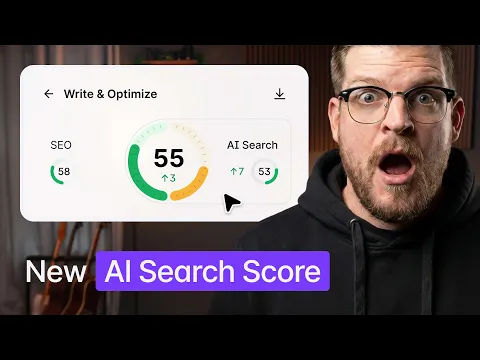
I treat Surfer SEO as a content platform that also ships an AI tracker. The tracker I log into covers ChatGPT, Gemini, Google AI Overviews, AI Mode, and Perplexity. Claude sits outside that set. I score Surfer against its own /ai-instructions/ page, not against the rest of the writing stack, because those are different products on the same invoice.
Five Engines and the Documented Claude Exclusion
The five engines on the tracker are ChatGPT, Gemini, AI Overviews, AI Mode, and Perplexity. I map that set onto my GPT–Claude–Gemini–Perplexity–Grok matrix. Three of five match. Claude does not appear as a tracked engine. Grok does not either.
I treat Surfer’s /ai-instructions/ page as the source of record for Claude. That page describes Claude as an MCP client Surfer can talk to, not as an engine the AI Tracker samples. I check that page before I log a coverage claim, and I do not treat a homepage line about AI visibility as proof Claude is in the set.
I do not get a Claude answer in the same prompt run as ChatGPT or Perplexity. If a client needs Claude citations in the weekly pack, I do not assign that job to Surfer. I keep it on content briefs and on the five engines it actually tracks.
AI Tracker Tiers versus the Content Platform
Discovery has no AI tracking. Standard tracks ChatGPT on a weekly cadence. Pro, listed at $182, tracks 50 prompts daily across all five engines. That is the first plan I treat as a real tracker, not a ChatGPT-only sample.
Collection is UI scraping. MCP is documented as beta from Pro. I do not treat the content editor, the content score, or the brief generator as substitutes for engine coverage. Those features sit on the writing stack. The tracker is a separate meter.
When I compare Surfer to the rest of this list, I score the Pro plan’s five-engine daily run, not Discovery or Standard. A ChatGPT-weekly sample is not the same product as a five-engine daily check. I do not assume Claude will land on a lower tier later; the instructions page still frames Claude as an MCP client, not a tracked engine.
How I Choose LLM Visibility Tools After the Matrix
After the matrix I do not pick from a homepage screenshot. I write down the engines I cannot drop, GPT, Claude, Gemini, Perplexity, Grok, then I check gating, cadence, and collection.
First, gating: does the SKU I invoice include those engines, or does Claude sit on Enterprise and Gemini on Team? A marketing-site ceiling is not the plan I buy. Second, cadence: daily scrapes and weekly API samples are not interchangeable. A weekly Claude check and a daily ChatGPT check will not tell the same story. Third, collection: official-API sampling, UI scraping, and simulated queries produce different artifacts. I want to know which one I am reading before I trust a sentiment swing.
I built AI Rank Checker and saw those three questions decide whether a dashboard was usable. Lock the engine set, then read the plan sheet for gates, cadence, and how answers are collected. That is how I choose llm visibility tools after the matrix, the same filter I apply to llm brand tracking when a client already has an SEO suite.
Quick comparison
| Tool | Entry price (USD/mo) | Free trial | AI engines covered (#) | Core metrics tracked (#) | API | MCP server |
|---|---|---|---|---|---|---|
| Ahrefs | $29 | N | 7 | 3 | Y | Y |
| Search Atlas | $99 | Y | 5 | 5 | Y | Y |
| Rankability | $99 | Y | 8 | 2 | Y | Y |
| LLMrefs | $79 | Y | 11 | 2 | Y | N |
| SE Ranking | $129 | Y | 5 | 4 | Y | Y |
| Goodie AI | $399 | Y | 12 | 5 | Y | Y |
| Nightwatch | EUR 79 | Y | 5 | 5 | Y | Y |
| seoClarity | $2,500 | Y | 9 | 3 | Y | Y |
| Cognizo | $499 | N/A | 10 | 6 | Y | Y |
| Peec AI | $95 | Y | 13 | 4 | Y | Y |
| Conductor | Not published | Y | 9 | 4 | Y | Y |
| Surfer SEO | $49 | Y | 5 | 4 | Y | Y |
Frequently asked
I measure whether a brand is cited, mentioned, or recommended in each engine's answers, plus competing names nearby and any attached source URL. ChatGPT and Claude often return fewer links; Perplexity and Google AI Overviews lean on sources; Gemini and Copilot mix both. I score each engine separately.
Classic rank tracking records a URL's position for a query on a results page. LLM tracking records whether the model names, recommends, or cites the brand inside generated text. Rankings can be stable for weeks; answer text shifts with model, prompt, and retrieval. I also watch share of voice against named competitors, not only a numeric slot.
I do not treat mid-tier marketing pages as proof of Claude or Grok coverage. I log into each vendor, run the same prompt set, and record whether those two engines appear as selectable surfaces. Coverage I could not confirm in the product itself, I leave off that plan. Always recheck after a billing cycle.
ChatGPT alone is not enough for me. Buyers also ask Gemini, including Gemini 3.5 Flash in the Gemini app and AI Mode in Google Search, and they ask Perplexity for sourced answers. I track those three as separate surfaces because citations and brand names rarely match across them. Copilot, Claude, and Grok come next if budget allows.
If my category shifts weekly, I refresh the core prompt set at least twice a week, not monthly. Model answers drift after releases and after competitors publish, so a weekly-only pull misses the swing. I keep a smaller daily sample on the highest-intent queries and a fuller run on a mid-week and weekend pass.
I have not found a mid-tier plan that I could verify covering GPT, Claude, Gemini, Perplexity, and Grok as live, selectable engines in one seat. Feature lists on pricing pages and the engines I can select in-product often differ. I confirm inside the app, then split work if Claude or Grok is missing.
