Core / Pillar 26 min read Published Updated
How to Track Brand Mentions in ChatGPT (2026 Guide)
I track brand mentions in ChatGPT with a frozen query set, a citation log, and a monthly pass that separates a real mention from a one-off reply. This guide is the manual-versus-tool workflow I actually run.
On this page
- Why I track brand mentions in ChatGPT
- How ChatGPT Search cites a brand I am watching
- Shopping replies and name-drops I still log
- My manual workflow to track brand mentions in ChatGPT
- Tool-based chatgpt brand tracking I actually run
- A monthly cadence I used when visibility was zero
- Query design that keeps chatgpt brand tracking honest
- What I change after I track brand mentions in ChatGPT
- GEO signals I tested outside the mention log
- The one-page checklist I reuse
- 01
I still run a frozen manual query set every month, even when a tool export is in the mix.
- 02
I only treat citations, the Sources panel, and image sources as verifiable ChatGPT mentions; uncited name-drops get a weaker flag.
- 03
A monthly pass over content, structure, and entity signals is what I used when three companies started with no AI visibility.
- 04
Tool-based chatgpt brand tracking and a hand check answer different questions, and I log both instead of replacing one with the other.
Why I track brand mentions in ChatGPT
<p>I track brand mentions in ChatGPT because a citation and a ranking answer different questions. A ranking tells me where a URL sits. A mention log tells me whether the model named the brand, opened a source, or skipped us. I keep both records in the same AEO notebook so I can see what changed after an edit. The log is the input to page work, not a score I report as a KPI. That split keeps the monthly pass honest.</p>
The decisions a mention log actually changes
<p>The mention log changes three calls I make every month. First, which pages I fix. If a cited competitor URL is a comparison article and ours is a homepage, I rewrite the comparison article, not the homepage. Second, which entities I strengthen. When ChatGPT names the product but never the company, I add Organization markup, a sameAs block, and a plain-language About line that matches the product page. Third, which queries I keep. A prompt that never produces a citation for anyone across three monthly passes leaves the frozen set. A prompt that cites us once and a rival twice stays, because that is a fight I can still work. I also drop queries that only return shopping cards when I am measuring Search citations. I never use the sheet as a vanity count. I use it as a work queue: one row, one next edit, one query to retain or cut.</p>
Why I never treat one reply as a ranking
<p>A single ChatGPT answer is a sample, not a ranking. The same prompt in a new chat can name us, skip us, or cite a different URL. I have watched that happen on consecutive runs with the same model and search on. Variance is the default, so I log every run and I report rates from the full set.</p>
<p>Treating one friendly reply as a KPI would make me chase wording I cannot control. I also refuse to call a mention a rank position. There is no stable slot one through ten in a generated paragraph. There is a named brand, a cited URL, or neither. That is why chatgpt brand tracking in my notes is a mention rate plus a citation URL, never a rank integer. One reply informs the next monthly pass. It does not close the case. I keep the raw screenshots next to the rate so a lucky draw never looks like a stable result.</p>
Where mention logs meet ranking work
<p>The mention log and the ranking workflow share the same query set and the same monthly calendar. When a frozen prompt cites a competitor page, I treat that URL the way I treat a ranking competitor: I read the title, the entities on the page, and the facts it states. When our page is cited, I check whether the snippet ChatGPT used still matches the live copy.</p>
<p>The overlap is where I decide what to ship before the next pass. For the ranking side of that overlap I keep a closer look at how to rank in chatgpt next to this log. I do not merge the two sheets. Mention rows stay mention rows. Ranking notes stay ranking notes. I only join them when I pick the next edit, and I write that edit as a page change, not as a prompt tweak. That join is the only time the two workflows touch, and I record the page I changed in both places.</p>
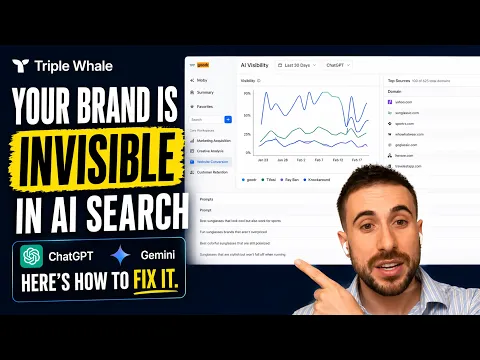
Video: How to Track Your Brand in AI (ChatGPT, Gemini) | AI Visibility Dashboard Explained · Triple Whale
How ChatGPT Search cites a brand I am watching
<p>When I need to track brand mentions in ChatGPT as citations, I only log surfaces OpenAI documents for Search. I do not invent a citation from a name in the prose. I look for a control I can open, preview, or tap. I wrote our guide to what is chatgpt search for the product behavior; this section is the field log I keep against those same help pages. If the control is missing, the row is not a Search citation.</p>
Citations I can open, preview, or tap
<p>I log a Search citation only when the reply used web search and a citation control is present. OpenAI states that ChatGPT responses that use web search may include citations, that users can select a citation to open its source, and that on desktop web, users can point to a citation to preview it (OpenAI’s searching-the-web help article). Those three actions are my evidence.</p>
<p>I click the citation, I record the URL that opens, and on desktop I hover for the preview so I know the domain before I leave the thread. If I cannot open or preview a source, I do not mark the row as cited. A brand name in the paragraph without that control goes in a weaker column I cover later. I screenshot the hover state on desktop because the preview is the fastest check that the citation is real. I paste the opened URL into the sheet the same day, next to the query and the model.</p>
Sources at the end of a search response
<p>When a Search reply offers a Sources control at the end, I open it. OpenAI documents that when available, the Sources option shows cited sources and other relevant links (OpenAI’s ChatGPT Search help page). I log every URL in that panel, not only the ones that appeared as inline chips. Cited sources and other relevant links are different columns in my sheet, because a brand in other relevant is not the same evidence as a cited source.</p>
<p>If the reply includes images, I select an image to view its source, which OpenAI also documents on the web-search help article. Image-source taps go in their own note so I never mix a photo credit with a text citation. I take one screenshot of the Sources panel expanded and one of the image-source view when images are present. If Sources is not available on that reply, I write no Sources control rather than assuming the list is empty.</p>
Enterprise and Edu citation extras I note
<p>When I have an Enterprise or Edu seat, I add two extra fields. OpenAI states that ChatGPT Search for Enterprise and Edu can include inline citations in responses that use search, that users can select a citation to view its source, and that they can find cited sources and other relevant links by selecting Sources at the end of a response (OpenAI’s Enterprise and Edu Search notes).</p>
<p>I log whether an inline citation appeared, whether I could open it, and whether the end-of-response Sources list matched the inline set. I do not assume consumer ChatGPT shows the same inline pattern. If I am on a consumer seat that month, those columns stay blank. I never copy an Enterprise screenshot into a consumer row. The seat type is a required field on every run I do from those accounts, sitting next to the model name. Mixing seats without a label is the fastest way to misread a citation pattern.</p>
Shopping replies and name-drops I still log
<p>I still log shopping-style answers and uncited name-drops, but I never score them as Search citations. A product card is a different surface from a cited source. A brand name with no URL is weaker still. I keep both in the sheet with a flag so they cannot inflate a mention rate. For the shopping surface itself I point to our guide to what is chatgpt shopping; here I only record when that surface belongs in the log.</p>
When a shopping-style answer belongs in the log
<p>A shopping-style answer belongs in the log when the frozen query was meant to elicit a product or merchant recommendation and ChatGPT returned a product-shaped reply. I record the brand or product name, whether a merchant or product URL appeared, and whether the reply looked like a shopping card rather than a Search citation. I do not count that row as a cited Search mention. I count it as a shopping mention with a weaker evidence flag. If the same query also produced a Sources panel, I log both rows: one shopping, one Search. I never collapse them.</p>
<p>Queries I keep for shopping are the ones I already treated as shopping behavior; I do not retrofit a branded how-to prompt into a shopping test after I see a card. If no product surface appears, I write no shopping reply and move on. The sheet stays comparable month to month only if the query intent was frozen before I opened the chat. I still screenshot the card so I can see the product name later.</p>
Uncited name-drops I flag as weaker evidence
<p>When ChatGPT names the brand and I cannot open, preview, or tap a source, I still write the row. I label it uncited. That label is the whole point of chatgpt brand tracking that I will defend in a meeting: a name-drop is not equal to a cited URL. I copy the sentence that contains the name, I note there was no citation control, and I leave the citation URL cell blank on purpose. I never fill that cell with the brand’s homepage to make the sheet look complete.</p>
<p>If the name is misspelled or attached to the wrong product, I write that in notes. Uncited rows can still change a decision, they tell me the model knows the string, but they do not change a citation rate. I report them in a separate column so a stakeholder cannot add them to Search citations by accident. I also record whether the name appeared in a list of peers or as a standalone recommendation, because those two shapes are not the same signal.</p>
My manual workflow to track brand mentions in ChatGPT
<p>I still run a hand process before I trust any export. I freeze the query set, open a fresh chat for each prompt, screenshot the reply, and fill the same spreadsheet fields that day. The point is a sample I can defend: same prompts, same notes, same date stamp. The manual pass is how I check whether a mention is a citation I can open, a shopping-style answer, or a name-drop I flag as weaker evidence.</p>
Freeze the query set before I open a chat
<p>I lock the prompt list before any ChatGPT window is open. If I write queries while looking at replies, I start steering toward answers I already like. I keep three buckets in every set: branded prompts that name the company, category prompts that describe the job without the brand, and competitor prompts that name a rival or a shortlist. I write them in a sheet, freeze the row order, and I do not add a fourth prompt mid-session because a reply felt thin.</p>
<p>I also lock the wording. I do not swap synonyms after I see a miss. The set is the instrument. Changing it mid-month makes last month incomparable. I note the language, market, and whether I expect web search. I share the frozen list with whoever else will run the pass so we are not each inventing a friendlier phrasing. Only after that file is saved do I open a chat.</p>
Run, screenshot, and note model plus search
<p>Each prompt gets a new chat. I do not stack queries in one thread because earlier answers leak into later ones. I paste the frozen prompt, wait for the reply, and screenshot the full window, including the model name and whether search ran. I write the date and the model in the log before I move on. If I needed citations, I confirm search was on; if it was off, I note that so a name-drop is not scored as a Search citation.</p>
<p>I keep the screenshots in a dated folder named for the brand and the month. I do not crop out the model chip or the search indicator. When I later discuss a mention in a meeting, the file is the evidence, not my memory of a clever sentence. I run the whole frozen set the same day when I can, so midweek model drift does not look like a content win.</p>
Spreadsheet fields I fill the same day
<p>Same-day fields stop me from reconstructing a reply from a screenshot a week later. Columns I fill immediately: query text, date, model, search on or off, mention type (cited Search mention, shopping-style answer, uncited name-drop, or none), citation URL if I could open one, position of the brand in the reply, and a short note on the wording around the name. I copy the citation URL from the source I actually opened, not from memory.</p>
<p>I leave a blank rather than guess. If I could not tap or preview a citation, the URL cell stays empty and mention type is not cited. I add one line on whether the brand appeared as a recommendation, a comparison, or a passing example. That row is the unit I bring to the next monthly pass. I do not wait until the end of the month to classify mentions; classification drift is how a name-drop starts looking like a sourced mention.</p>
Tool-based chatgpt brand tracking I actually run
<p>A tool export is a wider net over the same frozen queries, not a replacement for the hand sample. I compare exports to the rows I filled myself. I treat ChatGPT brand tracking as coverage plus a check against the hand log. Every product, including one I built, gets the same factual bar: documented fields in an export, not a marketing-page claim. I still open ChatGPT to click a citation, open Sources, or read the wording around the brand.</p>
What a tool export adds to a hand sample
<p>What I can log from a tool at scale that a manual pass of the same queries cannot cover is volume. I get more repeats per query, more calendar days, and a consistent capture when I cannot sit in ChatGPT for two hours. An export can hold far more prompt-response pairs against the frozen set than I can screenshot in one sitting. I use the extra rows to see whether a mention appears across repeats, not only in the one reply I happened to catch on a Tuesday.</p>
<p>I still map tool fields onto my sheet: query, date, model if the export includes it, mention present or not, and any citation URL the tool recorded. If the export does not include a citation URL, I do not upgrade that row to a cited Search mention. Scale is the add. Classification still follows the same types I use by hand. I keep the hand sample as the audit set.</p>
The same factual bar for every tool I review
<p>I built AI Rank Checker and I judge its exports the same way I judge any other file I import. I look at the fields that actually appear, then I map them to my sheet. I do not treat a product-page sentence as a documented field. For every tool I review, I check whether the export includes query text, a timestamp, a model name, a brand-string flag, and a citation URL. If a field was not in the file I pulled, I do not log it as captured.</p>
<p>I mention that tool only as a firsthand credential. I built it and saw that an export helps only when I can reconcile a column with a screenshot from the same query. I apply that bar to every product I test. When pricing is not published on a site, I write that pricing is not published. When a model column is absent, I write that the model was not in the export.</p>
When I still open ChatGPT myself
<p>A tool export does not replace citation clicks, the Sources option, or the wording around the brand. I open ChatGPT when I need to select a citation and confirm the URL, when I need Sources at the end of a search response, or when I need to read whether the brand was a recommendation, a comparison, or a passing example. Those checks are the difference between a string match and a mention I will defend in a meeting.</p>
<p>I also open ChatGPT when the export and my hand sample disagree. If the tool flagged a mention and I cannot find the name in the screenshot, I keep the screenshot. If I opened a citation by hand and the export has no URL, I keep the URL I opened and note the mismatch. I do not let an export overwrite a click I made. That audit is part of how I track brand mentions in ChatGPT after the file lands.</p>
A monthly cadence I used when visibility was zero
<p>I ran a monthly AEO pass for three companies that started with no logged ChatGPT mentions. The calendar was the same each month: content, on-page structure, and entity signals. I did not invent a new playbook per brand. I used the mention log to pick which pages and entities to touch, then I waited for the next monthly sample instead of rewriting overnight to chase one reply. When the sheet is empty, ChatGPT brand tracking is that calendar, not a one-off prompt.</p>
Content, structure, and entity checks on a calendar
<p>Each month I scheduled three kinds of work. Content: I checked whether the pages that should be citable actually answered the frozen category prompts in plain language, with the brand name, the product, and the facts a model would need to repeat. I did not add a new blog post for every miss. I updated the page that should have been the source.</p>
<p>Structure: titles, H1s, and a short opening paragraph that states who the company is and what it offers. I looked for a clear entity on the page, name, category, and a fact that is not only a slogan. Entity signals: consistent name, Organization markup where we already had a template, same contact facts on the about page, and a Wikipedia or Wikidata presence only if it already existed. I did not start a new profile just to feed the log. I scheduled these as recurring tasks on the same calendar, not a sprint after a bad sample.</p>
What changed for three companies that started at zero
<p>I cannot publish a percentage I did not measure in a controlled study. What I can say: three companies began with empty mention logs on the frozen set. After the monthly content, structure, and entity work, later passes included rows I could classify as mentions, some cited, some uncited name-drops I flagged as weaker evidence. I did not treat the first cited row as a ranking. I kept the same queries and the same fields.</p>
<p>The change I care about is the log going from none to some, then to repeats across the set. One company showed up first on a competitor prompt, another on a category prompt after we clarified the H1 and the about-page entity. The third needed a source page that actually stated the product in the same words as the query. I still re-test on the next monthly pass. I do not claim a timeline I cannot prove from those sheets when I track brand mentions in ChatGPT.</p>
Query design that keeps chatgpt brand tracking honest
<p>I do not treat chatgpt brand tracking as a handful of lucky prompts. The set is locked before I open a window, the same three buckets run every month, and I report from the full sample.</p>
<p>If a query is too branded, too flattering, or too unique to one session, I cannot defend the log in a meeting. Design happens first. The run is just execution against that frozen list. The next three notes are how I keep that set honest.</p>
Branded, category, and competitor prompts
<p>Every frozen set I keep has three buckets.</p>
<p>Branded prompts ask for the company by name: what it does, how it compares, whether I would recommend it. Those tell me if ChatGPT can retrieve the entity at all.</p>
<p>Category prompts never name the brand. I ask for tools, agencies, or products in the space the company actually sells into. A mention here is the one I care about most, because the model had to choose the name without a hint.</p>
<p>Competitor prompts name a rival or a shortlist and ask for alternatives, comparisons, or who else belongs on the list. I want to see whether my brand appears as a peer or disappears when the conversation is already about someone else.</p>
<p>I write the exact strings in a sheet before any chat is open. Stakeholder requests wait for the next freeze. I do not fish for a screenshot. The three buckets stay in every monthly set. No mid-month extras.</p>
New chats, search on, and model notes
<p>Each prompt gets a new chat. I do not stack queries in one thread, because earlier turns leak into later answers and I cannot tell whether the brand showed up from the prompt or from my own previous wording. I start from a blank composer every time.</p>
<p>When I need citation evidence, I turn web search on. OpenAI's web-search article states that responses which use search may include citations, and I only log a sourced mention when I can open or preview that source. I note the model name and the date on the same row. If search did not run, I mark the row as a name-drop or shopping-style answer, not a Search citation.</p>
<p>I never reuse a thread from last month. Memory and prior context are not part of this sample. Fresh chat, search setting recorded, model written down. That is the hygiene I will show if someone asks how the log was built.</p>
A sample size I can defend in a meeting
<p>I run each frozen query more than once in the same monthly window, always in a new chat. One reply is a data point. Three or more replies on the same string let me say whether the brand appeared often, rarely, or not at all. I do not stop at the first hit.</p>
<p>In the meeting I report rates from the full set: branded, category, and competitor prompts, every repeat included. I do not lead with the friendliest answer or hide the runs where the name never showed. If the brand hit on one category prompt and missed the other two repeats, that is a 1-in-3 observation, not a win.</p>
<p>I keep the same count month to month so a change in the log is a change in the answers, not a change in how hard I looked. Zeros stay in the sheet. I bring the misses, not a highlight reel. That sample is how I track brand mentions in ChatGPT without cherry-picking.</p>
What I change after I track brand mentions in ChatGPT
<p>The log is not a trophy. After I track brand mentions in ChatGPT, I pick the first pages and entity signals that would make a sourced mention more likely next month. I do not rewrite the whole site.</p>
<p>I change titles, about copy, and the URLs that already show up as citations for other brands. Then I wait for the next monthly pass instead of chasing the wording of one reply. Those are the only edits I make before I re-test.</p>
First edits: titles, entities, and source pages
<p>When the brand is missing or only appears as an uncited name-drop, I start with the title and H1 of the page that should answer the category prompt. I make the entity name and the job it does sit in the same sentence, in language a buyer would type, not internal jargon.</p>
<p>Next I strengthen the entity: Organization or Product markup if the site already has it, a clear About page, and the same legal name on the homepage, LinkedIn, and any profile ChatGPT Search has already cited for competitors. I do not invent a knowledge-graph claim I cannot verify. I make the name consistent where I control the copy.</p>
<p>If Search already cites a third-party roundup or a docs URL for rivals, I look at whether an equivalent page exists on the site I control and whether it is crawlable. That is the source page I would rather see in the citation chip. I fix that URL first, then stop. The rest of the backlog waits for the next log.</p>
Re-testing without overfitting one reply
<p>I do not open ChatGPT the same afternoon and rewrite until the brand appears. That overfits one sample. The frozen set stays frozen. Edits go live, then I wait for the next monthly window and run the same prompts, same repeat count, same new-chat hygiene. I do not iterate in the same sitting.</p>
<p>If a single reply used a phrase I then stuffed into a title, I treat that as a failed test even if the next chat echoes it. I am measuring whether the entity is retrievable across the set, not whether I can parrot one answer. Wording chase is not entity work.</p>
<p>I compare mention type and citation URL against last month, not against the friendliest screenshot. A move from zero to an uncited name-drop is a different row than a sourced Search citation. I note what I changed so I do not credit a mention to an edit I never shipped. The next pass is the test. I will not restage the same chat to celebrate a wording tweak.</p>
GEO signals I tested outside the mention log
<p>Some GEO work never belongs in the ChatGPT mention log. I still test those signals, because they can move referral traffic from other AI surfaces. I keep them in a separate column so a YouTube view or a social clip cannot masquerade as a sourced citation.</p>
<p>The video test below is one example. I refuse to mix those referrals with Search citations. The mention log stays a ChatGPT log. Everything else gets its own field. I keep that line hard.</p>
AI video I published and the referrals it drew
<p>I published an AI-focused video and treated title and on-page structure as the GEO variables. The title named the topic the way a prompt would. The page around it had a transcript, clear headings, and the same entity name I use on the site. I did not add a product pitch. I wanted to see whether AI platforms would send referral traffic when those pieces were in place.</p>
<p>Analytics showed visits attributed to AI platforms after the video and its page were live. I logged those referrals in a GEO column: date, landing URL, and source as reported. Platform name sat in that source field. I did not convert them into ChatGPT mention rows.</p>
<p>I cannot prove a percentage lift or a calendar of weeks I did not keep. What I can stand behind is the setup and the fact that referral traffic from AI platforms appeared when title and structure were done. That is the test I actually ran.</p>
Signals I refuse to count as a ChatGPT mention
<p>Video views, social clips, and generic AI traffic in analytics are not ChatGPT mentions. I keep them off the mention sheet.</p>
<p>A brand name in a Gemini, Perplexity, or Overview screenshot is a different platform's row, with that platform named. I do not roll those into the ChatGPT count to make a month look busier.</p>
<p>Uncited name-drops inside ChatGPT still go in the ChatGPT sheet, with the weaker-evidence flag I already use. Referral traffic from an AI video does not. If I cannot open a citation, tap Sources, or at least record the exact reply that named the brand in ChatGPT, it does not belong in that log.</p>
<p>The GEO column can grow. The ChatGPT mention log stays a log of ChatGPT replies I ran against the frozen set. Mixing the two inflates a ChatGPT count I cannot defend. I would rather show two thin columns than one blended number.</p>
The one-page checklist I reuse
<p>I keep one printed page next to the log for every monthly pass I use to track brand mentions in ChatGPT. Before any window opens, I freeze the branded, category, and competitor prompts. I do not add a query mid-run.</p>
<p>Each prompt gets a new chat. I note the model, the date, and whether web search ran. I screenshot the reply, then I fill the sheet the same day: mention type, citation URL if I can open or preview it, position in the answer, and a short note. I click every citation I log. I keep every run.</p>
<p>Uncited name-drops and shopping-style answers go in with a weaker-evidence flag. I never score a single reply as a ranking. I report rates from the full set. After the pass I pick first edits on titles, entities, and source pages, then I wait for the next month instead of chasing one answer. Video and other GEO traffic stay in a separate column. On Enterprise or Edu seats I also log inline citations and Sources at the end of a search response.</p>
Frequently asked
I run ChatGPT brand mention checks weekly for categories that move fast and monthly when the query set is stable. I re-prompt the same questions after product launches or content updates, because answers can shift without a ranking change. I log the date, model, and whether search was used so I can compare like with like over time.
A citation means the response used web search and listed that URL as a cited source users can open. It does not by itself prove the model grounded every sentence in that page. I still open the citation, check the preview, and compare the claim to the page before I treat it as the source of a specific mention.
Yes, I can. I keep a prompt list, run each query in ChatGPT, screenshot the answer, and log brand name, citation, and Sources panel. Manual work scales poorly past a few dozen queries, so I use it for audits and spot checks, not for daily coverage of a large keyword set.
I log them in a separate column rather than mixing them with editorial citations. A shopping card names a product and a merchant, which is a mention, but it is not the same signal as a web-search citation I can open. I still record the brand, the product, and whether a source link appeared.
I log that the answer used Search, then I open Sources and record every listed URL, marking which ones are cited versus other relevant links. I do not invent an inline citation that was not shown. I also note the date, the prompt, and whether I could preview a source on desktop.
I treat them as different systems. ChatGPT tracking is a prompted conversation: I log the model, whether search ran, citations, and Sources. Google AI Overviews sit on a results page with linked supporting sites in one snapshot. I never merge the two counts, because a brand can appear in one engine and not the other.
