AI Visibility Tools 28 min read Published Updated
12 Best AI Visibility Monitoring Tools in 2026 (Reviewed)
I score these platforms the way I run client work: refresh cadence, the alerts I can actually trust, and how many months of answer logs I keep. This is the comparison I wish I had before I built my own reporting stack.
On this page
- 01
I will not start an ai visibility monitoring program on a plan that keeps only a month of logs, because model drops are only readable against a 12–24 month baseline.
- 02
Daily cadence is wasted if prompt or answer caps force me to skip engines; I size the plan against prompts × engines × days, not the headline prompt count.
- 03
I treat a 20% week-over-week share-of-voice drop, or a competitor entering a previously brand-dominant prompt, as the alert line when I monitor brand in ai search.
- 04
Engine count on the homepage matters less than whether the tier I can pay for actually includes the five surfaces my buyers use, with a published refresh interval.
Why Cadence Now Defines AI Visibility Monitoring
I score platforms the way I run client work: refresh cadence, the alerts I can trust, and how many months of answer logs I keep. Spot checks died once answers started moving weekly. Cadence, alerting, and history are now the only lens I use for ai visibility monitoring.
If a tool cannot show me what changed since Tuesday, or last year's answers, it stays off the stack. I keep the comparison in our guide to best ai visibility tools because this field still shifts faster than most decks admit.
The Click-Through Drop That Made Spot Checks Unreliable
I used to screenshot a handful of prompts on Fridays. That habit broke when Google published the 2026 AI Overviews study. When an Overview appears, users click through to a traditional web result in roughly 8–10% of searches, against about 15% when no overview is shown. That drop is why I no longer trust a monthly spot check. The same study defines three signals I now treat as separate columns: citations, explicit brand mentions, and relative placement within the AI panel.
Pew Research Center's 2026 report finds about 58% of surveyed U.S. adults encountered at least one AI-generated summary in Google Search in the prior month. Pew also shows users are substantially less likely to scroll past an AI summary than a traditional results page. Presence inside the answer now outweighs a lower organic listing. I log those three signals on every refresh, not on a calendar, because a missing citation on Monday is already a lost week.
Alert Thresholds and Why I Keep 12–24 Months of Logs
McKinsey's 2026 marketing study treats this as a new analytics layer: how often a brand appears in AI-generated answers across Search AI Overviews, chat assistants, and enterprise copilots. I fire a tripwire when share of voice in a strategic category drops more than 20% week over week, or when a competitor appears in a prompt that used to be brand-dominant. The same report says leading organizations store citations, mentions, and model-specific answer logs for at least 12–24 months. I keep 24 months when I can, 12 at the floor.
Model releases rewrite answers without a site change, and I need last year's log to prove it. For clients I run a weekly citation-frequency report across ChatGPT, Perplexity, Google AI, Grok, and Claude. Same prompt set, same Monday pull, same owned-versus-earned split. Without a year of those logs I cannot separate a content win from a model shuffle.
1. Cognizo
Cognizo is the only platform on this roster that pairs daily tracking with all-time history on every paid tier. I put it first for that reason, not because I like the brand. Agencies ask me for a tool that will not wipe last year's answers when the contract renews. That is the bar I use for ai visibility monitoring. I wrote more on ai visibility tools for agencies after watching retainers fail on history walls, not on missing dashboards.
Daily Tracking and All-Time History on Every Tier
I logged Cognizo's published tiers before I scored it for this list. Growth is $499, Pro is $999, Enterprise is custom. Daily cadence runs on every tier, including Growth. All-time retention also runs on every tier, including Growth. Seats are unlimited, which matters when a client's SEO, PR, and content leads all need the same answer log.
Collection is UI scraping of the rendered answer. That is the method I trust when I need to see what a user actually saw, not what an API returned. I have watched API snapshots miss citations the live panel showed. I do not treat the price as cheap. I treat daily-plus-all-time as rare on this roster. Most tools on this list gate one of those two on the cheaper tiers. Cognizo does not, and that is why it leads this roster as a field note rather than a pitch.
The Six Metrics I Would Actually Wire to Alerts
The six metrics I would actually wire to alerts are visibility score, share of voice, citation share with an owned/earned split, source mention rate, sentiment, and positioning accuracy. Those map to the Monday reports I already send. Growth gives 150 prompts across 5 of 10 engines. That cap is the first thing I size against a client's prompt set, because daily cadence does not help if I cannot cover the category. I hold the other five engines until the prompt list is stable.
MCP ships 64 tools, enough for me to pull logs into the reporting stack I already run. I would alert on share of voice first, then citation share, then positioning accuracy when a false claim shows up. Sentiment is a secondary tripwire, not the alert I wake up for. Source mention rate tells me whether we are being named without being cited, which is a different problem than a missing URL.
2. Nightwatch
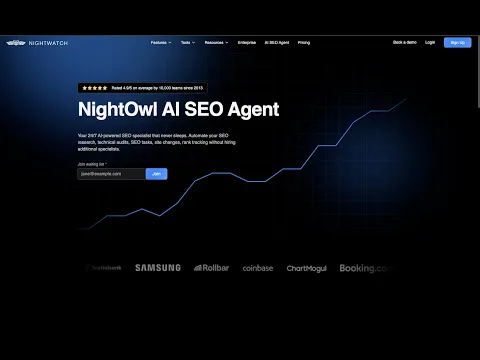
Nightwatch bundles daily AI visibility with classic rank tracking at an accessible euro price. That combination is why small teams ask me how they monitor brand in ai search first. I still flag the dual prompt-and-answer cap before anyone signs, because it quietly clips the alerting window I need for ai visibility monitoring. I keep notes on ai visibility tools for small business in 2026 for the same reason: price is not the same as coverage on a small stack.
Daily Scans Across Five LLMs, Not an Add-On
I ran Nightwatch against the surfaces I actually report. It scans ChatGPT, Claude, Gemini, Perplexity, and Copilot, plus Google AI Overviews and AI Mode. That engine list is the set I need for most retainers. Daily updates sit in the core product, not in an add-on I have to buy later. Published prices are Starter at EUR 79, Professional at EUR 159, and Agency at EUR 399. There is a 14-day trial, which is enough for me to test a prompt set before I commit a client.
SERP archives go back three years, longer than most of the AI-only tools on this list. I treat the AI scan and the rank tracker as one subscription, which is the point for a lean team. I still separate the two in my notes. A three-year SERP archive is not three years of answer logs, and I do not score them as the same thing.
Prompt Caps Versus Answer Caps That Clip the Window
The dual cap is what I size first on every Nightwatch demo I run. Starter allows 50 prompts and 1,500 answers. Professional allows 150 prompts and 4,500 answers. Daily scans across five LLMs burn the answer bucket faster than the prompt bucket, so I have to choose between covering the category and keeping enough lookback to trust an alert. That window is why I do not put Starter on a client who needs week-over-week share of voice.
Collection is simulated query sampling. I treat that as a proxy, not a census of live answers. I have never treated a simulated sample as a substitute for a rendered answer I can screenshot. NightOwl does not act on AI visibility findings, so I do not score it as a remediation loop. MCP is available from Professional up, which is the tier I would start on if I needed both headroom and a connector.
3. SE Ranking

I keep SE Ranking in the stack for clients who already live there, not because it is the cleanest layer of AI visibility monitoring I run. Daily-by-default tracking collides with check-based add-on math, and Core still hits a hard six-month history wall. Core is $129, Growth is $279. The parts I actually use, five engines with no gating, UI scraping of rendered answers, sit under those two constraints. I score the collision, not the SEO brand.
Daily by Default, Weekly When You Need to Conserve Checks
SE Ranking defaults to daily tracking. I only drop a prompt to weekly when I need to conserve checks, not because weekly is the product. Core gives 100 daily prompts at $129; Growth gives 250 at $279. Both cover five engines with no per-engine gating, which is the part I trust when a client wants every surface in one pass. Collection is UI scraping of the rendered answer, so I see what a user sees, not an API paraphrase.
A 14-day trial is enough to load a prompt set and watch one weekly cycle. Visibility Score, share of voice, and Net Sentiment do not live in the main rank tracker. They live in SE Visible only. That split matters when I wire alerts: if the client never opens SE Visible, those three numbers never fire. I treat daily as the working cadence and weekly as a budget valve, not a methodology.
Six Months of History on Core, All-Time on Growth
Core keeps six months of AI answer logs. Growth keeps all-time. That is the line I draw for any client who needs 12–24 months of lookback: Core cannot do it. I will not run a week-over-week share-of-voice alert on a six-month window and call it a trend.
The AI Search Add-on prices in checks: one check equals one prompt on one platform. Five engines times 100 prompts is 500 checks a day if I actually hit every surface daily. That math is why I drop some prompts to weekly, not because the answers are stable. The Sources report is the mention-opportunity view: competitor URLs that get cited when the brand does not. MCP ships on every plan, so I can pull the same logs into a notebook without waiting on a higher tier. I score SE Ranking on that collision: daily default, check burn, and a history wall that only Growth removes.
4. Goodie AI

Goodie is the first tool on this list where daily visibility and continuous Brand Command sit on the same invoice. I score it on that pairing, then on the action-credit meter that quietly becomes the bottleneck. Lookback is not the problem, every paid tier keeps all-time logs. Credits are. Core is $399 and Pro is $999. I run it when a client needs daily scans plus a continuous correction layer for ai visibility monitoring. Credits, not lookback, decide whether I stay.
Daily Visibility and Continuous Brand Command
Visibility on Goodie is daily. Brand Command is continuous. I treat those as two different clocks. Daily is the scan; continuous is the correction loop that tries to catch a false claim after it lands in an answer. Core at $399 covers five models. Pro at $999 adds Gemini, Alexa, and Sparky. That is the model gate. I do not buy Pro for the extra three names unless the client actually shows up in those surfaces.
All-time lookback ships on every paid tier, which is the retention I want for 12–24 months of answer logs. Core’s trial is seven days, enough to confirm the daily cadence, not enough to watch a model-release week play out. I load the prompt set on day one and read the Brand Command queue, not the marketing page. If the queue is empty and the five models are the ones buyers use, Core is the working plan.
All-Time Lookback Versus Metered Action Credits
History is not the bottleneck. Action credits are. I see tiers at 10, 30, and 60-plus credits, and Brand Command spends them when it tries to correct a false claim. Positioning accuracy, for me, is that catch, did the model state something untrue, and did Brand Command flag it. I do not treat a credit as a tracking unit. Tracking is daily and already paid for. A credit is an intervention.
GA4 connection is the part I actually wire: AI-referral sessions, conversions, and revenue against the same prompt set. Citation gap versus competitor sources tells me which URLs to chase, not which blog to rewrite. MCP is on Core and Pro. The API is Enterprise-only. If I need to dump all-time logs into my own warehouse, I need the Enterprise API, not Core or Pro. That is the real upgrade trigger, not lookback. I keep the credit meter next to the citation-gap report.
5. Ahrefs
Ahrefs is the mixed-cadence problem in one product. Chatbot indexes, AI Overviews, Web Visibility, and Custom Prompts do not refresh on the same clock, and history stretches from one month on Starter to unlimited on Enterprise. I use it when the SEO side is already paid for. I do not use it as a clean alerting layer for AI visibility monitoring. There is no composite visibility score, so I wire each surface myself.
Minutes, Days, and a 90-Day Chatbot Window
I map Ahrefs as four clocks, not one. AI chatbot indexes refresh monthly and sit on a 90-day window, that is not a daily alert surface. AI Overviews and AI Mode update every few days. Web Visibility ticks every few minutes. Custom Prompts I can set daily, weekly, or monthly. If I wire a 20% share-of-voice tripwire to the chatbot index, I am alerting on a monthly sample and calling it a week. I do not do that.
Collection is UI scraping of rendered answers, which I prefer to an API paraphrase. There is no composite visibility score. I build the roll-up in my own sheet from Brand Radar plus Custom Prompts, and I accept that the chatbot slice is always a quarter behind the Overview slice. Cadence mixing is the reason I keep Ahrefs as a supplement, not as the system of record for answer logs. Four clocks, one invoice, no single tripwire.
History From One Month on Starter to Unlimited on Enterprise
Starter is $29, one month of history, and no Brand Radar. I do not put a client there if the job is to monitor brand in AI search. Lite is $129: 150 custom prompt checks, six months of history, and MCP. That is the first tier I will actually log into for this work. Standard and Advanced raise both the check count and the history window, two years, then five. Enterprise at $1,499 is unlimited.
Prompt volumes in Ahrefs are modeled, not observed logs. I treat those numbers as a size-of-prize estimate, not as a citation-frequency series I can alert on. Six months on Lite is the same wall Core has at SE Ranking; I only stay there if the Custom Prompt set is small and the SEO side is already paid for. Unlimited history is an Enterprise cheque. I do not pretend Lite’s six months will survive a model-release year.
6. Peec AI
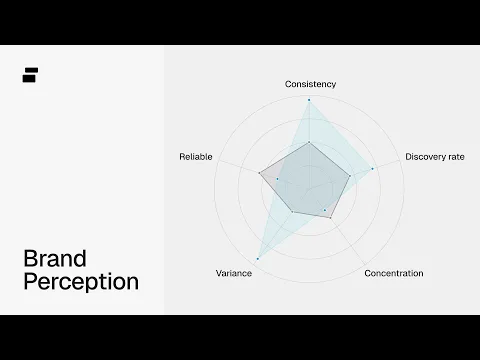
Peec is the first roster tool that states the scrape window in plain English: a 24-hour refresh, browser automation against the rendered answer, no marketing fog about “real-time.” I apply the same three questions I use for any AI visibility monitoring stack,cadence I can trust, alerts I can wire, and how many months of logs I keep. The honesty on that refresh is rare. The country and model gates on Starter and Pro are what actually shrink the watchlist.
Daily UI Scraping on a 24-Hour Refresh
I pay attention to Peec because the collection method is explicit. Starter is $95, Pro $245, Advanced $495. Prompt caps sit at 50, 150, and 350. Every paid tier scrapes the rendered UI on a 24-hour cycle,browser automation, not an API sample of a hidden backend. That matches how I actually read answers in ChatGPT or Perplexity, so the log is closer to what a buyer sees. I want the rendered page.
The metrics I can use sit in three buckets: Visibility, share of voice, and a 0–100 sentiment score. MCP ships on every tier with 92 tools, enough to pull those numbers into the reporting stack I already run. REST API is Enterprise-only, so a warehouse dump on Starter or Pro is not in the contract. I would still wire alerts off the daily scrape. I would not pretend the Enterprise API is part of the mid-tier deal.
One Country on Starter, Three Models Until Enterprise
Starter locks me to one country and three models. That gate matters more than the price. Until Enterprise I cannot watch all 13 engines, and countries stay capped. If a client sells in four markets, Starter is a sample, not a way to monitor brand in AI search. Enterprise unlocks the full engine set and unlimited countries; everything below that is a subset I document in the brief.
Historical retention is unpublished, so I cannot score Peec against the 12–24 month lookback I keep. ChatGPT ads show up as observed placements, not a connected ad account. Gap Scores flag sources that cite competitors and skip us,I treat that as a mention-opportunity list, not as a share-of-voice tripwire. I would run Peec as a daily UI scrape with eyes open on the country and model ceiling, not as the system of record for multi-market history.
7. Conductor
Conductor is the opposite of Peec on collection: official APIs, configurable cadence, and no public list price I can quote without a sales call. I treat it strictly as a credit-gated tracker, not as a daily default. Essentials ships with zero AI Search Credits. Growth gets 2,500 credits a year. Cadence is daily, weekly, or monthly per topic,if the credits last. Unpublished AI-search retention is the first gap I flag in any AI visibility monitoring bake-off I run.
Daily, Weekly, or Monthly, Per Topic, If You Have Credits
There is no public price sheet. I cannot put Conductor next to a $95 or $182 SKU without a quote. Essentials includes zero AI Search Credits, so the AI layer is off until I buy Growth or above. Growth starts at 2,500 credits a year. Cadence is configurable,daily, weekly, or monthly,per topic, which sounds like the control I want until I do the credit math. A daily topic burns the pool fast. Monthly is how most accounts will actually run.
Collection is not instant. Official timing is five hours to a few days, so a “daily” setting still lands as lag I have to explain in client Slack. Trial language splits: some pages say three weeks, some say 30 days. I confirm the clock in writing before a bake-off. Credits, not the cadence picker, decide whether I can watch a category week over week. I budget credits before I promise a daily topic.
API Sampling and a 24-Month Keyword Ceiling
Conductor collects through official APIs, not UI scraping. That is cleaner for compliance and worse for “what the buyer actually saw,” because I do not get the rendered panel. Nine engines are in the product; the Performance report drops Claude and Grok, so those two sit in the roster and out of the chart I would send a CMO. Keyword history caps at 24 months. AI-search retention is unpublished,the same hole I flagged on Peec. I cannot verify 12–24 months of the answer logs I need.
Logs name 16+ bots, which helps log-file work, not answer-level alerting. AgentStack is not autonomous. It does not act on a visibility finding the way I need a tripwire to page someone. I would use Conductor when a client already lives in that SEO suite and accepts API sampling plus an unpublished AI lookback. I would not migrate a daily UI-scrape stack onto it.
8. Surfer SEO
Surfer is a content platform that bolted on a visibility tracker. I score only the tracker, not the content editor. Discovery at $49 has no AI tracking at all. Standard stays weekly and ChatGPT-only. Daily coverage only starts at Pro. Claude is never in the engine list I am sold. Mention Gap is the closest thing to an alert I can use in AI visibility monitoring. Historical retention is unpublished, the same exact problem I flagged on Peec and Conductor.
Weekly on Standard, Daily From Pro Up
I keep the SKUs straight because the names hide the gate. Discovery is $49 and has no AI tracking. Standard gives me 25 prompts, weekly, on ChatGPT only, not enough if I need Gemini, Perplexity, or Google AI Overviews in the same week. Pro is $182 and is the first tier that looks like a tracker: 50 prompts, daily, across five engines. Peace of Mind is $299. Enterprise is $999.
Claude is not tracked on any plan. If a client’s buyers live in Claude, Surfer does not see them. Weekly on Standard means I cannot run a 20% week-over-week share-of-voice tripwire without waiting for two full cycles. I would not put Standard on a retainer that promises daily coverage. Pro is the floor I would quote, and I write “Claude excluded” in the scope. If I need to monitor brand in AI search on Claude, I look elsewhere.
Mention Gap as the Closest Thing to an Alert
The metrics Surfer publishes are Visibility Score, share of voice, Mention Rate, and Brand Sentiment. Mention Gap and Coverage Gap are the practical alerts: who is named in the answer when we are not, and which prompts have no brand coverage. I would actually alert on those gaps. There is no prompt-volume dataset, so I cannot weight a gap by how often the question is asked. There is no GA4 AI-referral product, so I cannot tie a mention to a session or a dollar.
MCP is in beta from Pro up. Historical retention is unpublished. I cannot tell a client how many months of answer logs I will have after a model swap. I would wire Mention Gap as a weekly check on Pro, keep my 12–24 month archive outside Surfer, and treat the content editor as a separate purchase, not as proof the tracker is complete.
9. seoClarity
I treat seoClarity as two products that share a logo. The SEO platform I have seen quoted at $2,500, $3,200, and $4,500 is not the tracker. ArcAI is the add-on that actually watches answer engines, and every ArcAI SKU is quote-only. Cadence is the story I score: weekly by default, with daily or on-demand only through the API. Retention is unpublished, which already sits below the lookback I keep on client work. I score the add-on for ai visibility monitoring, not the platform invoice.
Weekly by Default, Daily or On-Demand Through the API
When I opened ArcAI Core, the floor was 500 prompt queries across nine engines with no engine gating. Nine engines with no gating is the rare part of this SKU. That is the part I like: I am not paying extra to unlock another engine after I have already bought the seat. The default refresh is weekly. Daily is available, and the API lets me set daily, bi-weekly, weekly, monthly, or on-demand. For alerting I would only use the API path, because a weekly default misses the swings I act on.
Collection method is undisclosed. I cannot tell whether they scrape rendered answers or hit official APIs, and that matters. On client work I need that distinction, because UI scrapes catch citations the API often strips. Until seoClarity publishes the method, I treat every ArcAI log as unverified and I do not put it on a client dashboard as a source of truth.
ArcAI Is an Add-On, The $2,500 Figure Is Not the Tracker
The $2,500 / $3,200 / $4,500 figures belong to the core SEO platform. They are not ArcAI. ArcAI splits into Core, Discovery, and Accuracy, and every one of those is quote-only. I have never seen a public list price for the tracker, which already makes it hard to score against tools that publish Growth and Pro numbers. Bot tracking lives on Discovery only. Accuracy is the hallucination layer. Neither of those is the visibility monitor I came for.
McKinsey sets the bar at 12-24 months of stored citations, mentions, and model-specific answer logs. seoClarity does not publish retention. Without a published window I assume the history is too short to replay a model-release effect. I will not pretend a quote-only add-on with an unpublished lookback can carry the weekly client reports I run. If I cannot prove twelve months of logs exist, I cannot trust a week-over-week swing. That is the scoring lens, not the brochure.
10. LLMrefs
LLMrefs is the one-price, weekly-refresh trade on this list. I respect the honesty of a single All in One tier at $79 covering all eleven engines, and I flag the unpublished history and empty API docs in the same breath. If I need daily logs and a lookback I can replay, this is not the stack. If I need a cheap, wide engine set and can live with weekly, it is the compromise I consider.
One Paid Tier, Weekly Refresh, All Eleven Engines
The paid plan is All in One at $79. The plan includes 500 prompts, all eleven engines, and no per-engine fee. Each keyword is updated at least weekly. There is a free account plus a 7-day trial, and seats, projects, and domains are unlimited. Unlimited seats matter when I put a client marketing lead and my analyst on the same project without burning another licence. That combination is why I put it on the roster: the engine coverage is not gated behind a higher cheque, and the weekly cadence is stated in plain language.
I would not pretend weekly is daily. For a client whose buyers live in ChatGPT and Perplexity, a seven-day gap is a week of uncaught citation loss. I would still use LLMrefs as a cheap scan, then pair it with something that logs answers every day if I needed alerts I could trust.
Prompt Volume Estimates, Not a Published Lookback
What LLMrefs publishes on volume is estimates, not observed answer logs. Monthly AI prompt volume estimates sit next to a 4.5M+ ChatGPT prompt database built from public datasets and clickstream. I treat that database as research, not as a live monitoring log. That is useful context for choosing which prompts to track. It is not a citation-share series I can alert on.
I could not find a named citation share metric, a sentiment score, or a published history window. There is no MCP. The API page renders empty when I load it. I ran the same check I run on every vendor: can I export twelve months of answers and prove a citation disappeared after a given model release. Without a published window, this is research, not AI visibility monitoring I can replay. Volume estimates help me pick queries. They do not replace stored answers, and I will not invent a lookback they did not publish.
11. Search Atlas
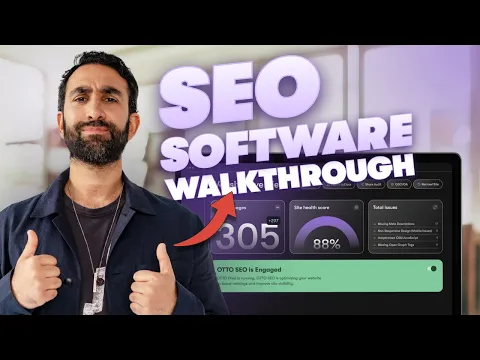
Search Atlas is the one I score last on cadence because the refresh interval is unpublished. The marketing page says real-time. The docs never give me a number I can put on a client SLA. What is published is the credit math, the engine gates, and OTTO, which deploys on-site changes and is a publisher, not a monitor. I split those jobs on purpose. I will not let a publisher pretend it is the log I keep for ai visibility monitoring. Credits are not a cadence.
Real-Time on the Page, No Interval in the Docs
Starter is $99, Growth $199, Pro $399, Agency $999. LLM Visibility credits land at 3,500 / 20,000 / 50,000 across those first three paid tiers. Agency at $999 is the top published price I scored, and I still could not find a refresh number attached to it. There is a 7-day trial. The product surfaces a Visibility Score, share of voice, citation share, and sentiment. None of that tells me how often the answers refresh. Share of voice without a timestamp is a vanity number.
No official interval is in the docs. I have watched dashboards that paint every number as live while the underlying scrape ran overnight. Without a published cadence I cannot wire a 20% week-over-week tripwire, because I do not know whether the last data point is an hour old or a week old. Credits tell me how much I can sample. They do not tell me when.
Three Engines on Starter, Five From Pro, Claude Absent From Pricing
Starter and Growth cover ChatGPT, Gemini, and Google AI. Perplexity and Copilot unlock from Pro. Claude is marketed on the site, then missing from every pricing-tier list I checked. I will not claim I can monitor brand in AI search on Claude when Claude is missing from the invoice.
OTTO deploys on-site changes. That is publishing, not monitoring, and I keep those jobs in different tools on purpose so a failed deploy cannot look like a visibility drop. There are 30 AEO MCP tools listed. The API is Enterprise-only and does nothing for the Starter engine gate. MCP is not a refresh interval: thirty tools do not tell me whether yesterday's ChatGPT answer is in the log. If I am on Starter, I am watching three engines on an unpublished cadence with metered credits only. That is the honest field note I would hand a client, not the homepage.
12. Yotpo (Discover)
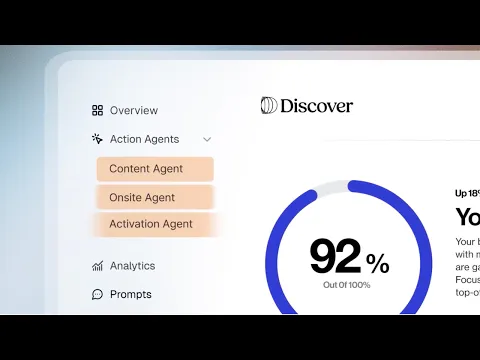
I close the roster with Yotpo Discover because cadence is my scoring lens and this module barely publishes one. It is the only commerce-native option I reviewed, and the three things I score,refresh cadence, answer-log history, and share of voice,are largely unpublished.
No list price. No trial. I treat it as a field note on what a reviews platform ships when it tries to live in the answer layer, not as a drop-in tracker.
Quote-Only, $10M GMV Gate, an AEO Consultant on Every Account
I never found a published price or a self-serve trial. Below $10M in GMV you sit on a waitlist. Above that, sales splits you onto Brands or Agencies quote tracks, and every account comes with an assigned AEO consultant. That consultant is the product as much as the dashboard.
The engine list is four: ChatGPT, Gemini, Claude, and Google AI Mode. Perplexity is not enumerated on the pages I reviewed, which matters if buyers shop there. I would not sign a quote until those four surfaces cover the journeys that move revenue,I cannot add engines later the way I can on a credit-based tracker.
There is no public seat or prompt math, so I cannot price a week of missed citations. You negotiate the module, get the consultant, and live with the contract’s refresh.
Review Schema as the Data Path, Not a Published Cadence
The data path I could actually verify is schema, not a scrape interval. On non-headless Shopify, Yotpo ships an LLM schema. Reviews Syndication is the other pipe. Discover MCP exists for Claude. Those are publisher moves. They tell me how Yotpo wants answers to ingest reviews; they do not tell me how often Discover re-reads the engines.
What is confirmed: visibility, citation share, and source mention. What is not: cadence, history, share of voice, sentiment. There is no Discover API. I counted three named agents in the product copy. Without published lookback I cannot run the 12–24 month storage bar, and without a cadence I cannot wire a tripwire.
I would use Discover if I already lived in Yotpo for reviews and needed schema in the answer layer. I would not use it as my system of record for answer logs.
How I Pick a Stack to Monitor Brand in AI Search
I buy a stack the same way I score this list. I need daily or weekly refresh on the surfaces my buyers actually use, not a monthly screenshot. Google’s 2026 analysis tells marketers to watch AI Overviews and consumer chat on the same models; some segments treat chat as the primary discovery channel. Pew’s 2026 work shows those users type natural-language, multi-sentence queries, so I track question-style prompts, not only keywords.
I keep 12 months of answer logs at a minimum,McKinsey’s bar is 12–24,because model releases rewrite who gets cited. I still have the week a client listicle landed in ChatGPT after three quiet months; without that history I would have called the spike luck. I wire a tripwire at a 20% week-over-week drop in share of voice, which is the threshold McKinsey put on growth teams.
If a tool cannot do those three things, I do not put it on the reporting stack for ai visibility monitoring, no matter how pretty the dashboard is.
Quick comparison
| Tool | Entry price (USD/mo) | Free trial | AI engines covered (#) | Core metrics tracked (#) | API | MCP server |
|---|---|---|---|---|---|---|
| Cognizo | $499 | N/A | 10 | 6 | Y | Y |
| Nightwatch | EUR 79 | Y | 5 | 5 | Y | Y |
| SE Ranking | $129 | Y | 5 | 4 | Y | Y |
| Goodie AI | $399 | Y | 12 | 5 | Y | Y |
| Ahrefs | $29 | N | 7 | 3 | Y | Y |
| Peec AI | $95 | Y | 13 | 4 | Y | Y |
| Conductor | Not published | Y | 9 | 4 | Y | Y |
| Surfer SEO | $49 | Y | 5 | 4 | Y | Y |
| seoClarity | $2,500 | Y | 9 | 3 | Y | Y |
| LLMrefs | $79 | Y | 11 | 2 | Y | N |
| Search Atlas | $99 | Y | 5 | 5 | Y | Y |
| Yotpo (Discover) | Not disclosed | N | 4 | 3 | N | Y |
Frequently asked
I refresh core prompts at least monthly, matching Google’s 2026 guidance for top queries. AI Overviews change more frequently than classic blue-link rankings due to model updates and freshness signals, so I treat monthly as the floor for anything that still drives discovery.
McKinsey’s 2026 marketing study notes that leading organizations store AI visibility data,citations, mentions, and model-specific answer logs,for at least 12–24 months. I keep that same window so I can separate a one-off model release from a lasting drop in presence.
I follow McKinsey’s 2026 framework: alert when share of voice in AI answers for a strategic category drops more than 20% week over week, or when a competitor shows up in a prompt I used to own. That pair catches both slow erosion and sudden displacement.
Google’s 2026 study says review AI Overview visibility at least monthly for top queries because summaries change faster than blue-link rankings. I still run weekly checks on core prompts so a 20% share-of-voice drop can trip McKinsey’s week-over-week alert without waiting a full month.
McKinsey’s 2026 study puts share of voice first: alert when it drops more than 20% week over week in a strategic category. Google’s three signals,citations, explicit mentions, and relative placement,still matter, but I treat share of voice as the tripwire because it compresses those into one competitive number.
Yes. Google’s 2026 analysis advises tracking both AI Overviews and consumer chat, and McKinsey describes visibility monitoring across Search AI Overviews, chat assistants, and copilots. I pick a tool that logs ChatGPT and Google AI Overviews in one place so I am not stitching two histories.
