AI Visibility Tools 27 min read Published Updated
12 Best AI Visibility Analytics Tools in 2026 (Reviewed)
I compared twelve tools the way I actually use them: can I see the answer, can I export it, and can I join it to GA4 or a BI tool.
On this page
- 01
I treat the dashboard as a preview; the export, API, or MCP is what I actually report from.
- 02
GA4, GSC, and warehouse joins are uneven across this roster, so I check that path before I commit a workflow.
- 03
Collection method and engine list change what a visibility number even means.
- 04
Prompt caps, seat limits, and history windows decide whether weekly AI visibility analytics is even possible.
What I look at in AI visibility analytics
AI Overviews and chatbot usage made weekly reporting necessary for me. TechCrunch reported Google AI Overviews in 43% of searches in 2026, up from 15% a year earlier, and AI Mode visits rising from 126 million in June 2025 to 279 million by May 2026. Pew found about half of U.S. adults using AI chatbots, with about a quarter using them daily. I built a citation-frequency report across ChatGPT, Perplexity, Google AI, Grok, and Claude, so this piece is about dashboards, exports, and GA4 or BI joins, not a product pitch.
Dashboards, exports, and the GA4 question
The lens I use is simple: can I see the answer in the primary UI, can I get it out, and can I join it. I look at the AI search analytics dashboard first, what engines sit on one screen, which metrics are named, and whether I can filter by prompt, brand, or competitor without exporting. Then I check export formats, CSV, XLS, PDF, Sheets, and whether an API or MCP exists so a warehouse or a chatbot can pull the same rows. The GA4 question is whether the product joins sessions, conversions, or revenue to those citations, or whether GSC and Looker Studio, or a warehouse, are the path. Agency stacks often need seats, SSO, and a connector that survives a client handoff; I keep the details on ai visibility tools for agencies in a separate note so this review stays on dashboards and joins. I score a stack on whether I can leave the UI with a file or an endpoint.
How I compared these AI visibility analytics stacks
The roster below is fixed in the order I listed it. I am not ranking these stacks as best, second, or last. For each one I recorded what I could observe: which engines are named, refresh cadence, collection method when the vendor states it, seats, history depth, and whether SSO appears on official pages. Pricing is whatever the public page showed at review. I treat AI visibility analytics as a reporting problem, citation frequency, share of voice, and whether those rows can leave the product, not as a beauty contest. If a page did not document a feature, I write that it was not documented. I also noted export formats, API or MCP presence, and any GA4, GSC, Looker Studio, or warehouse connector named on official pages. Mixed cadence, gated engines, and unpublished formats show up as facts, not as verdicts. That frame is what I used on every stack in this review.
1. Cognizo
I ran Cognizo as an AEO platform. Public pricing was Growth at $499, Pro at $999, and Enterprise custom. Collection is daily UI scraping across 10 engines, with six core metrics, unlimited seats, and all-time history. Export and API sit on every tier. MCP (64 tools) and AI Traffic Analytics are the reporting surfaces I opened. I filed more on ai visibility monitoring separately; here I stay on the dashboard and the API.
Dashboard, MCP, and the six core metrics
Inside the UI I used six named metrics: Visibility Score, Share of Voice, Citation Share with an owned versus earned split, source mention rate, sentiment, and positioning accuracy. Citation Share was the one I joined to content work because the owned/earned split told me whether the model was citing our pages or a third party. Sentiment and positioning accuracy sat next to the citation rows rather than in a separate product. I pulled the same AI visibility analytics from the dashboard, from Chat, and from MCP. Cognizo's connector is listed in the Claude Connectors Directory under Community. I did not treat that listing as a quality rank; it only told me how I could authenticate Claude against the MCP endpoint. The Chat surface answered questions against those six metrics without rebuilding filters. MCP lists 64 tools; I used it to pull Visibility Score and Citation Share into a notebook instead of screenshotting the UI.
AI Traffic Analytics, exports, and ChatGPT Ads
Exports are on every tier. File formats were not published on the pages I checked, so I cannot name CSV versus XLS from official copy. The API is available from Growth, which is the tier I would use for a BI job. AI Traffic Analytics on Growth is capped at one domain. The crawler set named was GPTBot, ClaudeBot, and OAI-SearchBot. There is a ChatGPT Ads library plus competitor ad tracking; I treated those as ad-inventory views, not as a GA4 join. A content agent auto-publishes on all tiers. I did not see a published statement that AI Traffic Analytics joins to GA4 conversions. I used it as a bot-hit and domain report, then planned the warehouse join myself. Unlimited seats meant I did not meter analysts against the export. If I needed sessions next to citations, I still planned two exports.
2. Ahrefs
I treated Ahrefs as an SEO suite with Brand Radar attached. Starter at $29 has no AI tracking. Lite at $129 adds Brand Radar, 150 custom prompt checks, API, MCP, six months of history, and one seat. Cadence is mixed and prompt volumes are modeled. I used Brand Radar for mentions and citations, not as a composite score. I keep a closer look at llm visibility tools separately; here I stay on the dashboard, Looker, and the split analytics products.
Brand Radar dashboards and mixed refresh cadence
Brand Radar names seven engines. Grok collection was noted as temporarily paused at review. Claude appears only through Custom Prompts. The metrics I recorded were Mentions, Citations, AI Share of Voice, and Estimated Impressions. There is no composite visibility score on the pages I checked. Collection is UI scraping of public web interfaces. Sentiment and positioning accuracy were not documented on official pages. Refresh cadence is mixed, which is why I date-stamped every export instead of assuming a daily series. Estimated Impressions are modeled volumes; I kept them in a separate column from observed citation counts so a weekly report did not treat a model as a crawl. I ran Custom Prompts when I needed Claude in the same workbook as the other engines. Mentions and Citations were the rows I charted for citation frequency.
Looker Studio, MCP, and split analytics products
Looker Studio connectors start at Advanced and above. Web Analytics has an LLM channel; Bot Analytics (Cloudflare Logpush or Worker) runs as a separate product. I did not find a published join that puts those bot hits next to Brand Radar citations in one report. Exports are CSV and Google Sheets, with row counts metered. MCP is first-party at api.ahrefs.com, and the Claude directory listing is first-party. Paid ads tracking is not part of Brand Radar. For a weekly AI visibility analytics pack I exported Sheets, then joined GA4 myself if I needed sessions. The split between Brand Radar, Web Analytics, and Bot Analytics is the operational fact I planned around. Seat count on Lite is one. Six months of history is the window I could chart without an older archive. I treated that window as a reporting constraint, not a verdict.
3. SE Ranking

I treated SE Ranking as an SEO platform with an AI module and a separate product, SE Visible. Core is $129: 100 AI prompts daily, 1 seat, 6 months of history, a 50k-row export, and MCP. Growth is $279. Enterprise is custom. A 14-day trial is listed. Visibility Score, Share of Voice, and Net Sentiment are documented for SE Visible only, so I did not apply those labels to the rest of the suite when I compared these dashboards.
SE Visible dashboards and daily prompt caps
Every plan I opened listed five engines, with no engine gating by tier. Collection is UI scraping of rendered answers, I am looking at what the public interface shows, not an unpublished API feed. On the sources side, the product reports Mention rate and Coverage. An owned-versus-earned split was not documented on the pages I reviewed, so I did not assume one exists.
The AI Search Add-on is priced in checks rather than as a flat engine pack. In practice I moved between three surfaces: AI Results Tracker, AI Overviews Tracker, and SE Visible. Daily prompt caps sit on Core at 100 AI prompts; that is the ceiling I used for weekly reporting, not an unlimited crawl. Visibility Score, Share of Voice, and Net Sentiment stay on SE Visible in the docs I read, so I kept those three metrics in that column when I compared AI visibility analytics stacks.
GA4, Looker Studio, MCP, and export row caps
GA4 and Google Search Console exist here as general analytics connections. I did not find a dedicated AI referral report, and AI crawler log analysis was not documented on the pages I checked, so I cannot join bot hits to conversions inside this stack from published material. Looker Studio, Whatagraph, and AgencyAnalytics are the BI and agency surfaces named.
MCP is present. Official pages disagree on the tool count, I recorded 160 on one page and 180 on another, and it is not listed in the Claude directory. Exports are PDF, HTML, and XLS. Core lists a 50k-row export cap; that is the number I used for a weekly pull. SSO was not mentioned on the official pages I checked. Core is one seat. I did not find a different connector list on Growth. For my reporting lens on AI search analytics, the GA4 join is a general analytics hook, not an AI-traffic product.
4. seoClarity
I treated seoClarity as an enterprise SEO platform and Clarity ArcAI as the add-on I was comparing for AI visibility analytics. Clarity ArcAI is a separate add-on, with Ask-for-a-Quote plans. The published $2,500–$4,500 figures I found are for the core SEO platform, not ArcAI, so I did not use those numbers as ArcAI pricing. ArcAI Core lists nine engines. Prompt queries start at 500. Users are unlimited on ArcAI Core. The collection method was not disclosed on official pages I reviewed for this piece.
ArcAI dashboards, sentiment, and Accuracy
On ArcAI I recorded presence rate, brand mentions, citations, and share-of-voice benchmarking as metrics. I did not find a named composite visibility score, so I did not invent one. Sentiment is broken out by engine and by query, which is how I would filter a weekly slice. The Accuracy module tracks hallucinations and fact errors, that is a different surface from mention counts, and I kept it in its own column.
Default cadence is weekly; daily is available. The API page states there are no cadence limits, which matters if I am pulling into a warehouse rather than waiting on the UI. Clickstream and question-database claims appear in vendor material; I treated those as vendor-stated and did not convert them into independent volume figures. Prompt queries start at 500. Nine engines sit on ArcAI Core. Collection method was not disclosed on official pages, so I cannot describe how answers are captured.
Warehouse connectors, API, and BI destinations
This is the deepest listed integration set I wrote down in this comparison: BigQuery, Snowflake, Redshift, S3, Tableau, Looker, and Looker Studio, plus Google Analytics, Google Search Console, and Adobe Analytics. That is the warehouse and BI map I used when I asked whether a weekly extract can leave the UI. I recorded those as listed, not as tested joins.
The API is included at no extra charge for data already tracked. Full API docs are gated, so I could not inventory endpoints from public pages. MCP exists; the tool count is unpublished, and it is not in the Claude directory. Exports go up to 1 million rows. File formats were not disclosed. Historical retention was not published, so I did not assume an all-time lookback. Unlimited users is the seat model I recorded for ArcAI. For my join question, can this land in a warehouse, the connector list is the answer I have.
5. Rankability
I treated Rankability as an AI search visibility product first, not an SEO suite with a bolt-on. Starter is $99, Core $199, Team $399. Seats are unlimited; workspaces are the gate, 1, 3, and 10. Engine gating is by tier. The help centre documents 11 platforms; the pricing page lists 8, so I recorded both. There is a 7-day trial. SPI is 0–100 and explicitly not market share.
Search Performance Index and citation states
Search Performance Index is a 0–100 score. The published weights are traditional 30 percent, video 10 percent, AI mentions 35 percent, and AI citations 25 percent. I used those weights as published. The docs state SPI is not market share, and I did not treat it as share of voice, there is no share-of-voice metric in what I reviewed.
The Citations tab classifies Linked, Unlinked, Opportunity, Gap, and Owned. That owned label is a citation state, not an owned-versus-earned traffic split. Sentiment is per answer. Cadence is daily, weekly, or monthly, plus on-demand. The collection method is not disclosed as a technical method on the pages I checked, so I cannot say whether this is UI scraping, an API, or something else. Engine gating is by tier; I kept the help-centre count of 11 platforms and the pricing-page count of 8 as two published lists, not one reconciled roster.
GA4 referrals, MCP, and export formats
GA4 here is referrer-based organic-versus-AI traffic. The engines named for that split are ChatGPT, Gemini, Perplexity, Claude, Copilot, Meta AI, Mistral, You.com, and Poe. The docs caveat that these are referrals, so I did not read them as on-site bot logs or as converted sessions beyond what GA4 already attributes.
Exports are CSV. Content leaves as Docs, HTML, Markdown, or docx. Looker Studio is not a first-party connector in the materials I read; the documented path is a self-built Apps Script recipe with a 90-day connector window. MCP is hosted, with 97 tools. Historical retention is not disclosed. SSO is not disclosed on official pages. Unlimited seats sit behind workspace gates of 1, 3, or 10. For my weekly AI visibility analytics report, the question is whether the dashboard can leave the UI and join GA4, here the join is referral-based, and the export path is CSV plus MCP.
6. Peec AI
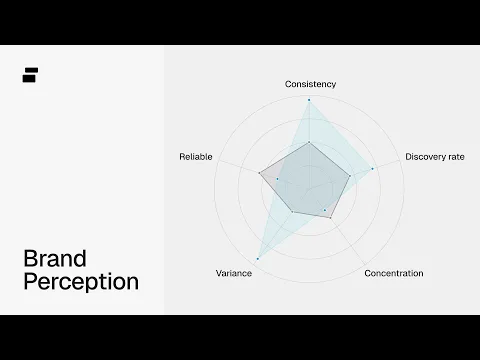
I treat Peec AI as a dedicated AI search analytics platform, not an SEO suite with a module attached. Official pricing is Starter at $95, Pro at $245, Advanced at $495, and Enterprise custom. Collection is daily UI scraping via browser automation. Users are unlimited. MCP is on every tier. The REST API is Enterprise only, with a first-party Claude connector at api.peec.ai. I run it as a daily capture layer I can later join to GA4 or Looker.
Visibility dashboards, 13 engines, and gap scores
When I log in, engine coverage is the first gate. Starter, Pro, and Advanced let me pick three models from the base set; all 13 engines require Enterprise. Countries gate the same way: one on Starter, three on Pro, unlimited on Advanced and Enterprise.
The dashboards I export from show Visibility %, Share of Voice, a 0-100 sentiment score, and Citation Rate / Retrieved. Domain classes include a You ownership flag, which is how I mark cited domains as mine without a separate owned-versus-earned split. I keep Visibility % beside Share of Voice in the same pull. Citation Rate versus Retrieved tells me when a domain is retrieved but does not land in the answer. Gap analysis ships with Gap Scores. I sort those scores into a punch list of missing citations before I write the weekly note.
GA4 referrals, log ingestion, and Looker
When I join Peec to traffic, AI Referrals go through GA4 OAuth and give me sessions, conversions, and revenue. GSC is not documented as a connector on the pages I checked. For crawler hits I ingest logs and CDN feeds from Vercel, Cloudflare, AWS, CloudFront, GCP CDN, WordPress, Akamai, plus webhook and CSV/CLF. Those first-party logs surface 40+ bots.
CSV export is on every tier. Looker and Data Studio connectors are documented on Advanced and Enterprise. Because the REST API is Enterprise-only, on Starter and Pro I leave through CSV or MCP and load the warehouse myself. Historical retention is not published. ChatGPT ads are noted in observed responses for listed countries; there is no Ads API. That GA4 OAuth join is why I can put conversions next to citation rows in the weekly sheet.
7. Conductor

Conductor is an enterprise AEO/SEO platform. Official pages I checked do not publish a list price. Tiers show quotas: Essentials has no AI Search Credits; Growth includes 2,500 per year. Collection is described as API sampling. Nine engines are listed; the AI Search Performance report does not support Claude or Grok. The free trial is stated as 3 weeks in the title and 30 days in page metadata.
Share of Voice dashboards and API-first collection
When I open Conductor's AI search views, the documented metrics are Share of Voice, Citations, Brand Mentions, and Brand Sentiment scored 1-10. I did not find a single composite visibility score confirmed on official pages. An owned-versus-earned split and positioning accuracy are not documented there either.
The engine list is nine names, but AI Search Performance does not include Claude or Grok, so I pull those two elsewhere. I set cadence to daily, weekly, or monthly. Collection is API-first and takes five hours to a few days, so I schedule the weekly pull after that window. API sampling is stated explicitly, which is how I read the volumes: samples, not every prompt I might invent. Generate Draft is labeled beta; I treat it as a draft surface, not as a reporting source.
GA4, Looker Studio, and a five-tool MCP
For the join, I connect GA4 directly and pull sessions, engagement, conversions, and revenue. AI bot crawling is a separate report. Official pages do not state that those crawler hits are joined to conversions, so I keep them in two tabs. Looker Studio, GSC, and Adobe sit alongside that GA4 connection.
MCP is at mcp-universal.conductor.com. I counted five tools, and there is a first-party Claude listing. I export XLSX or CSV up to 1 million rows. Keyword history is documented up to 24 months; AI search retention is not published. Log analysis names 16+ bots. When I need the AI visibility analytics dashboard to leave the UI, the five MCP tools and the 1 million-row export are the path. I do not treat bot crawling as a conversion source unless I join it in Looker.
8. LLMrefs

LLMrefs publishes one paid tier, All in One, at $79 a month: 500 prompts, all 11 engines, weekly refresh, unlimited seats, projects, and domains, plus CSV and an API. I found no MCP page in the sitemap. Collection method is unstated. The API docs page rendered empty when I opened it, so endpoints are not published.
One paid tier, eleven engines, weekly refresh
On the All in One tier I run all 11 engines against a 500-prompt cap, refreshed weekly. Weekly refresh is the cadence I plan around; the published tier does not document a daily option. The two headline numbers I export are an AI Visibility Score and Share of Voice. Citations & Sources give me counts and identities; they are not documented as a named citation-share metric. Sentiment is not tracked. The nearest field I found is brand mention accuracy.
Geo coverage is listed as 50+ countries and 20+ languages. Prompt volume estimates sit beside a 4.5 million ChatGPT Prompts Database. The vendor states that database comes from public datasets and clickstream. I treat those volumes as estimates I cannot re-query myself. I keep brand mention accuracy next to Share of Voice when sentiment is absent.
CSV, API, and what official pages do not name
What I can take out of LLMrefs is a CSV export and an AI SEO API. Official pages do not name Looker Studio, GA4, GSC, Slack, or Zapier. I found no MCP. AI referral tracking appears only as editorial advice to check server logs or GA4 yourself. That is not a productized join I can schedule.
Only GPTBot and ChatGPT-User are named as crawlers. SSO and historical retention are not mentioned on the pages I reviewed. I can open a free account and a 7-day trial; free-tier limits are not published. Because the API docs page rendered empty, I have not been able to confirm endpoints from official documentation. For the weekly report, the dashboard leaves as CSV. Any GA4 or warehouse join is work I do outside LLMrefs, which is the join test I apply to every AI visibility analytics stack.
9. Goodie AI

I treat Goodie AI as an AEO platform at higoodie.com. Tiers are Core $399, Pro $999, Enterprise custom. Engines gate 5 / 8 / up to 12, including Alexa and Sparky. Seats 3 / 5 / 10+; countries and languages follow those gates. Daily visibility with all-time lookback. Collection method is not documented; I found no docs or help center on the domain. I walked the pricing and product pages.
Visibility scores, Brand Command, and action credits
When I open Goodie, the AI search analytics dashboard is built around brand visibility scores, share of voice, citation frequency, relative mention frequency, and sentiment. Brand Command is the surface for false claims attributed to the brand. I use it as a review queue when an answer states something the brand does not claim, not as a ranking score.
Optimization Actions are metered as credits: 10 on Core, 30 on Pro, and 60+ on Enterprise, so recommended work volume is a plan limit. Content Studio produces articles from those actions. Page Visibility Scorecard is capped at 10 pages on Core and 30 on Pro, which matters if I want to score a catalog rather than a handful of URLs. Commerce feeds are documented for Shopify, BigCommerce, Merchant Center, Meta Catalog, and Amazon. I treat those feeds as input surfaces, not as proof that a given engine will cite the catalog.
GA4 attribution, MCP, and Enterprise-only export
The GA connection identifies ChatGPT, Perplexity, and Gemini referrals, and it reports sessions, conversions, revenue, and zero-click influenced revenue. GSC was not confirmed on official pages I checked. That is the join I care about for a weekly report, but I still have to assemble it: MCP is on Core and Pro, while full API and export are Enterprise only, and export formats are not published.
SAML SSO and SCIM appear on the security page; the pricing table has no SSO row. A dedicated AEO strategist is listed on Enterprise only. I treat that strategist as a services line, not as part of the analytics surface. Without a documented export schema I cannot assume a warehouse load until I am on Enterprise and can verify the files. I also cannot confirm GSC as a second join, so referral sessions in GA are the only documented traffic hook. MCP tool count is not published.
10. Surfer SEO
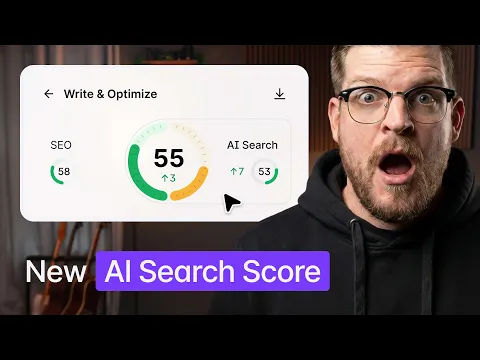
I use Surfer as a content platform that added AI Tracker rather than as a dedicated AEO suite. Discovery at $49 has no AI tracking. Standard at $99 is ChatGPT-only on a weekly cadence. Pro at $182 tracks 50 prompts daily across five engines. A standalone AI Search Analytics product is priced separately. The vendor states it reads front-end responses, not APIs. The /ai-instructions/ page states Claude is not tracked.
AI Tracker dashboards and five engines
When I open AI Tracker on Pro I see Visibility Score, Share of Voice, Mention Rate, and Brand Sentiment. Placement is published as Average Position rather than a positioning-accuracy score, and there is no named citation share on the pages I checked.
Mention Gap and Coverage Gap are the two gap views I use to see where the brand is absent from answers. Prompt suggestions fire only at project creation, so I author the rest of the prompt set myself. No prompt volume data is published, which means I cannot weight a prompt by modeled demand inside Surfer. Five engines on Pro, daily at 50 prompts, is the working configuration I actually run. Standard staying on ChatGPT weekly is a different product shape. The Marketplace is documented for paid placements when trusted sources support it; I treat that as a separate buying surface, not as a visibility metric. That is my working lens.
CSV, Looker Studio, GSC, and MCP beta
I export AI Tracker as CSV and I can share view-only links. Looker Studio is mentioned as a destination. GSC is a documented integration. GA4 is not, and I found no AI referral attribution on official pages, so this stack does not join chatbot sessions to citations inside Surfer.
MCP entered beta on 11 August 2026 for Pro, Peace of Mind, and Enterprise, with three tool groups and no published tool count. API access starts at Peace of Mind at $299 and is in closed testing; AI Tracker via API is listed as coming soon. A country or language selector for AI Tracker is not documented. Historical retention is not published. Until the API exposes AI Tracker, my weekly report is a CSV drop plus Looker Studio. I keep GSC in the same workbook and join GA4 elsewhere. Retention is unpublished, so I export on a schedule.
11. Nightwatch
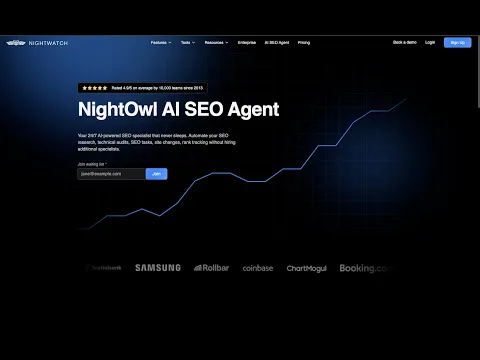
I use Nightwatch as a rank tracker with AI visibility in the base price. Prices are in EUR: Starter €79, Professional €159, Agency €399, Enterprise custom. All five LLMs plus AI Overviews and AI Mode sit on every tier; volume gates by prompts and AI answers per month. Unlimited seats. 14-day trial, no card. Vendor wording is simulated query sampling.
Daily AI visibility dashboards across five LLMs
The daily dashboard shows AI Visibility %, Share of Voice, Citation Intelligence, domain-level mention frequency, and sentiment. Average Position is the closest published placement metric I found; I do not get a positioning-accuracy score. Prompt Research generates prompts. No prompt volume metric is published, so I cannot weight those prompts by demand inside Nightwatch.
The ceiling that actually binds me is answers per month, not the prompt count: 50 prompts across five engines every day would exceed Starter’s 1,500 answers in a month. I run the same five LLMs plus AI Overviews and AI Mode on every tier, which means engine mix is not the upgrade lever. Prompt and answer volume is. Cadence is daily. I treat Citation Intelligence as the citation surface and I read it next to domain-level mention frequency and sentiment. Because collection is described as simulated query sampling, I treat the numbers as sampled visibility.
Looker Studio, GA4, GSC, and MCP from Professional
GSC and GA4 integrations exist. A citation page states mentions can be traced to search traffic; I found no dedicated AI referral report and no crawler-hit product on official pages. Looker Studio dashboards and PDF white-label reports are documented. CSV export was not confirmed.
MCP starts at Professional, with six tool categories and no published tool count. SERP archives go back three years; AI visibility retention is not called out separately on the pages I checked. SSO is Enterprise only. The integrations page returned 404 when I checked, so Slack and Zapier are not confirmed. For a weekly report I park Looker Studio on GA4 and GSC and keep the AI visibility analytics dashboard in Nightwatch. I do not treat that citation-page claim as a built AI-referral join until I see sessions attributed to ChatGPT or Perplexity in-product. PDF is the export I can document; I still verify CSV in the UI.
12. Search Atlas
I treated Search Atlas as an SEO platform that meters LLM Visibility in credits. Starter is $99, Growth $199, Pro $399, Agency $999. Starter and Growth cover three engines; Perplexity and Copilot start at Pro. Official pages state brand analysis runs on all five engines regardless of which ones I select. Engine lists differ across those pages; Claude is absent from every pricing-tier platform list I checked. Cadence and collection method were not disclosed on official pages.
Four LLM Visibility dashboards and credit metering
When I opened LLM Visibility I worked from four dashboard surfaces. Visibility Score sits next to share of voice and Share of Voice Rank. Citation Sources lists identities plus a share figure. Brand mentions and a sentiment dashboard sit alongside placement, which the UI labels first, last, or skipped rather than a continuous rank. Competitor Gap and citation source tables sit next to those views.
Credits are metered at 3,500, 20,000, and 50,000 on the published tables I used. Prompts are authored manually; auto-suggested prompts were not documented on official pages as of my review. OTTO can deploy on-site changes through a CMS connection or a JavaScript snippet. That is an optimization path, not a reporting one, so I kept it separate from the dashboards I was scoring for export and joins.
PDF/CSV exports, MCP, and where GA4 sits
When I tested whether the AI visibility analytics dashboard can leave the UI, I found PDF and CSV plus shareable live dashboard links. GSC history is unlimited on all plans and also available through MCP. LLM Visibility does not report sessions or conversions; official material describes manual GA4 segmentation rather than a built-in AI referral report.
MCP is documented as 30 AEO tools, community or self-hosted, and not a first-party Claude connector. API access is Enterprise quote-only. OTTO connectors include WordPress, HubSpot, Webflow, and Shopify. Slack, Teams, and ClickUp are listed for the Atlas Agent. Looker Studio and Zapier were not confirmed on official pages; the integrations page returned 404 when I checked. SSO was not disclosed. I did not pipe LLM Visibility into a warehouse from this stack, because Looker Studio was not confirmed.
How I run AI search analytics as a weekly report
I pick an AI visibility analytics stack by whether the dashboard can leave the UI, CSV, API, or MCP, and whether I can join those rows to GA4 or a BI tool. That is the same three-question lens I used on all twelve: can I see the answer, can I export it, and can I join it. I am not ranking these twelve products.
The reason citation reporting matters to me is a field note, not a product argument. I built AI Rank Checker to log whether a brand is named in generated answers. A listicle covering that work later surfaced as a citation inside ChatGPT. Watching my own URL appear in an answer is what made a weekly citation-frequency report feel like operations, not a pitch.
I still run that report across ChatGPT, Perplexity, Google AI, Grok, and Claude, then I try to land the export in GA4 or Looker. I keep the stacks that leave the UI and join a warehouse.
Quick comparison
| Tool | Entry price (USD/mo) | Free trial | AI engines covered (#) | Core metrics tracked (#) | API | MCP server |
|---|---|---|---|---|---|---|
| Cognizo | $499 | N/A | 10 | 6 | Y | Y |
| Ahrefs | $29 | N | 7 | 3 | Y | Y |
| SE Ranking | $129 | Y | 5 | 4 | Y | Y |
| seoClarity | $2,500 | Y | 9 | 3 | Y | Y |
| Rankability | $99 | Y | 8 | 2 | Y | Y |
| Peec AI | $95 | Y | 13 | 4 | Y | Y |
| Conductor | Not published | Y | 9 | 4 | Y | Y |
| LLMrefs | $79 | Y | 11 | 2 | Y | N |
| Goodie AI | $399 | Y | 12 | 5 | Y | Y |
| Surfer SEO | $49 | Y | 5 | 4 | Y | Y |
| Nightwatch | EUR 79 | Y | 5 | 5 | Y | Y |
| Search Atlas | $99 | Y | 5 | 5 | Y | Y |
Frequently asked
I export a row per prompt-engine-date: the exact prompt, engine and locale, timestamp, whether my brand was cited, citation URLs and domains, mention position, a short answer excerpt or hash, and the competitor set. Screenshots help QA; they are not the dataset. CSV or JSON is what I actually join to content and CRM later.
No. Citation tracking is useful without GA4 because ChatGPT, Perplexity, Gemini, Copilot, Grok, and Claude do not send reliable session data the way organic search does. I still connect GA4 when I want to see AI-referrer landings, but that is traffic, not share of citations. The two datasets answer different questions and I keep them separate.
I treat them as different instruments. UI scrapes capture what a browser session actually rendered, including Google AI Overviews and AI Mode layouts, so they pick up personalization and UI chrome. API samples are more repeatable and less personalized, but they often miss that chrome. I never blend the two into one citation rate without labeling the source.
Across dashboards I have used, share of voice is rarely the same formula. Some count the share of tracked prompts where a brand is cited at all. Others weight by citation rank or split credit among domains in one answer. I always ask for the denominator in AI search analytics: which prompts, which engines, and whether uncited answers still count.
I do not trust a weekly report until I have a fixed prompt set, the engines my buyers actually use, and several samples per prompt rather than one. A few dozen prompts on one engine swing too hard week to week. I stabilize first, then add prompts; I never grow the set and the engines together.
Yes, if the product exports CSV, JSON, or a documented API. I schedule a daily dump into BigQuery or a sheet, then point Looker Studio at that table so citation rates sit next to content and CRM fields. Native connectors help when they exist; I still keep a raw export because dashboard UIs change and I need history.
